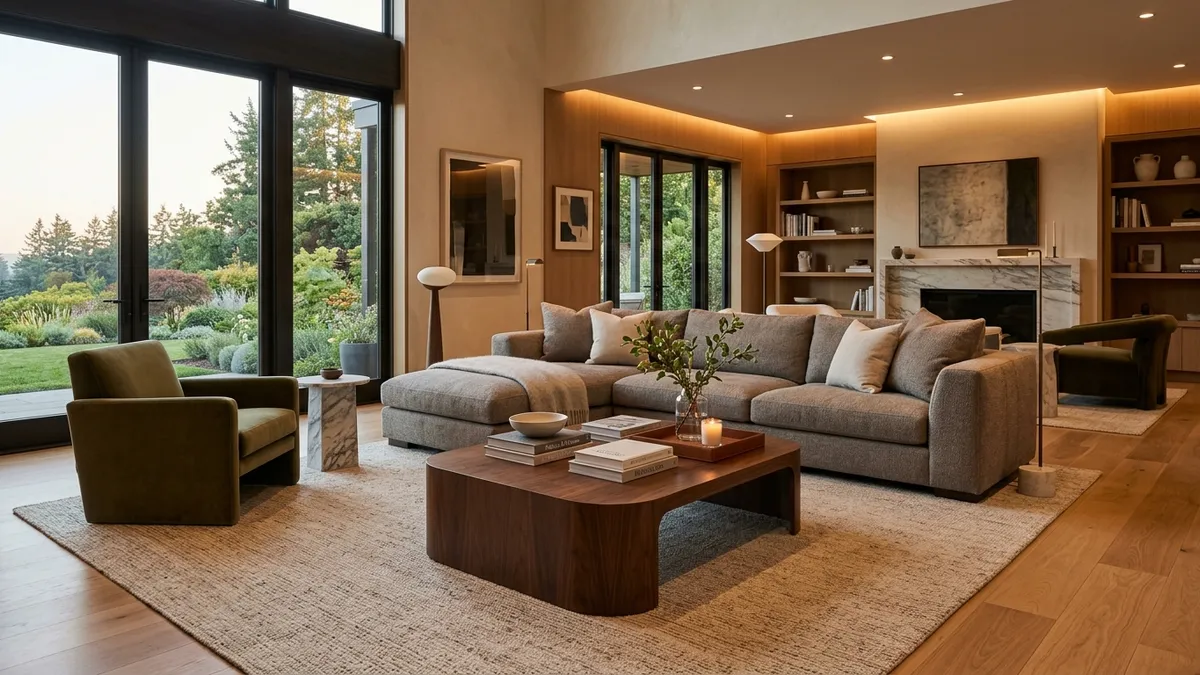
Have you ever looked at your living room and felt that everything was nicely arranged, yet something subtle was missing to tie all the pieces together and make you want to curl up on the sofa with a good book? The area rug is that magical unifying element: beyond softening footstep echoes and protecting your floorboards, it acts as an invisible frame that gathers your sofa, chairs, and coffee table into one warm, cohesive conversation zone.
Yet shopping for an area rug often brings up doubts: will it look too small? Will it be impossible to vacuum dog hair out of it? Let us take the stress out of the equation with easy, practical designer secrets.
An Embrace Underfoot That Anchors the Room
An area rug serves an essential spatial purpose: it defines where conversation and rest happen. In modern open-plan apartments where the kitchen, dining, and living areas merge, the rug visually announces where the cozy living zone begins.
Tactile comfort also plays a huge role in daily wellbeing. Coming home after a busy day, kicking off your shoes, and sinking your toes into a soft, textured surface immediately triggers physical relaxation.
The 'Floating Island' Mistake and How to Avoid It
The most common decorating blunder is buying a rug that is way too small—that timid little mat floating in the middle of the floor under only the coffee table, without touching any seating furniture.
When a rug floats on its own, it visually shrinks the room and makes furniture feel disconnected. The golden rule is to go generous: an area rug that extends 6 to 8 inches beyond the sides of your sofa instantly makes the entire living room feel larger and more intentional.
The 'Front Legs On' Rule: The Designer's Favorite Shortcut
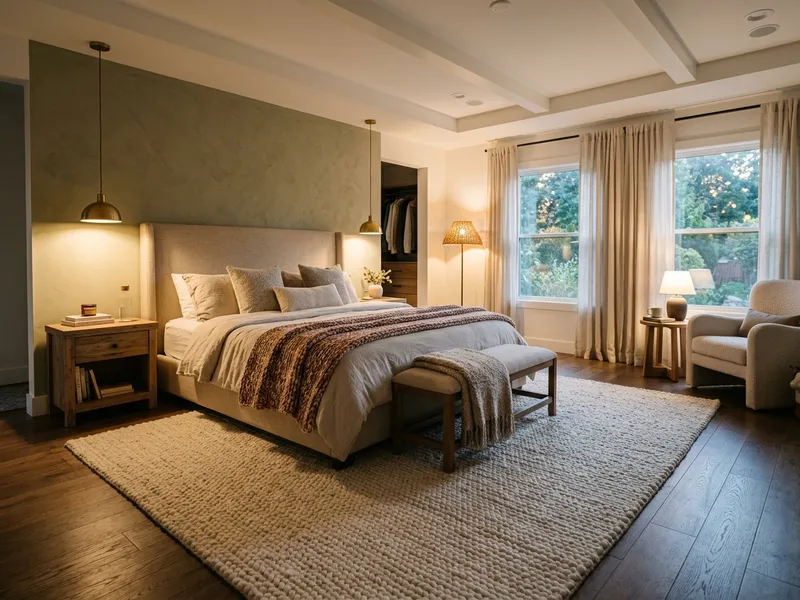
You do not need a colossal rug that reaches all the way to the baseboards behind your couch. The most popular, cost-effective arrangement is placing just the front legs of your sofa and accent chairs on the rug.
Tucking the front feet about 6 to 8 inches onto the weave anchors the rug securely so it will not slide around, while connecting all seating elements into one unified layout.
Cozy, Practical Fibers for Homes with Pets & Kids
If your home is bustling with dogs, cats, or young kids enjoying movie-night snacks, choosing the right weave makes everyday life effortless.
Low-pile polypropylene rugs and flatweave cotton/wool kilims are incredibly durable, do not shed, and can be spot-cleaned in seconds with a damp cloth and mild dish soap. For those seeking earthy, organic textures, soft jute or sisal weaves introduce gorgeous warmth that pairs naturally with green houseplants and raw timber coffee tables.
Quick Guide: What Rug Size Fits Your Living Room?
| Living Room Size | Typical Sofa Size | Ideal Rug Dimensions | Furniture Placement |
|---|---|---|---|
| Compact Living Room | 2-seater sofa (60 to 75 inches) | 5' x 8' or 6' x 6' (approx. 1.5m x 2.4m) | Front legs of sofa resting on rug with lateral overhang |
| Medium Living Room | 3-seater or Chaise sofa (85 to 100 inches) | 8' x 10' (approx. 2.4m x 3.0m) | Front legs of sofa plus side armchairs resting on rug |
| Large Open-Plan Living | Sectional L-shape (110 to 140 inches) | 9' x 12' or 10' x 14' (approx. 2.7m x 3.6m+) | All furniture pieces (sofa, chairs, tables) 100% on the rug |
| Dining Room | 4 to 6-seat dining table | Table size + 24 to 30 inches on all sides | Allows pulling chairs back without rear legs falling off |
Frequently Asked Questions on Area Rugs
Do all sofa legs need to sit completely on top of the area rug?
Not at all. The most popular and practical designer rule is placing just the front legs of your sofa and accent chairs on the rug (about 6 to 8 inches inward). This effortlessly anchors the seating group while keeping rug size manageable.
Which rug fiber is easiest to maintain with pets and young children?
Low-pile polypropylene and flatweave wool/cotton kilims are top performers. They do not trap pet hair or dust mites easily and can be wiped clean in minutes with mild soap and water.
How do I prevent an area rug from slipping on smooth hardwood or tile floors?
Always lay down a textured rubber or felt rug pad underneath. In addition to preventing accidental slips and trips, it protects your flooring and adds a plush layer of cloud-like cushioning underfoot.
How can I preview area rugs in my exact living room before buying online?
Take a photo of your living room with your smartphone and upload it to the Arquitet IA application. You can test various rug dimensions, textures, and patterns in realistic 3D in seconds.
Try Rugs in Your Living Room with Arquitet IA
Want to see exactly which rug size, pattern, and texture looks best under your sofa before ordering online? Take a smartphone photo and preview 3D concepts with Arquitet IA in real time.
Simulate Rugs in App →