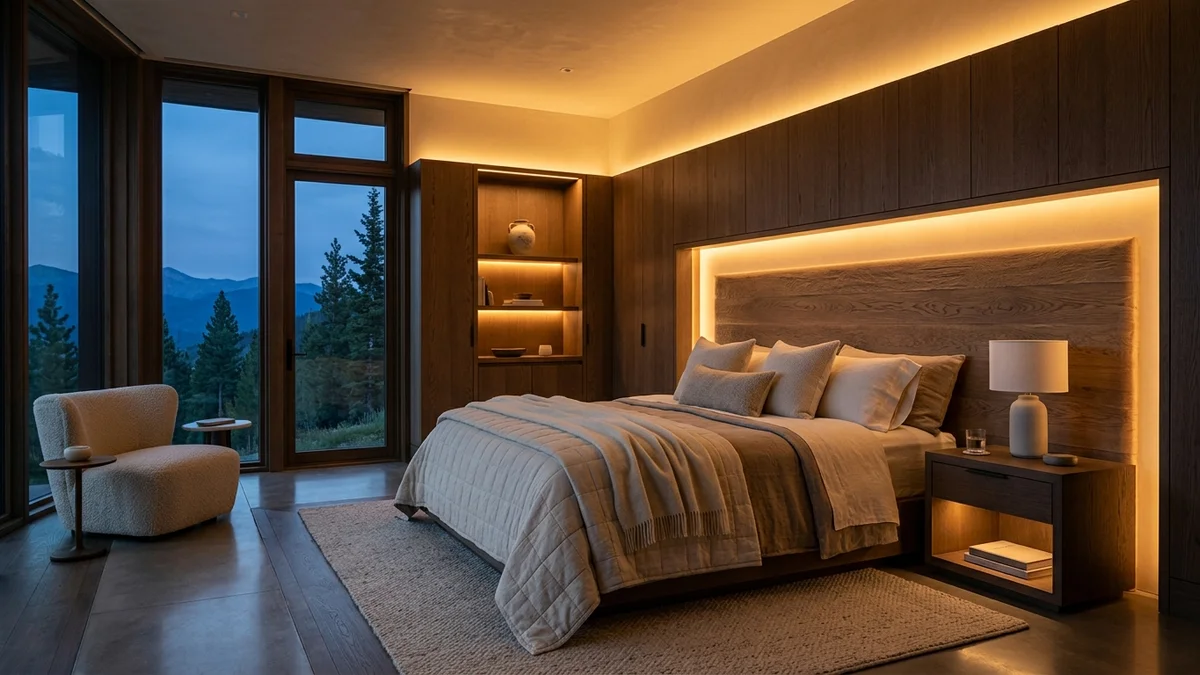
Have you ever felt an unexpected surge of fatigue midway through a workday at your computer, or struggled to fall asleep despite feeling physically exhausted in bed? The answer often lies in overhead ceiling lights. For millennia, human biology evolved under natural sunlight—waking with golden morning rays, producing under mid-day brightness, and winding down at twilight. Circadian biological lighting brings this natural rhythm back into indoor spaces.
Understanding Circadian Lighting and Human Hormones
The human body relies on an internal 24-hour biological clock known as the circadian rhythm. This internal timer regulates body temperature, metabolism, and the secretion of two crucial hormones: cortisol (which promotes alertness and focus) and melatonin (which triggers deep restorative sleep).
Human eyes contain specialized photoreceptors sensitive to light color wavelengths. Nighttime exposure to cold white light misleads the brain into believing it is still mid-day, suppressing melatonin release and causing insomnia. Conversely, spending full workdays under weak warm lighting induces drowsiness and lowers mental sharpness.
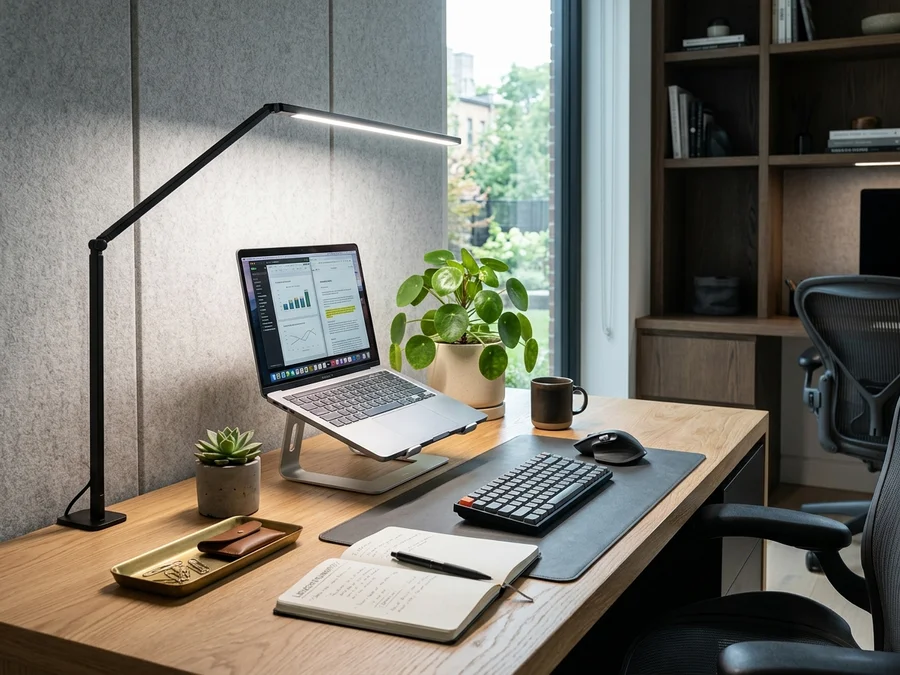
Morning focus: crisp cool light during work hours sharpens mental acuity and boosts daily output.
Cool White Light: Focus and Productivity in the Home Office
To configure an intelligent home workspace, lighting designers recommend color temperatures between 4000K and 5000K during morning and early afternoon hours.
This light spectrum, mimicking bright clear daylight, keeps the mind energized, reduces visual strain from computer monitors, and encourages natural cortisol production.
Strategic placement matters as well: blend soft overhead ambient lighting with an adjustable desk lamp directed onto your work surface to eliminate harsh shadows while typing and reading.
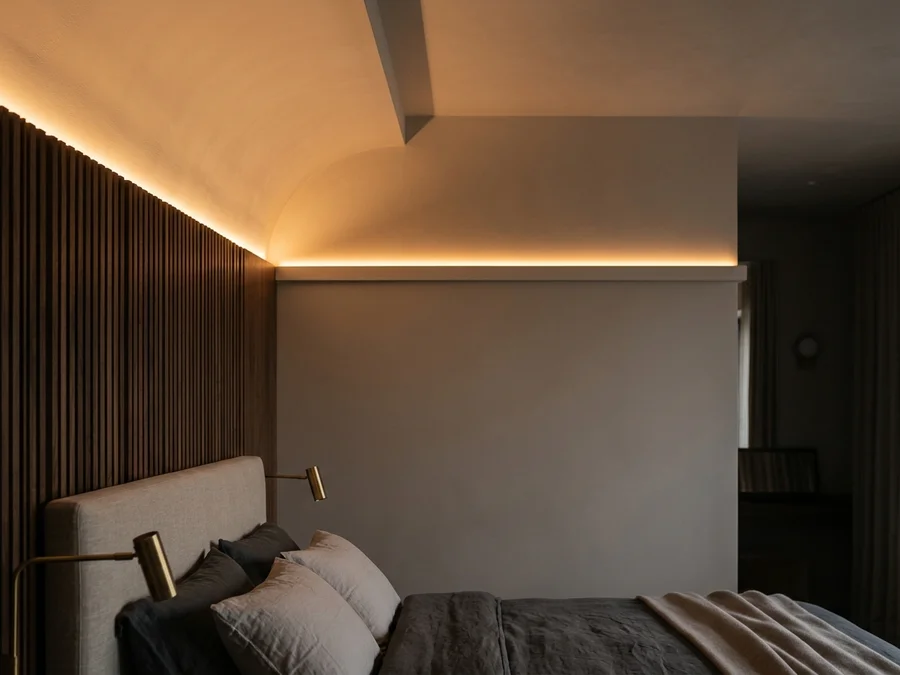
Evening tranquility: warm hidden LED strips prepare your mind for deep rest at night.
Warm Indirect Light: The Secret to Restful Sleep in the Bedroom
As the sun sets, indoor lighting must shift rhythms. During late afternoon and evening, bedroom and living room illumination should transition toward warm tones (between 2200K and 2700K), echoing the gentle glow of sunset or candlelight.
To prevent eye glare, indirect lighting is ideal. Utilizing plaster cove ceilings with hidden LED strips, wall sconces directed upward, or bedside lamps with fabric shades diffuses light evenly across surfaces.
This soothing glow signals your nervous system that the workday is complete, unlocking natural melatonin release so you fall asleep effortlessly and wake up recharged.
How to Automate Smart Lighting Without Major Renovations
The good news is that implementing biological lighting requires no major demolition. Smart bulbs featuring *tunable white* technology (shifting smoothly from cool to warm tones via smartphone apps) fit into existing lamp fixtures.
You can set simple automated schedules: at 8 AM, lights glow crisp and bright; by 6 PM, brightness gradually softens; and by 9 PM, illumination settles into a gentle golden amber hue.
Simulate Your Home Lighting with Arquitet IA
Want to see how warm indirect lighting or a cove ceiling design would look in your bedroom before buying new fixtures? The **Arquitet IA** app makes lighting design fast and simple.
Capture a photo of your room with your smartphone, and the app renders realistic circadian lighting scenarios, cove lighting details, and wall sconce layouts on your screen instantly.
Frequently Asked Questions
What is biological or circadian lighting?
It is a lighting system designed to mirror natural daylight cycles, adjusting color temperature and brightness throughout the day to regulate internal biological clocks, hormones, and energy levels.
What light color is best for daytime work and productivity?
Cool crisp white light (between 4000K and 5000K) mimics mid-day sunshine, keeping the mind alert, enhancing focus, and suppressing melatonin secretion during work hours.
How should bedroom lighting be set up in the evening?
At night, lighting should be warm and indirect (between 2200K and 2700K) at dimmed levels. This signals to the brain that night has arrived, prompting natural melatonin release.
Do I need major home renovations to install circadian lighting?
No. Smart bulbs with tunable white technology can be screwed into existing lamp sockets or combined with smart LED strips in current light fixtures and cove ceilings.
How does the Arquitet IA app help plan home lighting?
With the Arquitet IA app, photograph your bedroom or home office to preview different light temperatures and indirect illumination setups in real-time on your phone screen.
📱 Preview Perfect Lighting with AI
Want to transform your room atmosphere? Download Arquitet IA to simulate cool daylight and warm evening lighting on your phone photo.
Try Arquitet IA Free