Picture the infectious excitement of 1920s Paris: vintage champagne served in faceted crystal glasses, warm golden lighting reflecting off mirrored walls, and jazz melodies filling grand salons. Art Deco design was born as a celebration of modern progress, optimism, and uncompromised luxury. Today, this iconic style is enjoying a thoughtful renaissance, showing that a touch of bold theatricality can live in total harmony with modern comfort.
Sharing architectural lineage with the tailored symmetry of Modern Neoclassical style and the refined composure of Quiet Luxury, Art Deco delivers captivating visual presence.
Bold Geometry: Chevrons, Stepped Arches, and Sunburst Motifs
The unmistakable hallmark of Art Deco is its celebration of striking geometric precision.
Unlike the organic flowing curves of Art Nouveau, Deco champions clean stepped lines, repeating chevron patterns, and iconic fan-shaped sunbursts. These shapes become showstoppers when applied as bespoke fluted wood wall paneling, metallic foil wallpapers, or beveled mirrors that act like wall jewelry.
The Material Palette: Deep Velvet, Brushed Brass, and Dark Marble
The rich sensory appeal of Deco lies in the deliberate interplay of contrasting textures:
Curved channel-tufted sofas upholstered in teal, emerald green, or deep midnight blue velvet invite relaxation, paired with Nero Marquina black marble cocktail tables and warm brushed brass edging. The interplay of cool metallic glint against the softness of plush velvet creates an inviting, upscale cocoon.
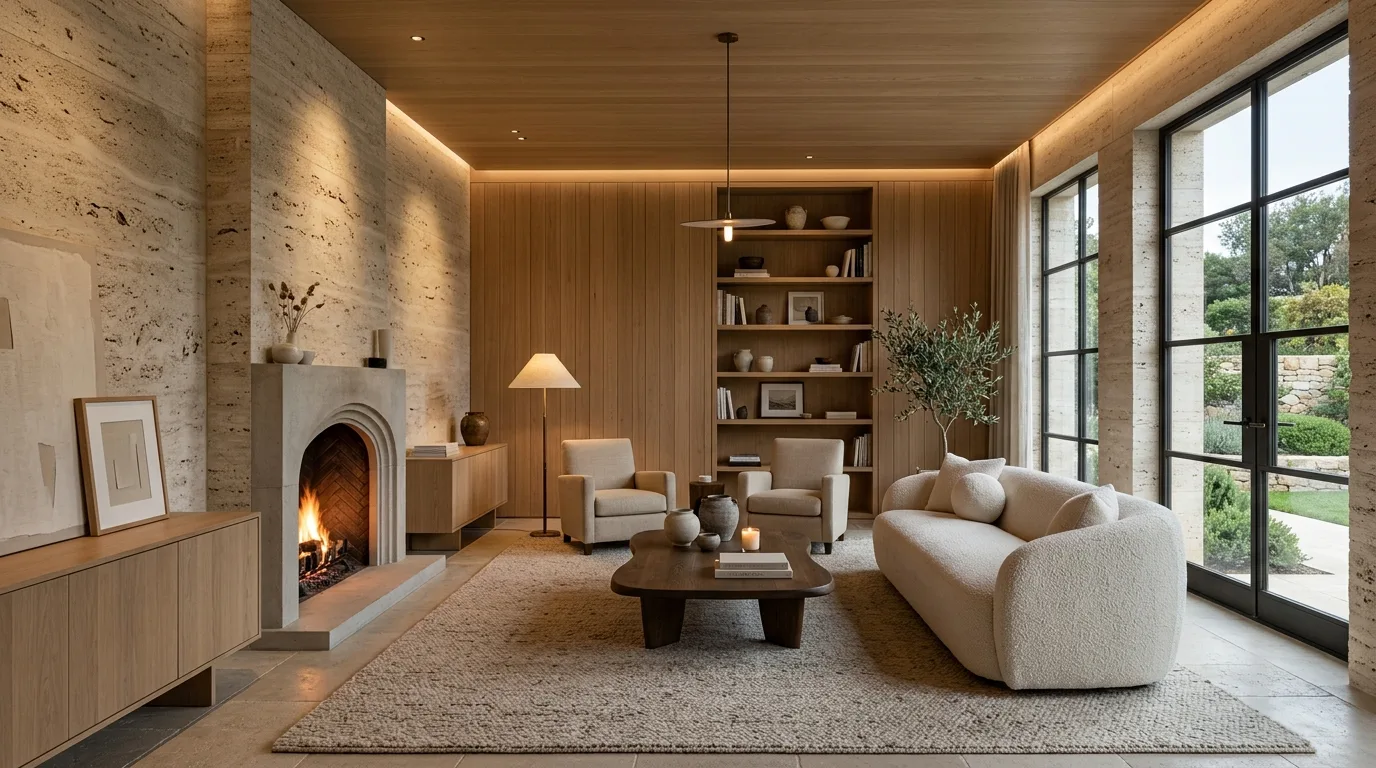
Atmospheric Lighting: Sculpting the Evening Mood
In an Art Deco space, lighting is far more than functional illumination — it is the centerpiece of the room's emotion.
Following principles from our compact space lighting guide, replace harsh overhead downlights with fluted glass wall sconces and alabaster table lamps running warm 2700K LED filament bulbs. The diffused glow reflects off warm metals, creating a cozy and glamorous ambiance.
How to Adopt Art Deco in Modern Apartments with Restraint
To keep your home looking fresh rather than like a stage set, curate focal moments with intention:
Design an impactful accent wall in the foyer or powder room with a striking geometric wall cladding, swap in brushed brass cabinet hardware, and anchor the sitting area with a sunburst mirror. A few thoughtful details bring effortless sophistication.
Overview: Key Elements of Modern Art Deco
| Element | Traditional 1920s Feature | Modern Adaptation | Practical Styling Tip |
|---|---|---|---|
| Furniture | Stepped lacquer cabinets & curved sofas | Sculptural boucle & velvet armchairs | Anchor the living room with one curved seat |
| Metals | High-polish gold and heavy bronze | Brushed brass, champagne, matte steel | Cabinet handles, table bases & light trims |
| Surfaces | Heavy Nero Marquina & Carrara marble | Leathered quartzite & sintered stone | Coffee table tops and bathroom vanities |
| Lighting | Faceted crystal chandeliers & sconces | Opal glass globes with warm 2700K LED | Indirect sconces for cozy evening mood |
Frequently Asked Questions
What are the defining characteristics of Art Deco interior design?
Striking geometric patterns (chevrons, triangles, sunbursts), gleaming noble metals (brushed brass, polished gold), high-contrast materials (black Nero Marquina marble), high-gloss lacquers, and tactile opulent fabrics like deep velvet.
How can I incorporate Art Deco into a small apartment without visual clutter?
Focus on deliberate accents: a sunburst geometric mirror over a credenza, sculptural frosted glass globe sconces with brass backplates, and emerald or sapphire velvet accent cushions on a neutral modern sofa.
What lighting works best for Art Deco ambiance?
Layered warm ambient lighting (2700K) using fluted or reeded glass wall sconces, brass floor lamps, and marble-base table lamps to create a cozy, intimate evening glow.
How can I preview Art Deco decor in my home with Arquitet IA?
Take a photo of your living room or bedroom with the Arquitet IA app. You can test geometric wallpapers, gold molding, and curved velvet furniture in photorealistic 3D within seconds.
Visualize Art Deco Glamour in Your Own Space
Wondering how brushed brass trims, sunburst mirrors, and jewel-toned velvet would look in your home before renovating? Snap a photo with the Arquitet IA app and generate photorealistic 3D designs in seconds.
Try Art Deco Room Simulator in App →