Who hasn't admired photographs of classic Parisian apartments with soaring high ceilings, decorative wall moldings, marble mantelpieces, and herringbone oak floors? For generations, people assumed such aristocratic refinement belonged exclusively to 18th-century grand estates. Today, Modern Neoclassical design borrows that timeless dignity and translates it effortlessly into modern urban apartments, proving that history and contemporary living can coexist in sublime harmony.
Closely aligned with the understated prestige of Quiet Luxury architecture and the serene comfort of Warm Minimalism, modern neoclassical design relies on curated restraint: clean-lined wall profiles, soothing color palettes, and enduring natural stones that never age.
Modern Boiserie Moldings: Structured Wall Elegance
Classic French boiseries originally adorned royal salons to insulate and beautify stone palaces.
In contemporary apartments, the golden rule is monochromatic harmony: painting the framed moldings in the exact same color and matte sheen as the surrounding wall (using soothing tones like off-white, greige, linen, or soft fawn). As outlined in our guide to interior wall cladding materials, this subtle relief adds layered tactile depth without visual clutter.
Noble Marble: The Enduring Grandeur of Raw Stone
Nothing conveys timeless nobility quite like genuine marble. In a contemporary living room renovation, marble takes center stage on low coffee tables, kitchen island waterfalls, and sleek bioethanol fireplace surrounds.
Varieties like Calacatta Gold, Statuario, and honed Navona Travertine with soft satin finishes (avoiding dated high-gloss plastic sealers) provide an authentic mineral presence that holds its value for generations.
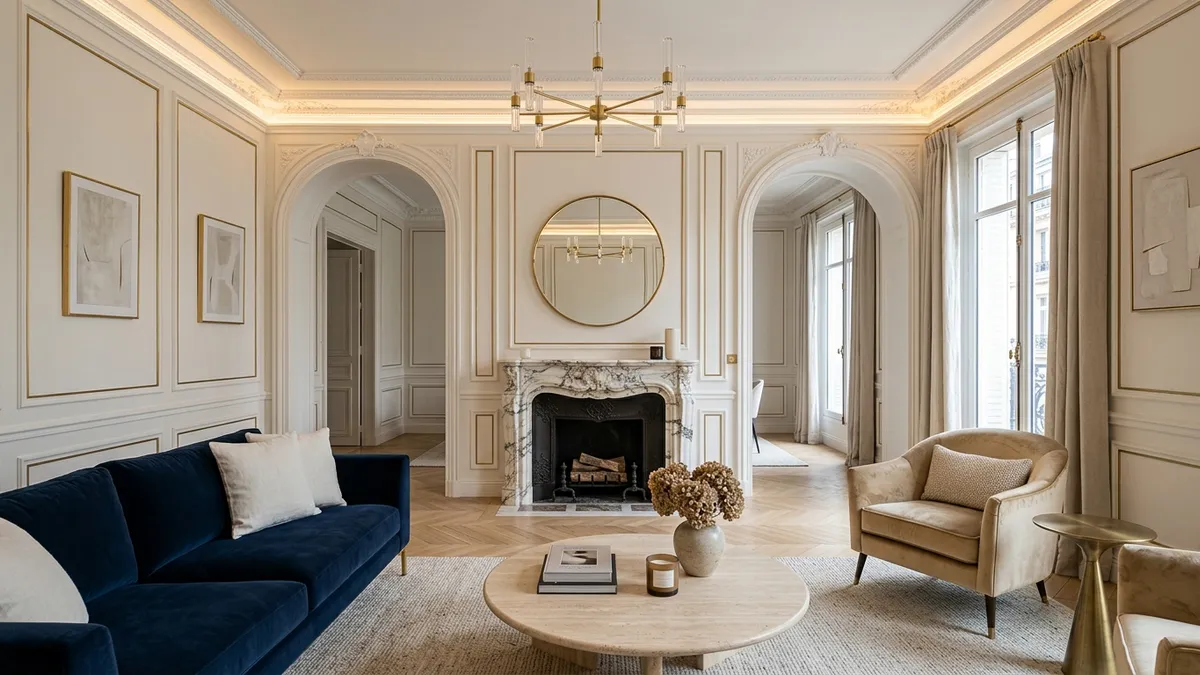
Stepped Crown Cornices & Indirect Ambient LED Lighting
Contemporary crown moldings have abandoned bulky, ornate baroque swirls in favor of sleek, stepped architectural cornices.
By concealing warm 2700K LED strips inside ceiling drop-coves, light is cast upwards across the ceiling, eliminating harsh downward glare and bathing the entire living space in a gentle, relaxing evening glow.
Curved Velvet Seating & Brushed Brass Details
To soften the crisp geometric lines of framed walls, modern neoclassical furnishings favor soft, organic curving silhouettes.
Curved sofas upholstered in cotton velvet or nubby bouclé, plush accent armchairs, and subtle accents in brushed champagne brass (instead of garish yellow gold) complete an interior that feels warm, cultured, and deeply inviting.
Quick Guide: Baroque Classic vs. Modern Neoclassical
| Design Element | Traditional Baroque Classic | Modern Neoclassical | Apartment Living Experience |
|---|---|---|---|
| Wall Moldings & Boiserie | Gilded floral arabesques and heavy swirls | Clean-lined geometric profiles in wall color | Understated elegance with expansive visual space |
| Stone & Marble | High-gloss polished with golden frames | Honed satin natural marble and travertine | Serene, timeless mineral authenticity |
| Lighting Fixtures | Massive dripping crystal chandeliers | Concealed cove LEDs & tailored linen shades | Gentle eye comfort and soothing ambiance |
| Color Palette | Heavy burgundy, heavy gold & dark green | Off-white, warm sand, greige & muted navy | Natural daylight reflection & mental peace |
Frequently Asked Questions on Modern Neoclassical
How can I incorporate boiserie moldings into a compact apartment without overcrowding it?
The secret is monochromatic painting: finish the wall moldings in the exact same color and sheen as the background wall in soft, light neutrals (such as off-white, warm greige, or soft stone). This creates subtle, structured shadows without visually shrinking the space.
What is the difference between traditional plaster moldings and modern polyurethane cornices?
Traditional plaster requires wet mixing, drying time, and specialized plaster artisans. Modern high-density polyurethane moldings arrive pre-primed, ultra-lightweight, and can be bonded cleanly with polymer adhesive in a single afternoon.
Which marble varieties suit contemporary neoclassical interiors best?
White natural marbles with soft, fluid grey or gold veining—such as Calacatta Gold, Statuario, and honed Navona Travertine—especially in honed or satin finishes rather than reflective high gloss.
How can I preview modern neoclassical designs in my rooms using Arquitet IA?
Take a photo of your living room or bedroom with your smartphone and upload it to the Arquitet IA application. You can preview custom boiseries, marble surrounds, and ceiling cornices in 3D in seconds.
Visualize Boiseries & Crown Moldings with Arquitet IA
Want to see how Parisian boiserie wall moldings, marble surrounds, and indirect lighting look in your living room before hiring contractors? Snap a photo with your phone and generate 3D concepts with Arquitet IA in real time.
Simulate Neoclassical in App Free →