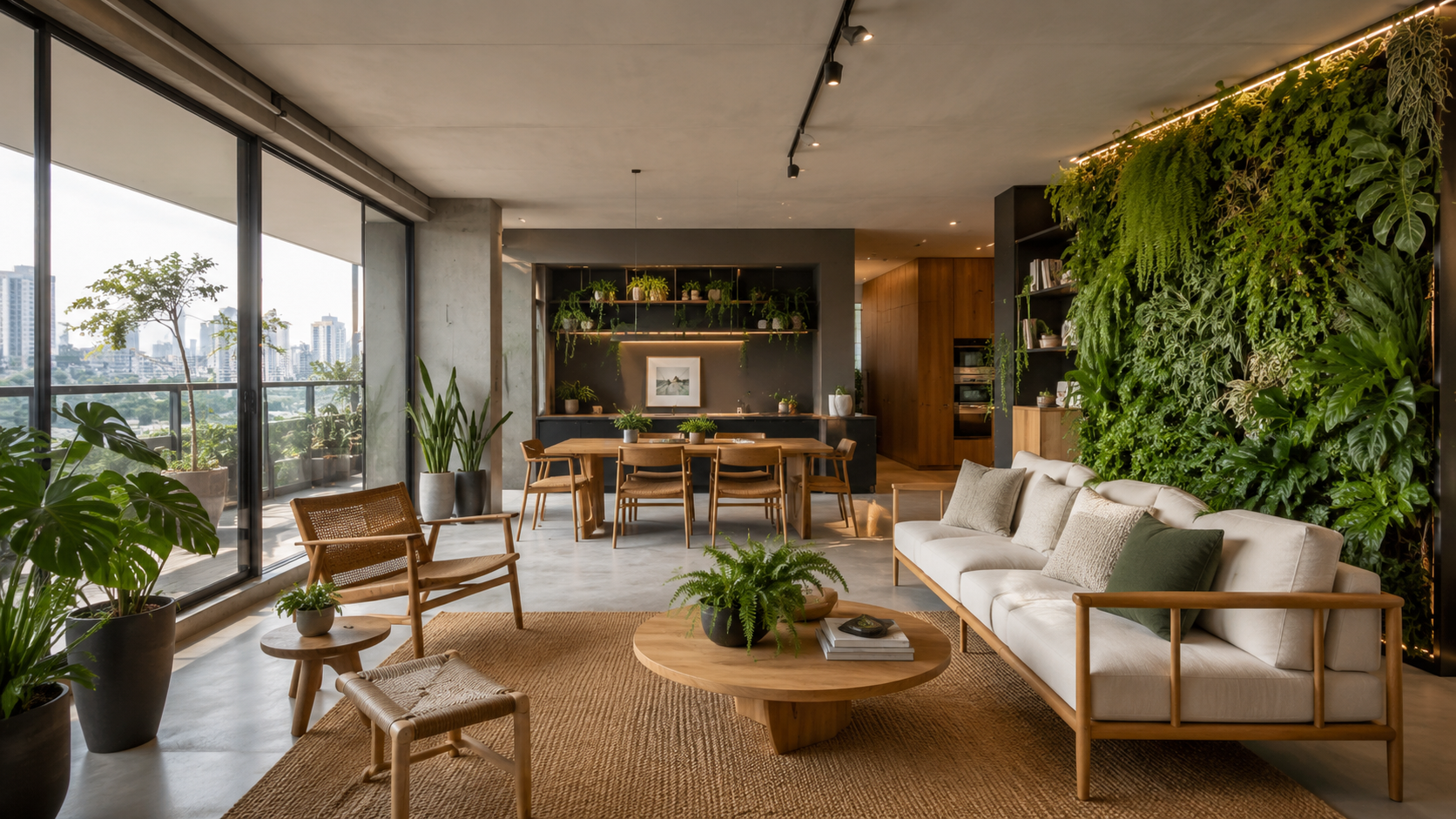
It is no secret that a peaceful walk through a sunlit, leafy park recharges drained batteries like nothing else. We humans carry an innate, deep-seated love for the living world—and that is the heart of biophilic design. Far from being a fleeting design buzzword, it is simply the joyful practice of inviting nature to live inside with us, transforming ordinary apartment walls into a refreshing oasis of green leaves, clean air, and grounded tranquility.
The best part? You do not need a green thumb or a big budget to fill your home with natural vitality. With a few hardy, forgiving plants, thoughtful use of sunlight, and warm, tactile materials, your apartment will feel like a brand-new sanctuary.
A Personal Forest in the Heart of the City
Urban living surrounds us with concrete, pavement, and glowing digital displays all day long. When you unlock your front door and are greeted by healthy potted greenery, your eyes instantly relax.
Houseplants act as natural air purifiers and humidifiers, filtering microscopic dust particles and infusing the atmosphere with gentle freshness. Watching a brand-new glossy leaf unfurl on a quiet Sunday morning brings a wonderful sense of calm and reconnects us with nature's patient, steady rhythm.
Hardy Companion Plants That Practically Care for Themselves
If you worry about plant care during busy workweeks, start with nature's most resilient champions.
The ZZ Plant (Zamioculcas zamiifolia) is a beloved favorite: boasting glossy, wax-like emerald leaves, it thrives in lower-light corners and only needs watering once every ten to fifteen days. The classic Golden Pothos is another joyful friend: place it high on a bookshelf or in a hanging pot, and its lush vines will cascade down in a verdant waterfall that grows effortlessly.
The Dance of Natural Daylight and Fresh Breezes
Sunlight is the magic ingredient that gives soul to any living space. Cracking the windows in the morning to let fresh air circulate and swapping heavy, dark curtains for airy sheer linen lets soft, diffused light flood your rooms.
Watching leaf shadows gently dance across your walls as the sun moves across the sky reconnects your mind with natural circadian rhythms, helping you stay alert during the day and unwind effortlessly at dusk.
Living Textures: Woven Fibers, Timber & Handmade Pottery
Biophilic design extends beyond potted plants—it encompasses everything you can touch and feel. Furniture made of wood with visible grain patterns, woven seagrass storage baskets, natural jute rugs, and raw cotton cushions bring grounding organic textures into your home.
Handcrafted terracotta and ceramic pots add the poetically imperfect beauty of the earth to tables and counters. When you combine these tactile materials with living plants and warm lighting, your home becomes a deeply welcoming haven you will never want to leave.
Easy Plants to Start Your Urban Jungle
| Plant Name | Light Requirement | Watering Frequency | Where It Looks Best |
|---|---|---|---|
| ZZ Plant (Zamioculcas) | Low to moderate indirect light | Every 10 to 15 days (very drought tolerant) | Living room corners, hallways, and entry consoles |
| Golden Pothos | Bright indirect to medium light | 1 to 2 times weekly when soil dries | High floating shelves, bookcases, and hanging macramé |
| Snake Plant (Sansevieria) | Tolerates full sun to deep shade | Every 10 to 14 days | Beside the living room sofa or bedroom dresser |
| Philodendron Martianum | Filtered daylight & moderate humidity | Once a week | On sideboards, credenzas, or low coffee tables |
Frequently Asked Questions on Biophilic Living
What is biophilic design in simple terms?
It is the design philosophy of connecting our everyday indoor rooms with the living natural world: through leafy house plants, abundant daylight, fresh circulating breezes, and tactile natural materials like wood, stone, and woven fibers.
Which indoor plants are best for beginners with busy schedules?
ZZ plants (Zamioculcas zamiifolia), snake plants (Sansevieria), golden pothos, and cast-iron plants are virtually indestructible. They thrive in moderate indirect light and only need watering when the soil feels completely dry to the touch.
How can I incorporate biophilic design into a small apartment without a balcony?
Use wall-mounted plant shelves or hanging ceiling hooks to keep floor space clear, hang airy sheer linen curtains that maximize daylight, and bring in natural textures like clay pottery, jute rugs, and raw timber.
How can I preview plant styling and green walls in my home using Arquitet IA?
Simply take a photo of your room with your smartphone and upload it to the Arquitet IA application. In seconds, it produces realistic 3D renderings showcasing plant arrangements, vertical walls, and organic woodwork tailored to your layout.
Style Your Green Haven with Arquitet IA
Want to see how your living room would look with lush hanging plants, vertical green panels, and warm timber accents? Snap a quick photo with the Arquitet IA app and generate 3D concepts with AI in seconds.
Simulate Green Living in App →