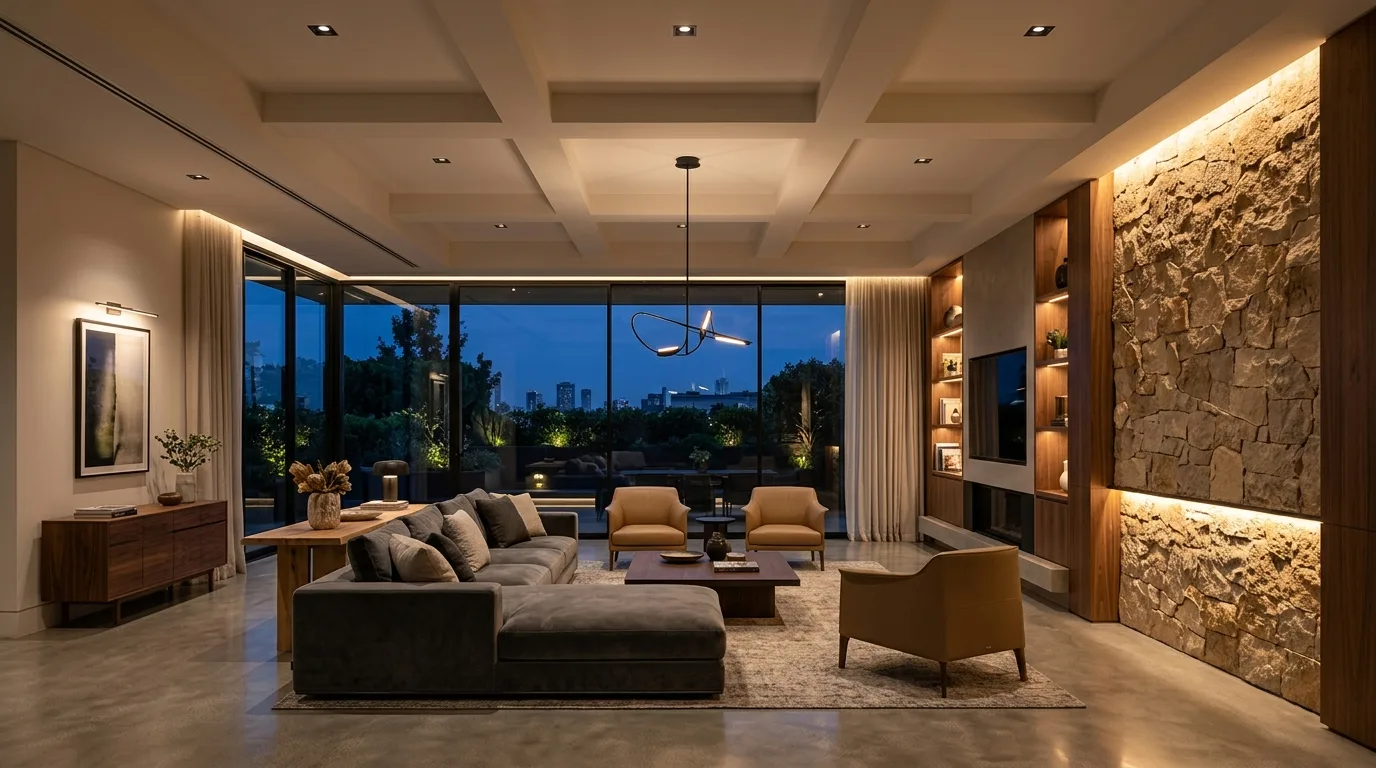
Lighting is the invisible medium that dictates the spatial emotion, volume, and material authenticity of interior architecture. A meticulously designed luminotechnical scheme elevates noble materials, expands visual boundaries, and aligns indoor living with natural circadian cycles. Exceptional lighting avoids flat, floodlit ceiling arrays in favor of an orchestrated hierarchy: diffuse ambient glow, focused task lighting, and theatrical accent highlights.
"Light does not merely banish shadows; it carves architectural form, honors surface textures, and sets the psychological cadence of each living space." — Principles of Architectural Lighting.
Color Temperature & Visual Psychology: From Amber 2700K to Neutral 4000K
Measured on the Kelvin scale (K), color temperature defines the spectral hue of light emissions and exercises profound influence over human biology and mood.
Warm Light (2700K to 3000K): Emitting an amber, sunset-like glow, warm light triggers the parasympathetic nervous system, inducing relaxation and domestic intimacy. It is the premier choice for living rooms, master bedrooms, and dining spaces, accentuating the grain of natural hardwoods and linen drapery.
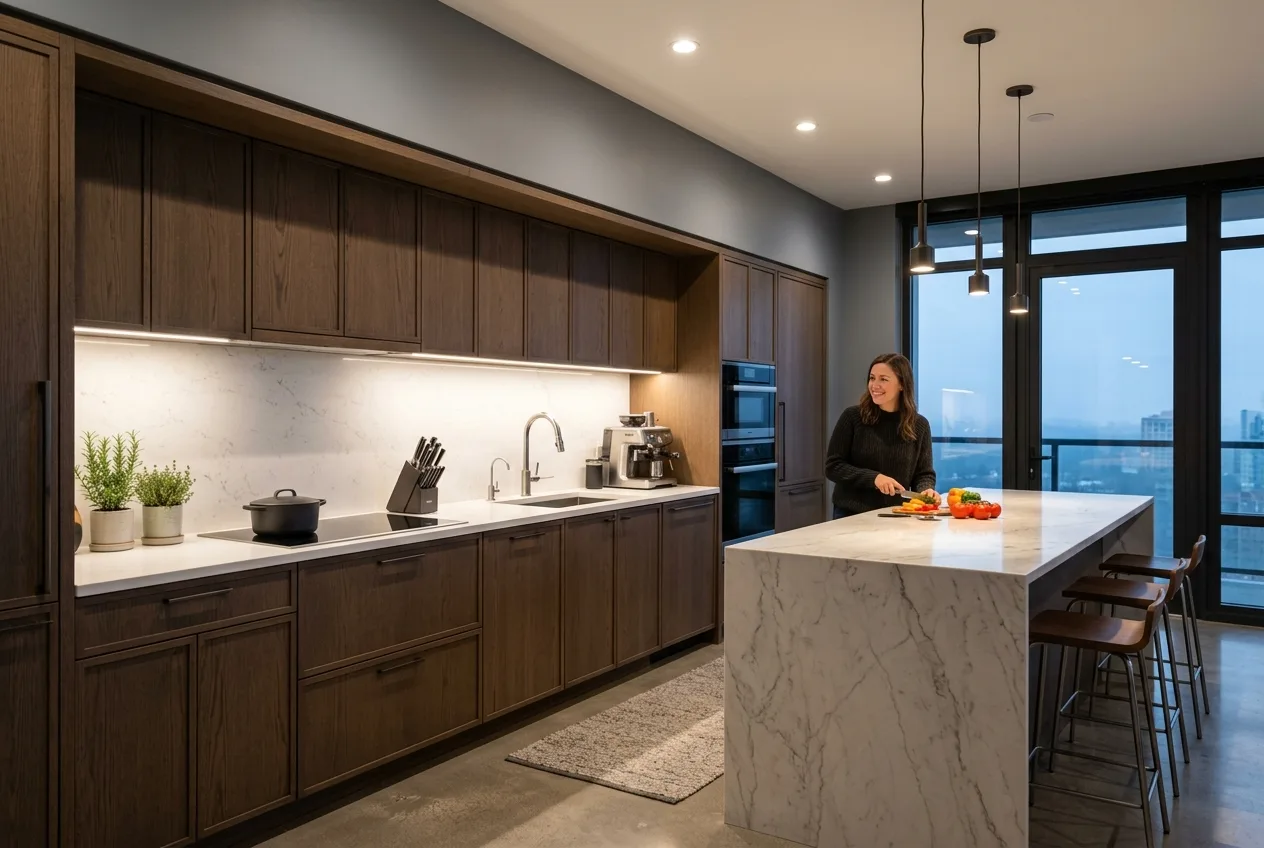
Neutral Light (4000K): Replicating crisp midday daylight without harsh blue peaks, neutral light maintains alertness without causing ocular fatigue. It is recommended for culinary prep countertops, home office desks, and grooming vanities.
COB LED Technology & High Color Rendering (CRI > 90)
Recent advancements in solid-state lighting brought Chip-on-Board (COB) linear ribbons to the forefront. Unlike traditional SMD strips whose widely spaced diodes create dotting patterns across slim aluminum profiles, COB strips feature hundreds of micro-chips coated under an unbroken layer of phosphor, casting a flawless, dotless sheet of illumination.
Equally vital is the Color Rendering Index (CRI). Inexpensive luminaires with CRI below 80 cast murky grayish or greenish undertones. Specifying fixtures with CRI > 90 guarantees that stone veining, curated art pieces, and custom timber cabinetry appear with vivid, lifelike accuracy.
Architectural Wall Grazing: Revealing Mineral Textures
The technique of wall grazing entails mounting linear fixtures or narrow-beam recessed spots close (5 to 10 cm) to a vertical surface.
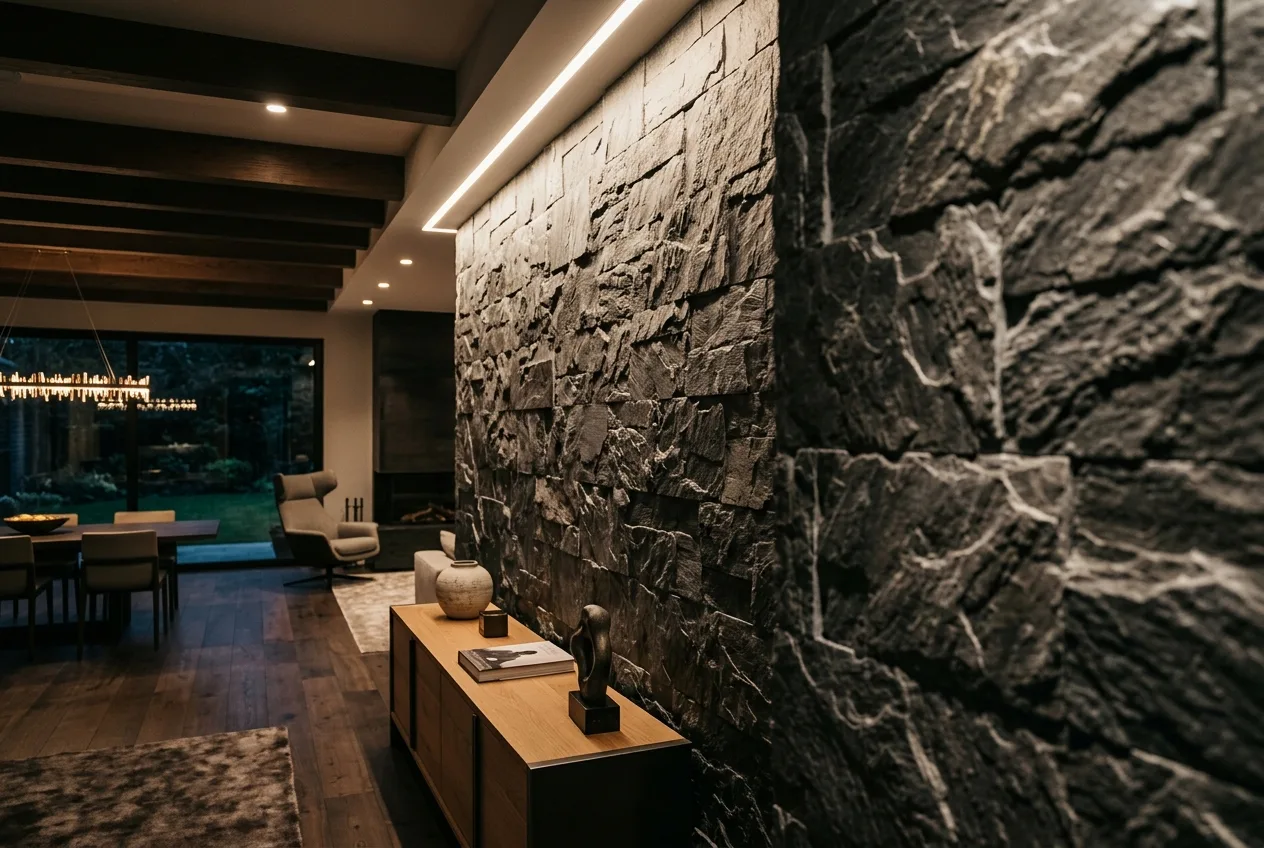
By washing down parallel to the wall at an acute angle, the beam generates delicate micro-shadows that celebrate the tactile dimensionality of rough-split stone, fluted plaster, and sand-textured dune finishes.
Layered Scene Control & Independent Circuits
Mastering residential lighting relies upon zoned switching and smooth dimming. Leaving an indirect cove active while extinguishing downward spotlights naturally and fluidly transitions an open-plan salon from a vibrant entertaining lounge into a calming late-evening sanctuary.
Explore related insights in our guides on Smart Mirrors & Circadian Rhythms, Wavy Sand Textured Plaster Lighting, and Lighting Compact Living Spaces.
Simulate Lighting Scenes and LED Features with AI
Curious to see how ceiling coves, 2700K vs 4000K temperatures, and wall grazing will transform your living room or bedroom? Arquitet IA generates photorealistic lighting simulations in seconds.
Try Simulator in Arquitet IAFrequently Asked Questions
What is the optimal color temperature for living rooms and bedrooms?
Warm light between 2700K and 3000K is ideal for living areas and master bedrooms. It promotes melatonin production, fosters circadian relaxation, and enhances the warm richness of natural timber and linen fabrics.
What is the technical advantage of COB LED strips over standard SMD tape?
COB (Chip on Board) LED strips pack hundreds of micro-diodes under a continuous phosphor layer, creating an unbroken, dotless ribbon of light without unsightly diode spotting through slim aluminum diffusers.
Why is the Color Rendering Index (CRI) critical in home lighting?
CRI measures how accurately a light source reveals the true colors of objects compared to natural daylight. Specifying fixtures with CRI > 90 ensures wall paints, marbles, food, and upholstery maintain authentic, rich hues without greenish or grayish casts.