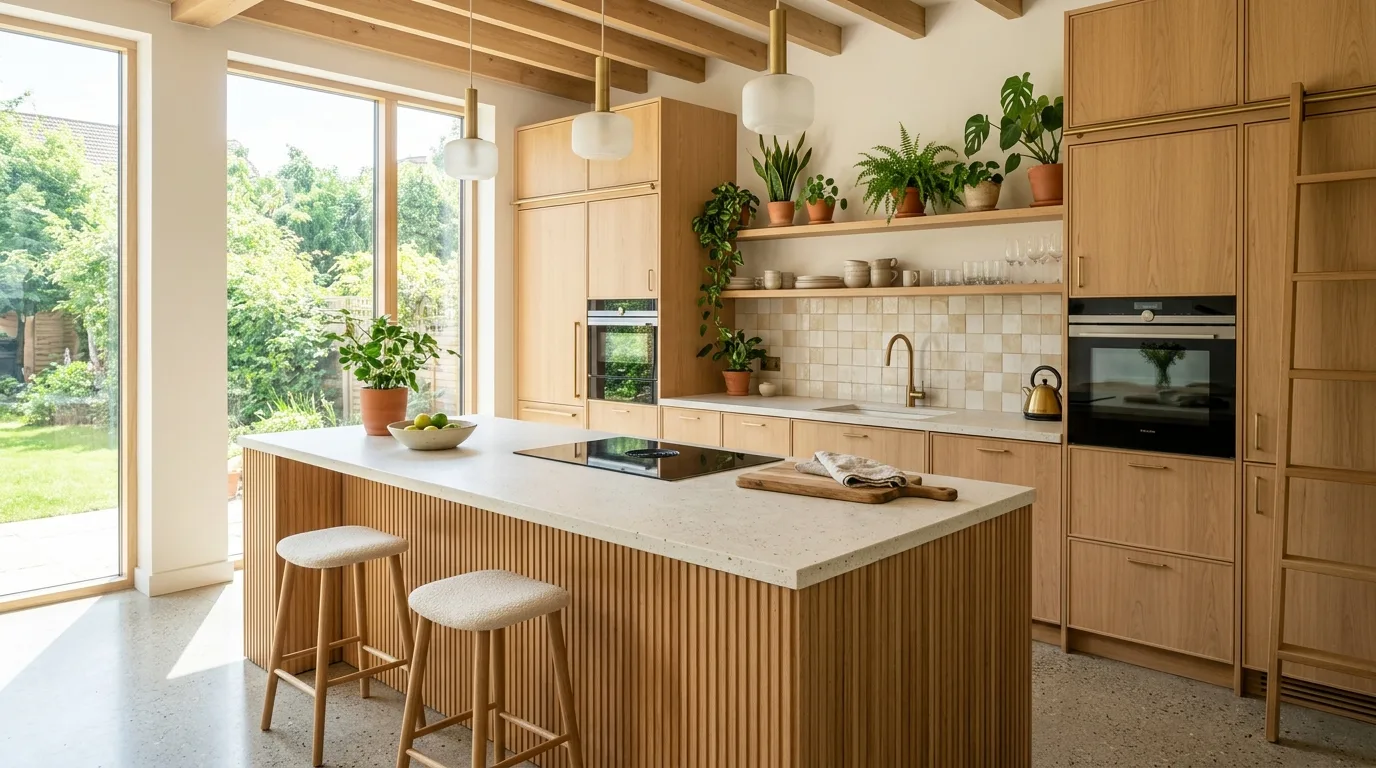
Sustainability in contemporary architecture has progressed far beyond conceptual marketing to become a foundational mandate of occupational safety, environmental governance, and supply chain accountability. The residential sector is currently navigating one of its most pivotal technological transitions: the worldwide regulatory restriction and outright prohibition of traditional high-silica engineered quartz surfaces.
Spearheaded by Australia’s landmark 2024 national ban on engineered stone fabrication—with complementary regulatory oversight gaining rapid momentum across the European Union and the United States—environmental agencies have catalyzed a major leap in materials science. Prime residential commissions are transitioning toward circular bio-composites, pure mineral sintered stones, and low-embodied-carbon natural slabs.
The Crystalline Silica Crisis: Supply Chain Ethics in Focus
Engineered quartz surfaces manufactured over recent decades frequently contained up to 93% crystalline silica bound with polyester resins. During dry cutting, edge profiling, and mitering in fabrication facilities, fine respirable crystalline silica (RCS) dust was generated, causing an acute epidemic of silicosis among stonemasons.
This human toll compelled premier architecture practices to reevaluate their specifications. Discerning homeowners recognize that true architectural prestige cannot coexist with hazardous fabrication conditions. Thoughtful specification now requires building products that guarantee safety across every touchpoint of their lifecycle.
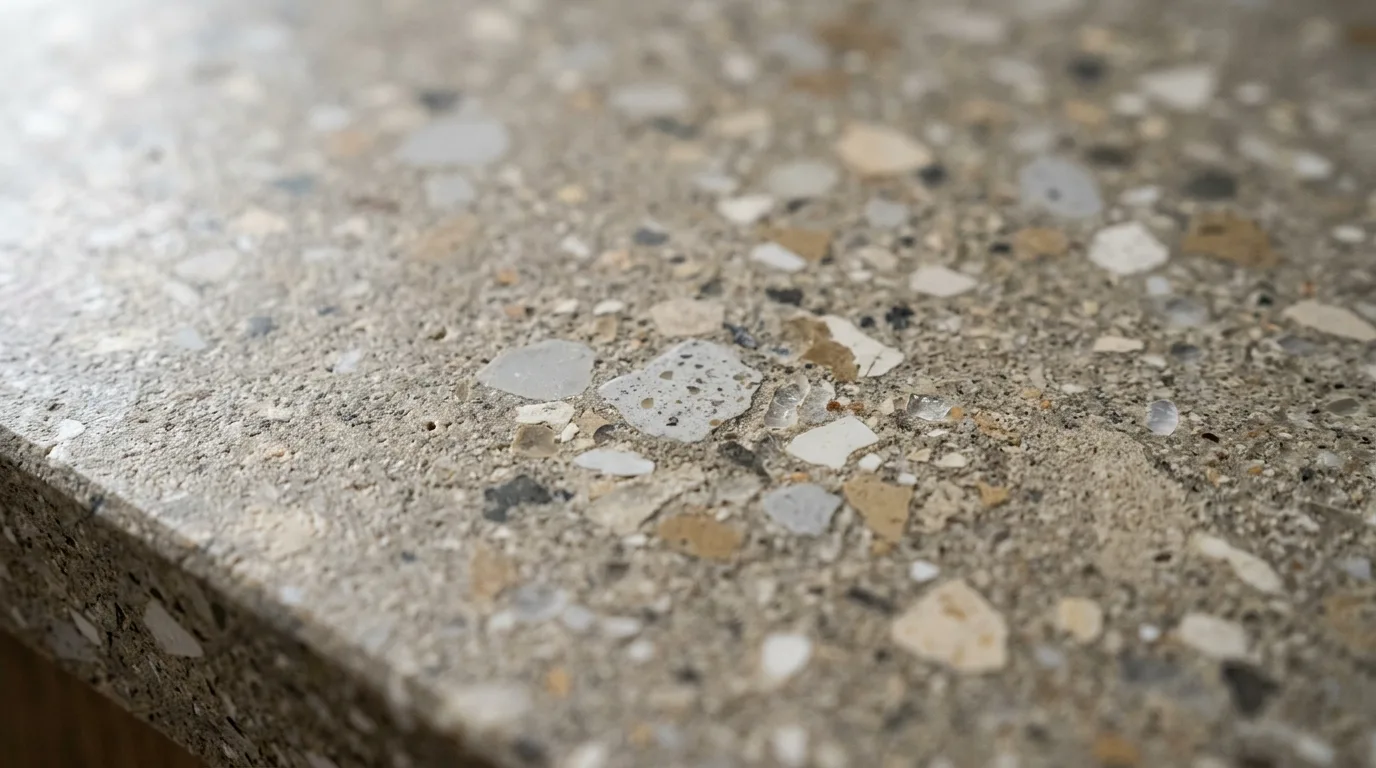
Material Vanguard: Low-silica eco-surfaces fuse post-consumer glass and circular minerals with a tactile velvet finish.
The Rise of Sintered Stone and Circular Bio-Composites
The architectural response to silica reduction centers on two key technological innovations:
- Ultra-Compact Sintered Stone: Formed through extreme compaction (exceeding 25,000 tons) and thermal sintering at over 1,200°C, these surfaces utilize only raw natural clays, feldspars, and mineral oxides. They contain zero synthetic polymer binders and emit no volatile organic compounds (VOCs).
- Low-Silica Bio-Composites: Next-generation solid surfaces that suppress crystalline silica below 10% or achieve zero silica content by substituting quartz with upcycled post-consumer glass, recycled ceramic chips, and bio-based resins.
- Traceable Natural Stone: Reclaimed or locally quarried granites and quartzites with transparent ethical supply chains, preserving centuries of geological longevity without artificial chemical processing.
Mechanical Hardness, Thermal Immunity, and Non-Porous Hygiene
Far from compromising practical utility, contemporary sustainable surfaces outperform legacy engineered quartz across essential performance metrics.
With water absorption rates under 0.05%, sintered mineral slabs are naturally impervious to acidic etchings from lemon juice, red wine, and culinary oils. They tolerate direct thermal contact from cookware at temperatures exceeding 300°C without resin scorching, and feature a Mohs hardness score of 7 to 8, providing daily scratch immunity against kitchen cutlery.
Essential Specification Guidelines for Sustainable Projects
When detailing gourmet kitchens, bespoke bathroom vanities, and entertaining bars, architects should verify:
Third-party verified Environmental Product Declarations (EPDs), cradle-to-cradle recyclability credentials, and low-VOC certifications such as Greenguard Gold to guarantee superior indoor atmospheric quality.
Frequently Asked Questions on Eco Surfaces
Why are traditional high-silica engineered stone surfaces being banned globally?
Fabricating and dry-cutting artificial quartz countertops containing up to 93% crystalline silica releases microscopic respirable dust, inducing rapid-onset silicosis among stonemasons. This prompted a complete national ban in Australia in 2024, followed by strict regulatory thresholds in Europe and the United States.
What are the leading sustainable alternatives for kitchen and bathroom countertops?
Primary alternatives include ultra-compact sintered stones (formulated 100% from natural minerals with zero polymer resins), low-silica bio-composites (<10% or zero silica) utilizing recycled glass, and quarried local granite with documented provenance.
Can eco-friendly surfaces endure extreme heat and acidic food stains?
Yes. Sintered stones and bio-composites feature near-zero porosity (<0.05%), rendering them impervious to stains from wine, coffee, and lemon juice while tolerating hot cookware placed directly on the surface without scorch marks.
What are Low-VOC indoor air quality certifications?
Certifications such as Greenguard Gold verify that a building surface does not emit harmful volatile organic compounds into interior air, safeguarding long-term indoor respiratory health.
Simulate Eco-Friendly Sintered Stone Surfaces with Arquitet IA
Looking to preview how low-silica composite countertops, organic mineral tones, and architectural millwork would enhance your kitchen or gourmet area? Upload your room photo to the Arquitet IA app and explore photorealistic 3D concepts in seconds.
Try Sustainable Simulations Free