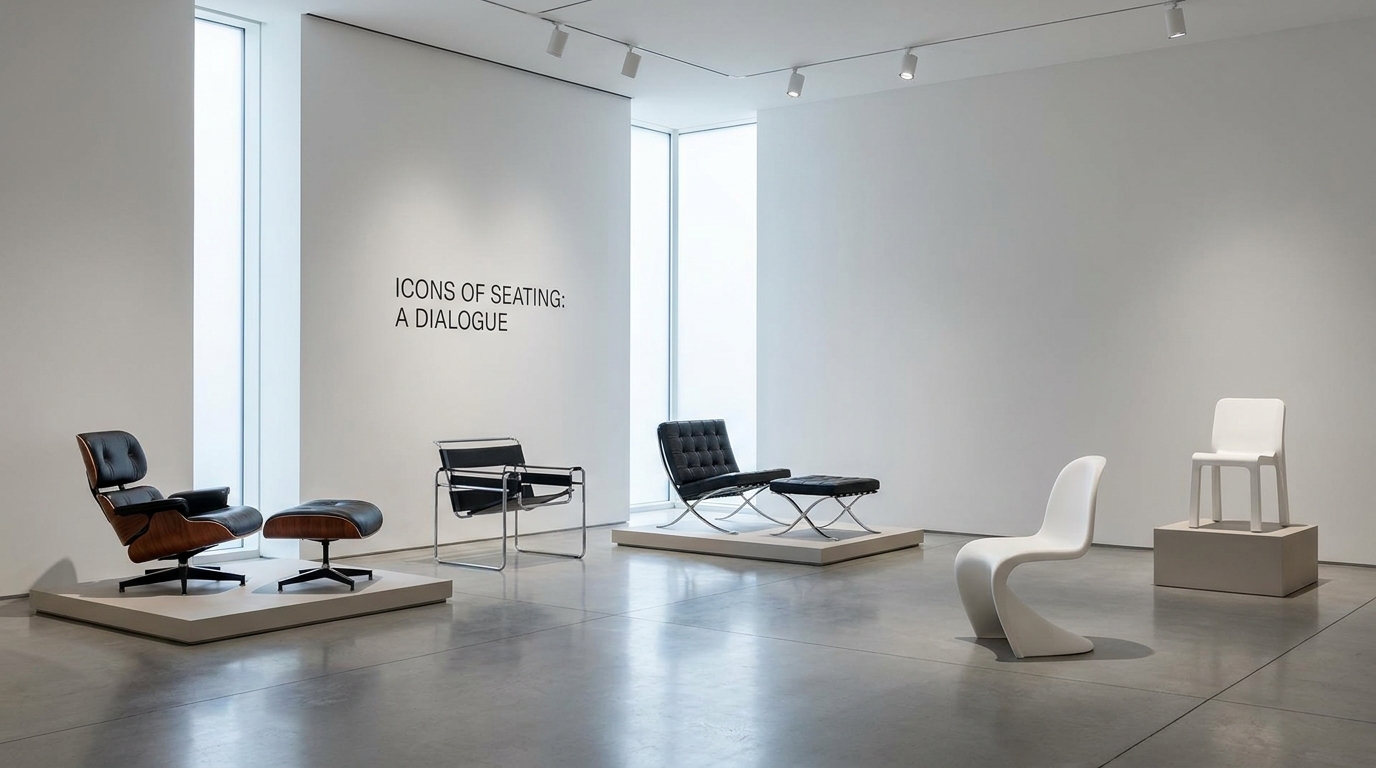
The history of interior architecture is written in the contours of its seating. Far beyond functional pieces of furniture, iconic chairs serve as compact spatial manifestos: they synthesize the industrial mastery of their era, articulate the philosophical vision of pioneering architects, and shape the choreography of daily life. From the early experiments in tubular steel of the Bauhaus to the sculptural fluidity of single-molded polymers, this dossier investigates the five most influential chairs in history and how they continue to anchor prime residential and commercial interiors.
"A chair is a very difficult object to design. Everyone who has ever tried knows this. There are endless possibilities and many problems — the chair must be light, strong, comfortable. It is almost easier to build a skyscraper." — Ludwig Mies van der Rohe.
Eames Lounge Chair: The Mastery of Molded Wood and Leather
Introduced in 1956 by American design pioneers Charles and Ray Eames, the Eames Lounge Chair and Ottoman established a new benchmark for postwar luxury. The couple set out to recreate the comforting embrace of a well-worn baseball glove, delivering relaxed ergonomics within an uncompromising architectural silhouette.
The manufacturing breakthrough relied on pressing thin veneers of rosewood (and later walnut and cherry) under extreme heat and steam into three distinct molded plywood shells. Upholstered in premium glove leather with generous down feather padding, the lounge chair quickly became the definitive symbol of modernist executive elegance, securing a permanent place in the collection of New York's MoMA.
Wassily Chair: Bauhaus Tubular Steel Purity
In 1925, inspired by the lightweight strength of the curved handlebars on his Adler bicycle, Hungarian architect Marcel Breuer — then master of the carpentry workshop at the Bauhaus in Dessau — conceived the Model B3, later christened the Wassily Chair.
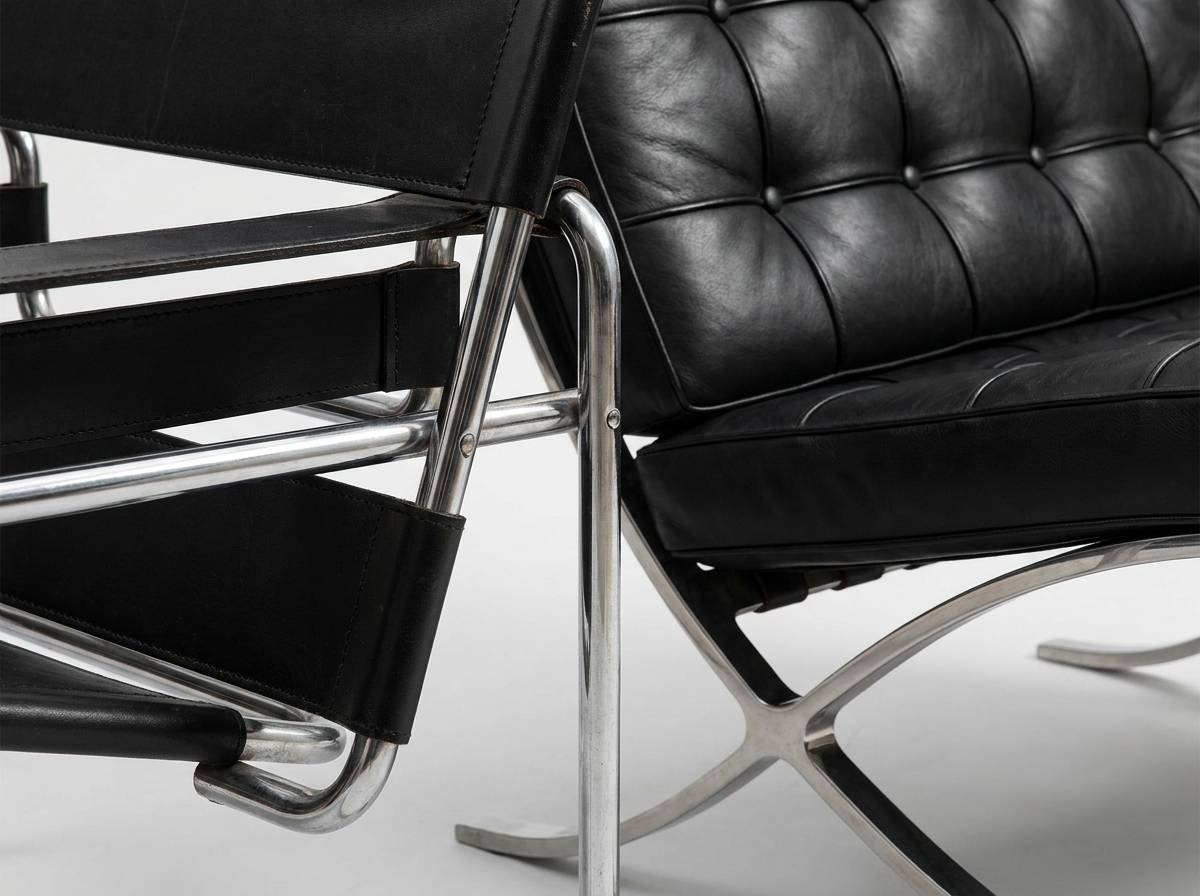
Breuer discarded traditional heavy joinery in favor of continuous cold-bent nickel-plated (and later chrome-plated) tubular steel. Tensioned with taut bands of thick leather or Eisengarn canvas, the piece created a skeletal, floating framework that allows light and surrounding air to pass through unobstructed. Breuer named the piece after abstract painter Wassily Kandinsky, an enthusiastic admirer of the initial prototype.
Barcelona Chair: The Modernist Throne by Mies van der Rohe
Commissioned for the German Pavilion at the 1929 Barcelona International Exposition, the Barcelona Chair was created by Ludwig Mies van der Rohe in close collaboration with German designer Lilly Reich to serve as monumental seating for Spanish royalty during the pavilion's dedication.
Featuring a scissor-like X-shaped base in hand-buffed stainless steel inspired by ancient Roman curule seats, the chair is topped by two thick cushions upholstered in 40 individually hand-welted and button-tufted leather panels. The design remains the quintessential expression of Mies's timeless philosophy: "Less is more."
Panton Chair: The Single-Piece Molded Cantilever
Debuted in 1960 by Danish visionary Verner Panton, the Panton Chair marked a dramatic break from four-legged timber construction. Panton pursued the dream of shaping a fully cantilevered chair from a single continuous piece of molded plastic for more than a decade.
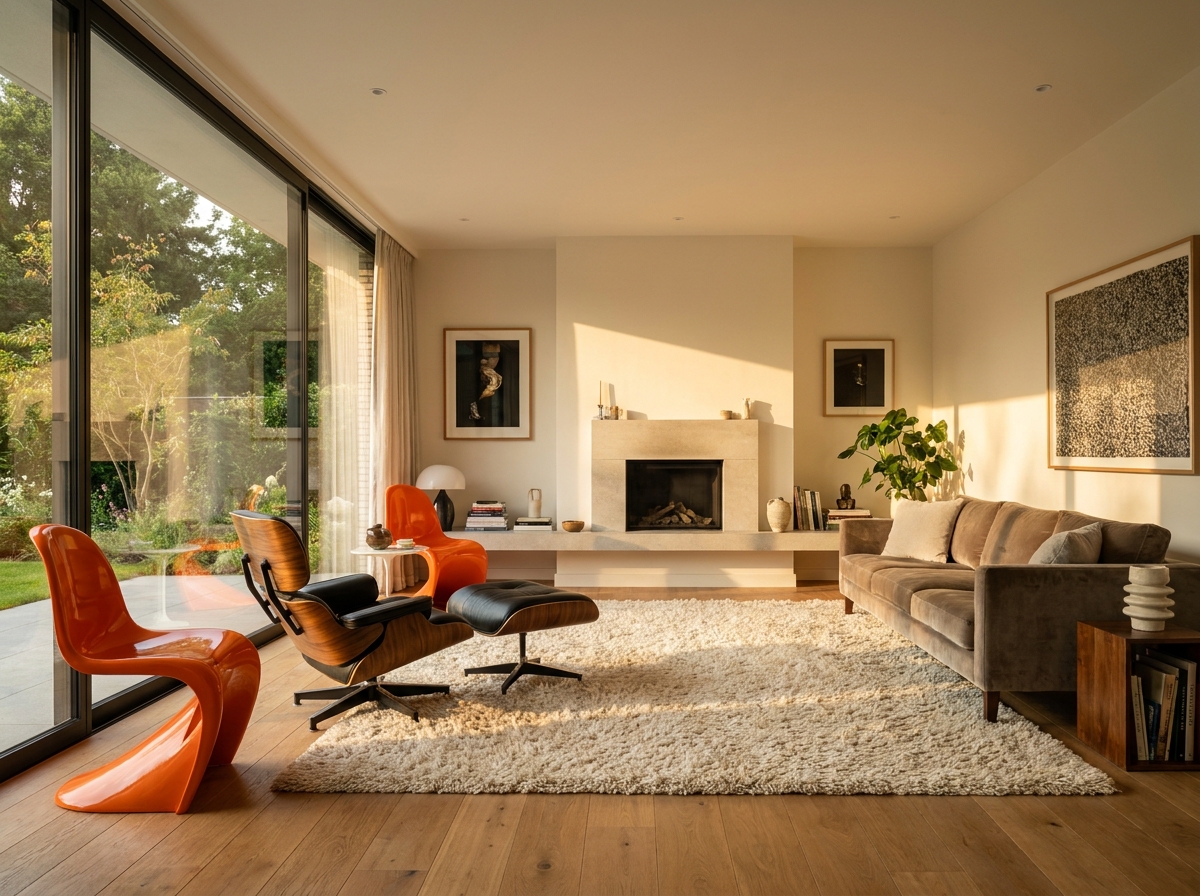
With its sinuous S-shaped profile and saturated lacquer finishes, the chair captured the spirit of 1960s Pop Art and space-age optimism, retaining its status as an enduring benchmark for organic sculptural forms in contemporary interiors.
The Monobloc: The World's Most Ubiquitous Design
Evolving from European patents in the late 1970s and 1980s and inspired by early prototypes by Joe Colombo, the white polypropylene Monobloc chair holds the record as the most mass-produced artifact in human history.
Manufactured in seconds through single-shot injection molding at a fraction of standard furniture costs, lightweight, stackable, and impervious to weather, the Monobloc represents the absolute democratization of utilitarian seating across cafes, terraces, and gardens on every continent.
Comparative Specification: 5 Iconic Design Chairs
| Chair | Designer / Year | Key Materials | Architectural Impact |
|---|---|---|---|
| Eames Lounge Chair | 1956 (Charles & Ray Eames) | Molded plywood & premium leather | Definitive statement of mid-century warmth and prestige. |
| Wassily Chair | 1925 (Marcel Breuer / Bauhaus) | Tubular steel & leather strapping | Pioneered industrial transparency and dematerialization. |
| Barcelona Chair | 1929 (Mies van der Rohe & Lilly Reich) | Polished steel & hand-tufted leather | Monumental elegance for grand reception halls and galleries. |
| Panton Chair | 1960 (Verner Panton) | Continuous molded polypropylene | Dynamic organic curves and pop-art energy. |
| Monobloc Chair | 1970s–1980s | Injected thermoplastic polymer | Universal utility and global democratic adoption. |
The Role of Signature Seating in Spatial Composition
Selecting a signature designer chair anchors a room's architectural proportions, creating visual focal points while establishing a curated dialogue between volumes, natural light, and finishes. This discipline resonates closely with Le Corbusier's Modulor and the masterworks explored in our profiles of Oscar Niemeyer, Lina Bo Bardi, and Zaha Hadid.
Visualize Iconic Furniture in Your Home with AI
Curious how an Eames Lounge, Barcelona, or Wassily chair complements your living room layout? Arquitet IA renders photorealistic 3D furniture placements directly onto your room photos in seconds.
Try Furniture Simulation in Arquitet IAFrequently Asked Questions
What was the inspiration behind the Eames Lounge Chair?
Designed by Charles and Ray Eames in 1956, the chair aimed to deliver the welcoming tactile warmth of a well-used baseball mitt, combining heat-molded rosewood plywood shells with sumptuous button-tufted leather.
How did the Wassily Chair innovate manufacturing methods?
Conceived by Marcel Breuer at the Bauhaus in 1925, it was the first chair constructed with seamless cold-bent tubular steel (inspired by Adler bicycle handlebars), replacing heavy joinery with a transparent, lightweight framework.
For what occasion was the Barcelona Chair designed?
Mies van der Rohe and Lilly Reich designed the chair for the German Pavilion at the 1929 Barcelona International Exposition, specifically intended as ceremonial seating for the King and Queen of Spain.
Why is the Monobloc chair the most produced piece of furniture in history?
Manufactured from a single injection of polypropylene at negligible production cost, lightweight, stackable, and completely weatherproof, the Monobloc embodies the ultimate global democratization of seating.