Oscar Niemeyer was born in Rio de Janeiro in 1907 and died in the same city 104 years later, six days before his own birthday. Between those two moments, he designed entire cities, wrote manifestos, survived dictatorships, and left in curved concrete a signature the whole world learned to recognize.
He was not an architect who designed pretty houses. He was someone who decided, very early on, that architecture had to be built poetry — and spent his whole life trying to prove it.
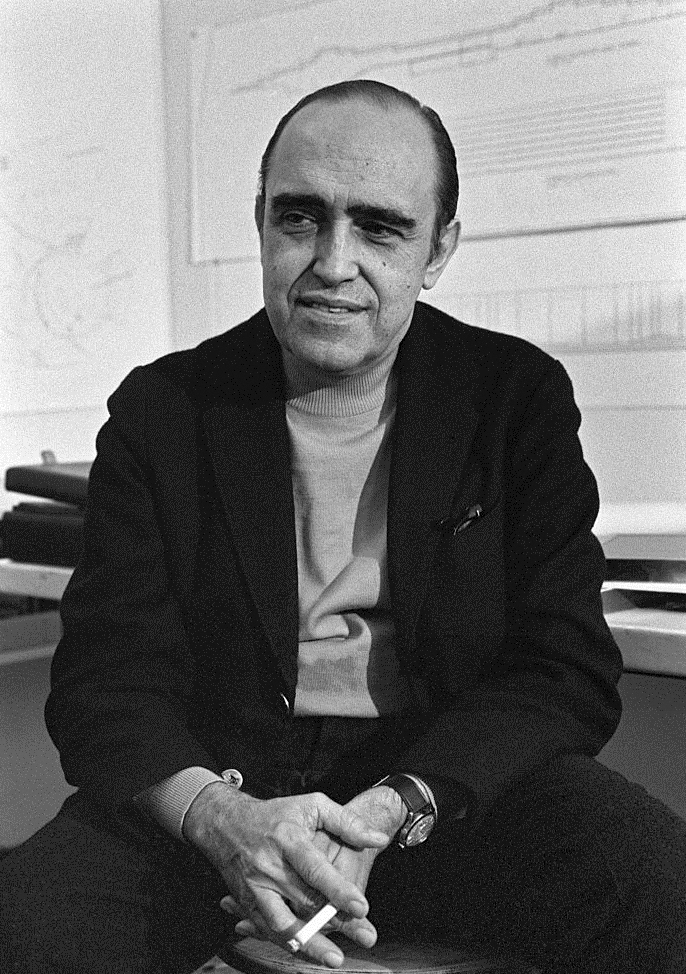
Oscar Niemeyer, the architect who designed a country.
Who Was Oscar Niemeyer
Oscar Ribeiro de Almeida Niemeyer Soares Filho grew up in Santa Teresa, a neighborhood of steep streets in Rio de Janeiro. He studied architecture at the Escola Nacional de Belas Artes and, while still a student, joined the office of Lúcio Costa — the meeting that would define the course of Brazilian architecture.
In 1936, at 29, Niemeyer took part in the design of the Ministry of Education and Health in Rio, alongside Lúcio Costa and with French modernist master (read our Le Corbusier architecture dossier) as consultant. It was Brazil's first major modernist building. It was also where Niemeyer realized that Le Corbusier's rules were a starting point, not a destination.
"It is not the right angle that attracts me, nor the straight line, hard and inflexible, created by man. What attracts me is the free and sensual curve — the curve I find in the mountains of my country, in the winding course of its rivers, in the waves of the sea, in the body of the beloved woman."
— Oscar Niemeyer
The Pampulha Complex: The First Major Break
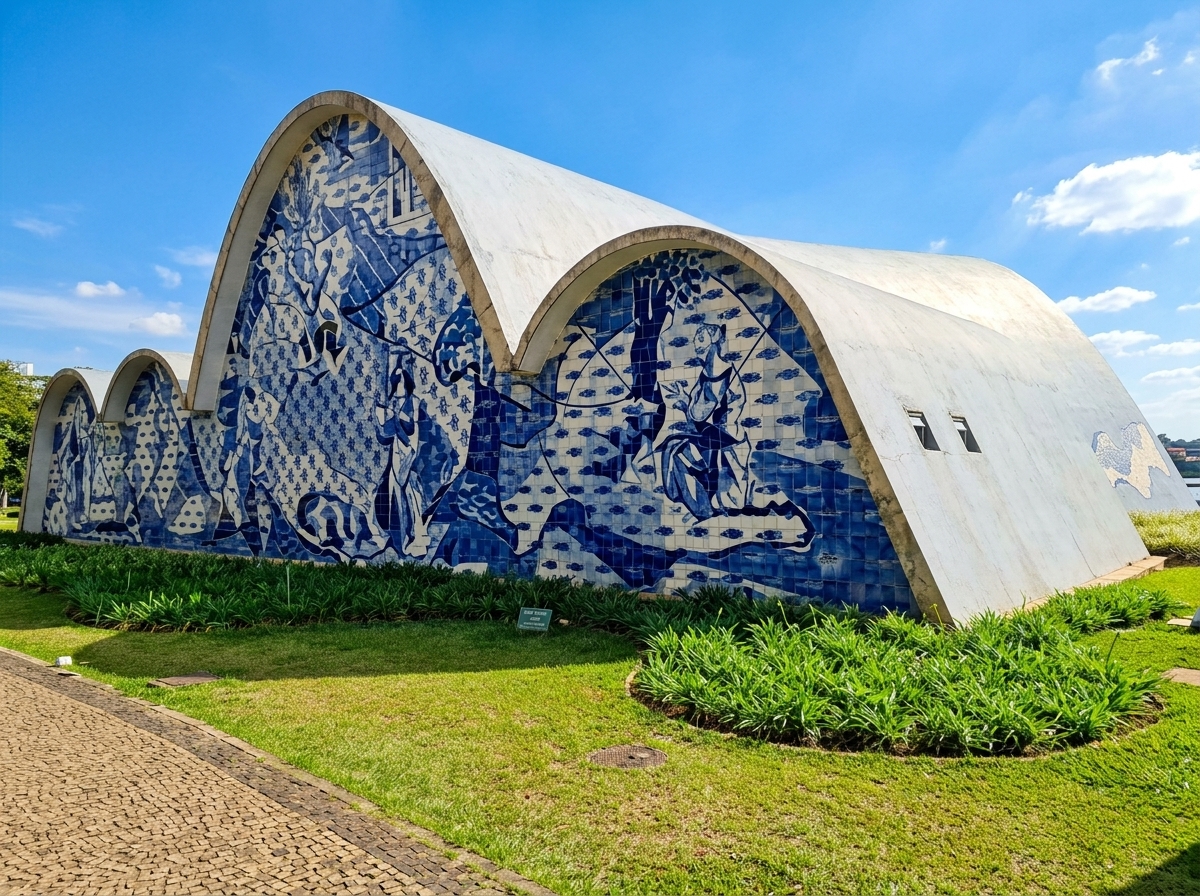
São Francisco of Assisi Church, Pampulha (BH), 1943 — UNESCO World Heritage Site.
In 1940, the then-mayor of Belo Horizonte, Juscelino Kubitschek, commissioned Niemeyer to design an architectural complex on the shores of Pampulha Lagoon. Niemeyer was 33 years old and had complete creative freedom.
The result was a set of four buildings that shocked architects worldwide: the Yacht Club, the Casino, the Casa do Baile, and the boldest of all, the São Francisco of Assisi Church. The parabolic concrete façade, Portinari's tile panels, the integration of art, landscape, and structure — it was an entirely new architectural vocabulary.
The Cardinal of Belo Horizonte initially refused to consecrate the church because of its "irreverent" form. Decades later, UNESCO would declare the Pampulha Complex a World Heritage Site.
Brasília: The Capital Niemeyer Built
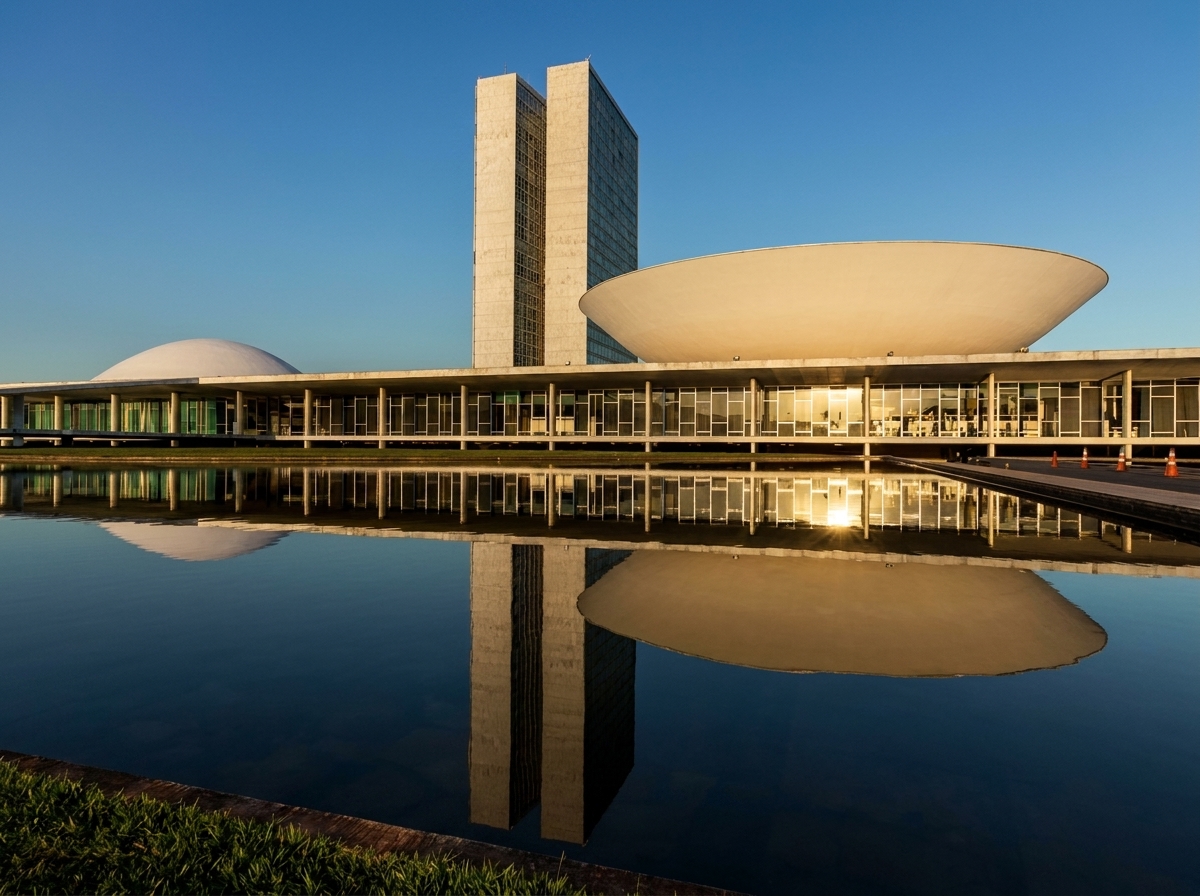
National Congress, Brasília, 1958 — the most recognized image of Brazilian architecture worldwide.
When Juscelino Kubitschek was elected president in 1955, he carried a campaign promise that seemed absurd: build a brand new capital in the middle of the Brazilian savanna, from scratch, in four years. He called Niemeyer — his old friend from Pampulha.
Lúcio Costa won the urban planning competition with the Pilot Plan. Niemeyer took charge of the major buildings. The result was inaugurated in 1960, on time. Brasília was declared a UNESCO World Heritage Site in 1987 — the first 20th-century city to receive that distinction.
The National Congress, with its two opposing domes (one concave for the Senate, one convex for the Chamber of Deputies), the Alvorada Palace, the Planalto Palace, the Metropolitan Cathedral — each building has a form so distinctive it became an instant national symbol. No architect, before or since, has designed so many national icons for a single country.
Exile and the Latin America Memorial
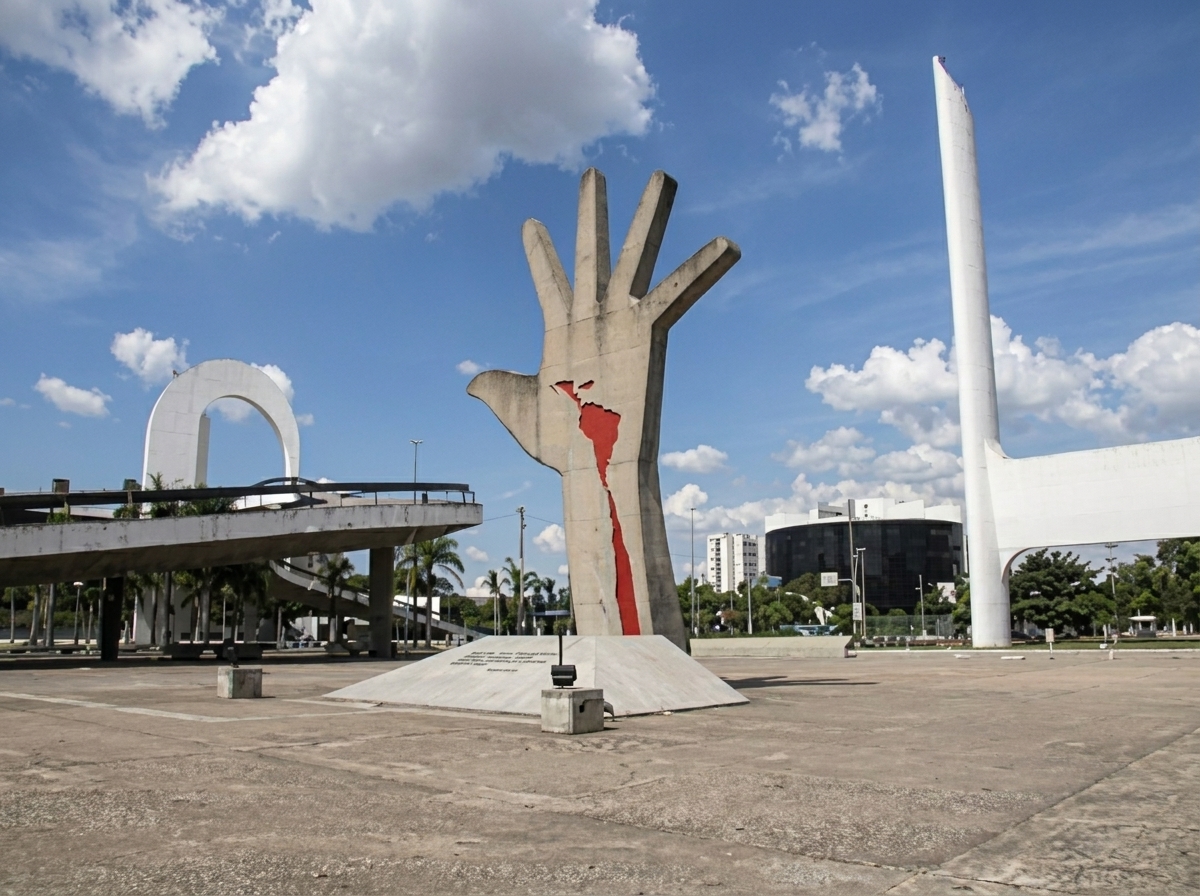
Latin America Memorial, São Paulo, 1989 — concrete and a symbol of resistance.
After the 1964 military coup, Niemeyer — a declared communist and member of the Brazilian Communist Party since 1945 — lost his contracts in Brazil. He moved to Paris in exile, where he opened an office and worked for two decades for international clients.
In exile, he designed the French Communist Party Headquarters in Paris, the Mondadori Building in Milan, and the University of Constantine in Algeria, among dozens of other projects. He became a celebrated figure in Europe while silenced in his own country.
After Brazil's return to democracy, he came back and designed the Latin America Memorial in São Paulo — a complex of buildings with an open, bleeding hand he sculpted himself in the central square. A political and artistic gesture at the same time.
A Legacy No Concrete Erases
Oscar Niemeyer won the Pritzker Prize in 1988 — architecture's Nobel — sharing it with Gordon Bunshaft. He remains the only Brazilian architect to have received that honor.
His works span five continents. Brasília, his most famous project, draws tourists from across the globe and still functions as the capital of a country of 215 million people — an urban experiment that, for better or worse, has never left anyone indifferent.
He died on December 5, 2012, six days before turning 105, with 50 projects still ongoing in his Rio de Janeiro office.
Photographs alone don't quite capture Oscar Niemeyer. You need to stand inside one of his buildings — to feel how light enters through the curve of the ceiling, how the space feels larger than the blueprints say it should be. Only then do you understand why he insisted that architecture was not a profession. For him, it was a way of loving the world.
Simulate the Niemeyer aesthetic in your space
With Arquitet IA, you photograph a room and experiment with organic shapes, exposed concrete, and modernist design in seconds.
Try Arquitet IA FreeArchitect Profile
| Full name | Oscar Ribeiro de Almeida Niemeyer Soares Filho |
| Birth | December 15, 1907, Rio de Janeiro, Brazil |
| Death | December 5, 2012, Rio de Janeiro (age 104) |
| Education | Escola Nacional de Belas Artes, Rio de Janeiro |
| Pritzker Prize | 1988 (shared with Gordon Bunshaft) |
| Landmark works | Brasília, Pampulha, MAC Niterói, Latin America Memorial |