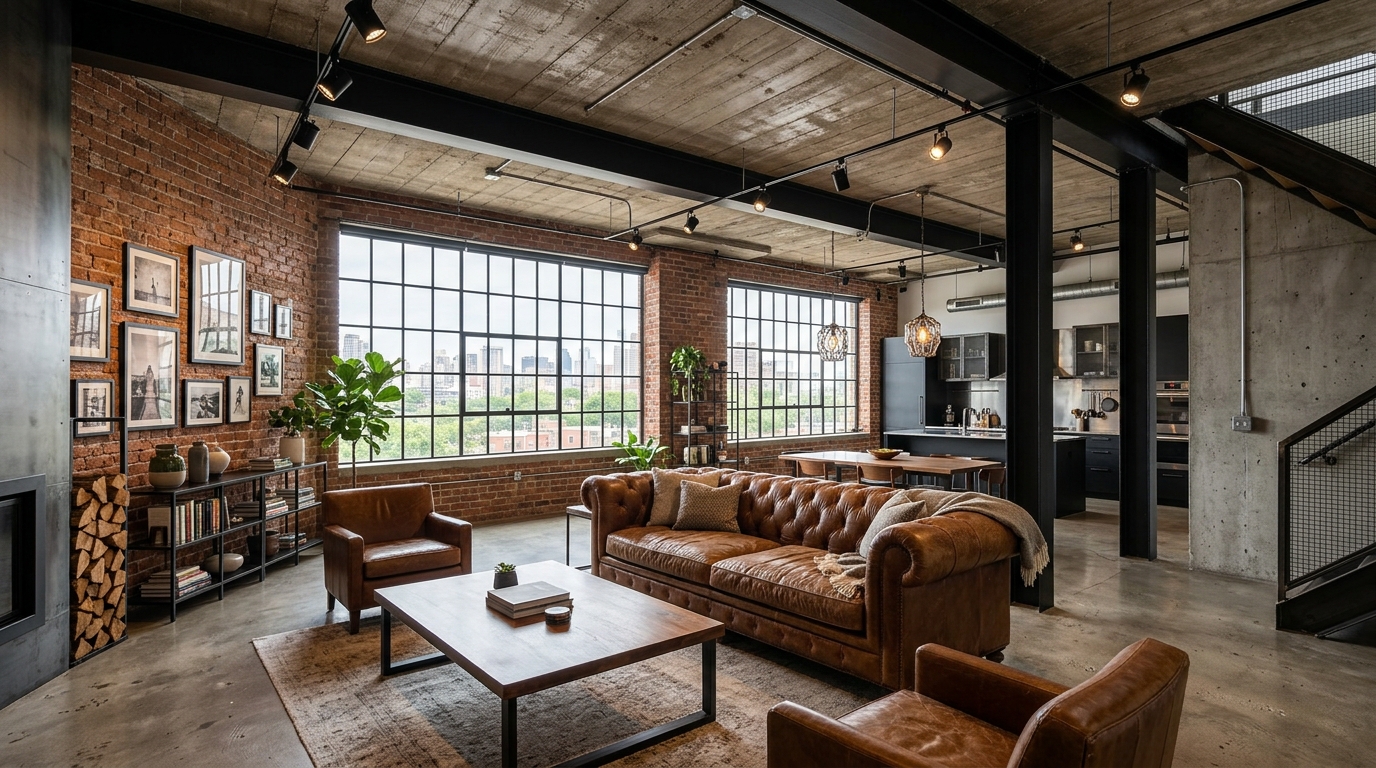
When we step into a modern apartment featuring exposed red brick walls, burnished concrete, and black ceiling conduits, it is easy to forget that this look started out of pure practical necessity. During the 1950s and 1960s in New York, artists moved into empty manufacturing warehouses in SoHo simply because the spaces were cheap, soaringly tall, and flooded with natural light from oversized factory windows.
Decades later, that honest workshop aesthetic has become one of the most celebrated residential styles around the globe. To see how industrial elements mix with other popular aesthetics, explore our complete interior design styles guide.
Exposing the Building Bones: Concrete, Brick, and Steel
The appeal of industrial homes lies in celebrating authentic materials. Rather than boxing in ceilings with layers of drywall or skimming walls with thick plaster, this approach lets original building bones speak for themselves.
Burnished concrete flooring (or large-format matte porcelain tiles) sets a calm, durable foundation. Solid red clay brick walls, treated with a clear water-based matte sealant, bring in warm earthen color that breaks up cool grays. If you are remodeling bathrooms or powder rooms, check out practical advice in our small bathroom tile guide.
Surface Conduits and the Glow of Black Track Lighting
In typical renovations, routing wiring inside masonry walls creates excessive dust, debris, and structural patching. Industrial design turns electrical runs into graphic architectural features with black powder-coated conduits and galvanized metal channels.
To make sure the room stays cozy for family life, lighting temperature is paramount. Black track lights fitted with 2700K warm LED filament bulbs cast a welcoming amber glow at night, balancing the visual coolness of iron and concrete.
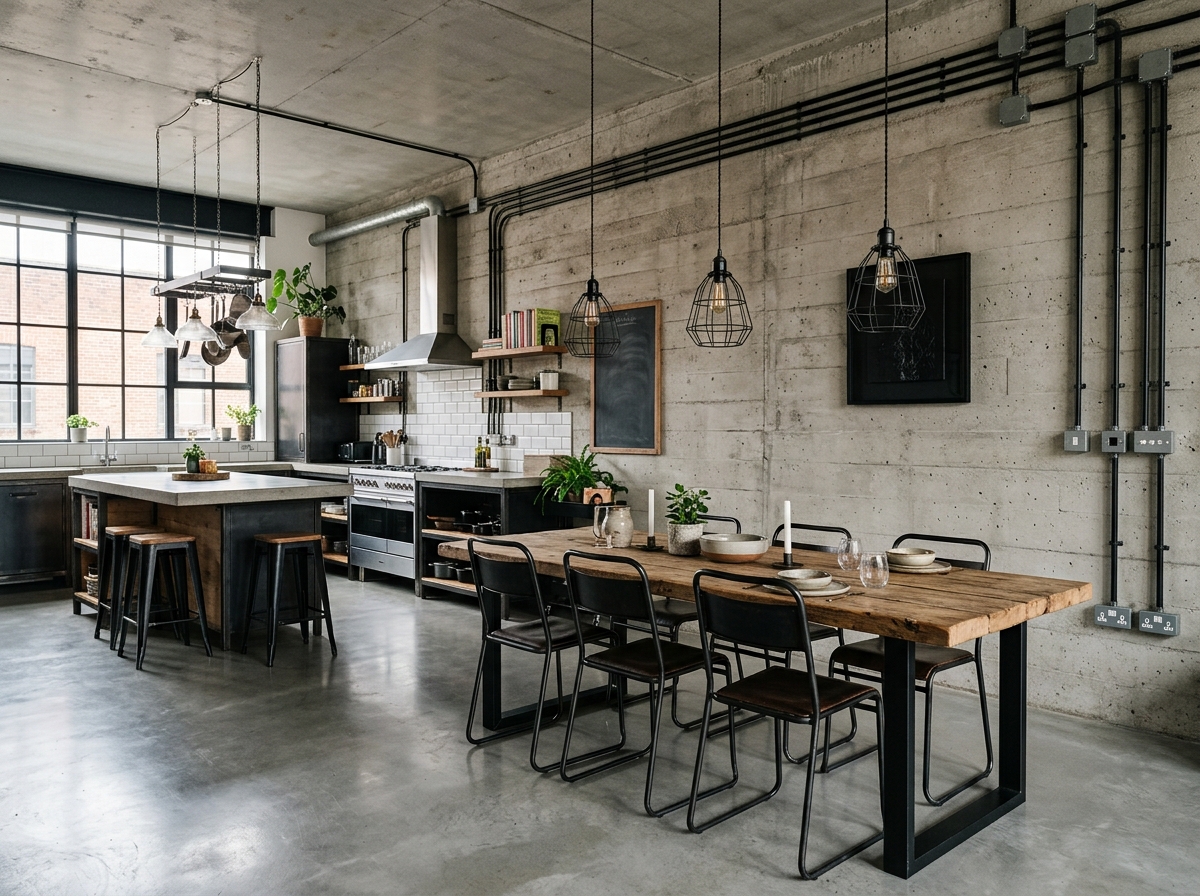
Open kitchen with surface-mounted conduits, solid wood island, and steel frame detailing.
Balancing Raw Materials with Cognac Leather and Timber
The most common hesitation when adopting industrial design is fear that the home will feel like an auto shop or a sterile office. The answer to livable comfort lies in rich, soft furnishings.
A distressed cognac leather sofa, a thick reclaimed wood dining tabletop, and heavy wool or jute rugs immediately provide tactile warmth. Adding lush indoor plants like fiddle-leaf figs or monstera plants introduces vibrant botanical green that pops against rustic brick.
Industrial Facades in Modern Residential Architecture
On building exteriors, industrial inspiration has transformed residential streetscapes. Homes featuring crisp rooflines, large glass openings framed in matte black aluminum, and dark masonry panels offer striking curb appeal.
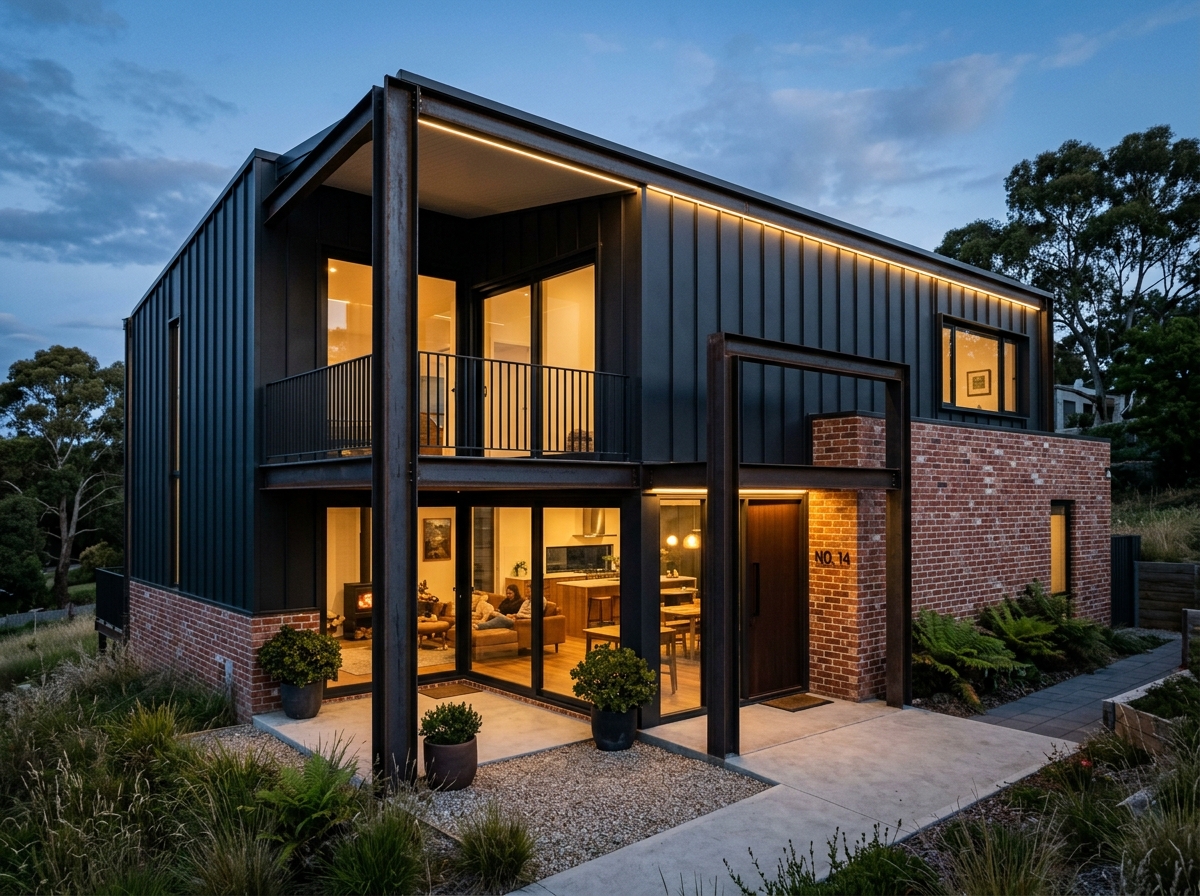
Residential facade blending dark metal framework, large windows, and rustic brick cladding.
See how your home looks in Industrial Style
Want to preview burnished concrete walls, exposed brickwork, and custom steel-and-wood furniture in your room before renovating? Take a phone photo and visualize it instantly with Arquitet IA.
Simulate Industrial Style in Arquitet IA →Industrial Materials & Finishes Guide
| Element | Recommended Finish | Visual Purpose |
|---|---|---|
| Main Flooring | Burnished concrete or concrete-look porcelain tile | Clean, urban, low-maintenance foundation |
| Accent Wall | Exposed solid brick sealed with matte resin | Adds rustic texture, heritage, and warmth |
| Electrical Runs | Black metal conduits and steel cable trays | Graphic linear rhythm and easy remodeling |
| Ceiling Lighting | Black tracks with directional spotlights & 2700K LED | Warm ambiance and focused task lighting |
| Key Furnishings | Cognac leather, black iron framing & solid timber | Long-lasting comfort, durability, and character |
Frequently Asked Questions
Does industrial style make a home feel cold or uninviting?
Not when properly balanced. The coolness of concrete and steel is offset by warm natural timber, caramel cognac leather seating, textured wool rugs, and cozy 2700K ambient lighting.
Is surface-mounted exposed electrical wiring expensive?
Quite the opposite. During renovations, using surface-mounted black steel conduits and cable trays often reduces labor and costs by eliminating the need to chase walls and patch plaster.
How do you seal exposed brick walls to prevent dust?
Apply a clear, water-based matte acrylic sealant or breathable brick impregnator. This locks in masonry dust, protects against moisture, and keeps the brick easy to wipe clean without altering its natural color.
Can industrial decor work well in small apartments?
Yes. In compact layouts, select one accent wall (brick or burnished concrete), keep surrounding walls bright white, and use slim black metal-framed room dividers and open shelving.