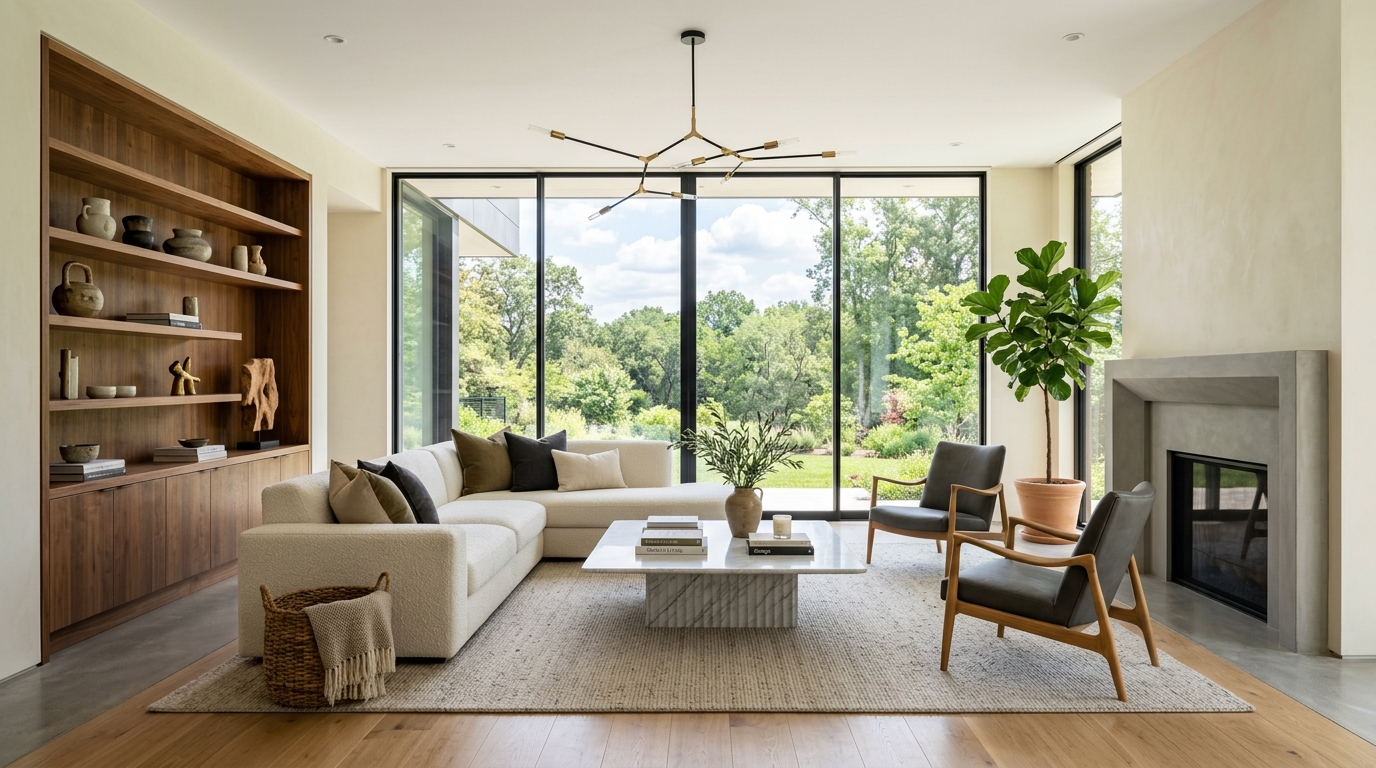
Almost everyone has saved dozens of interior inspirations on their phone only to wonder how to tie them together in real life. You might love a curved contemporary sofa, fall for a rustic wood dining table, and still want an industrial black pendant light. The key to avoiding a mismatched showroom look is understanding how each design style communicates.
Instead of strict academic rules, recognizing these aesthetic languages helps you pinpoint what truly makes you feel relaxed at home. Here is a practical overview of today’s most sought-after residential styles and how to adapt them to your daily life.
The Clean Coziness of Scandinavian and Japandi Design
Northern European design arose from a simple, real-world reality: long, dark winters required bright, highly practical, and comforting rooms. The foundation of this look relies on soft white walls, sandy beiges, and pale woods such as natural white oak, ash, or pine.
When blended with Japanese minimalism, this approach becomes Japandi. The result is a calm, quiet atmosphere with minimal surface clutter, subtle greenery, and tactile natural textiles like linen and wool. It is ideal for anyone looking to slow down and enjoy soft morning sunlight across the living room.
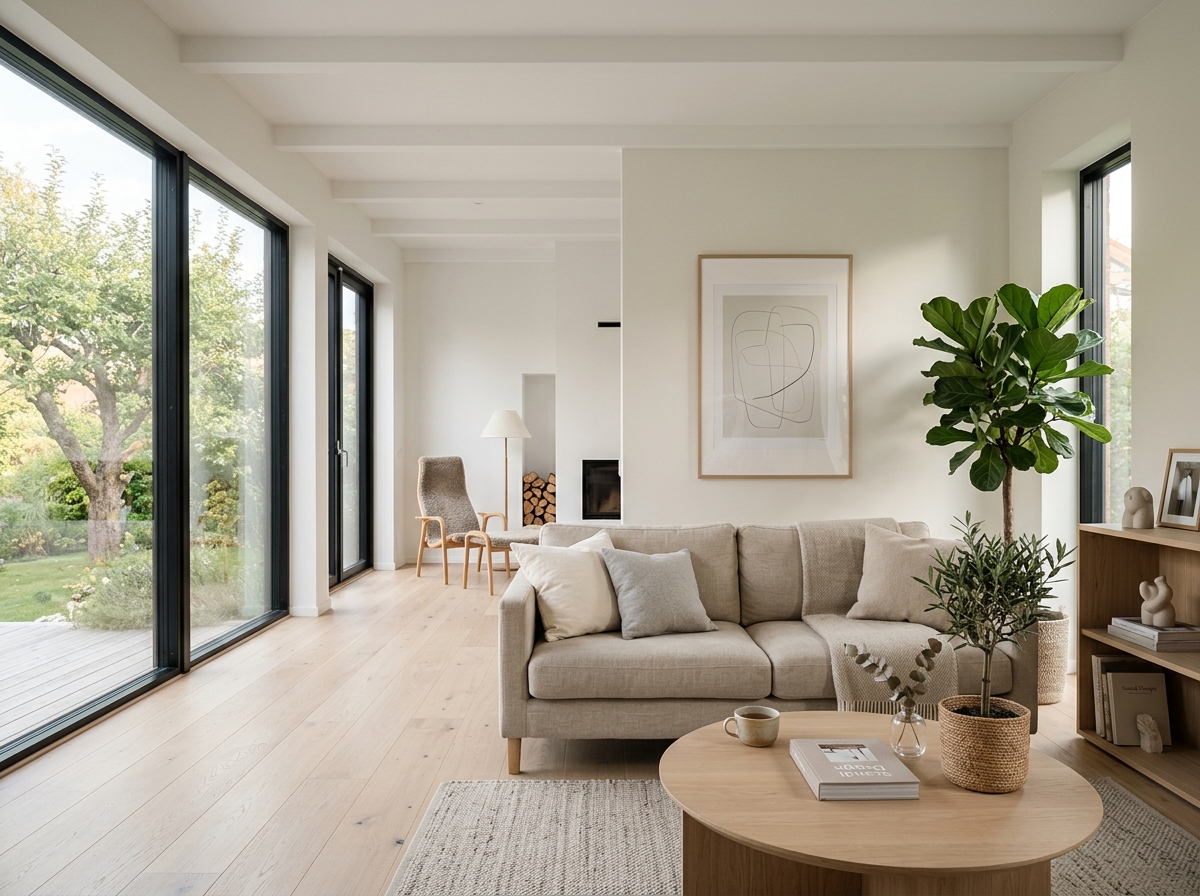
Clean silhouettes, pale timber, and tactile fabrics define Scandinavian comfort.
Soft Curves and Tactile Textures in Contemporary Spaces
Unlike rigid mid-century furnishings with sharp right angles and needle legs, contemporary design mirrors our present lifestyle: organic curved sofas, nubby bouclé fabrics, and lime-wash mineral walls in warm terracotta, sand, and taupe tones.
Here, everyday luxury lives in the quality of finishes and thoughtful lighting design. Warm spotlighting (2700K) paired with indirect LED coves creates a deeply relaxing evening atmosphere that flatters wall art and slatted wood paneling.
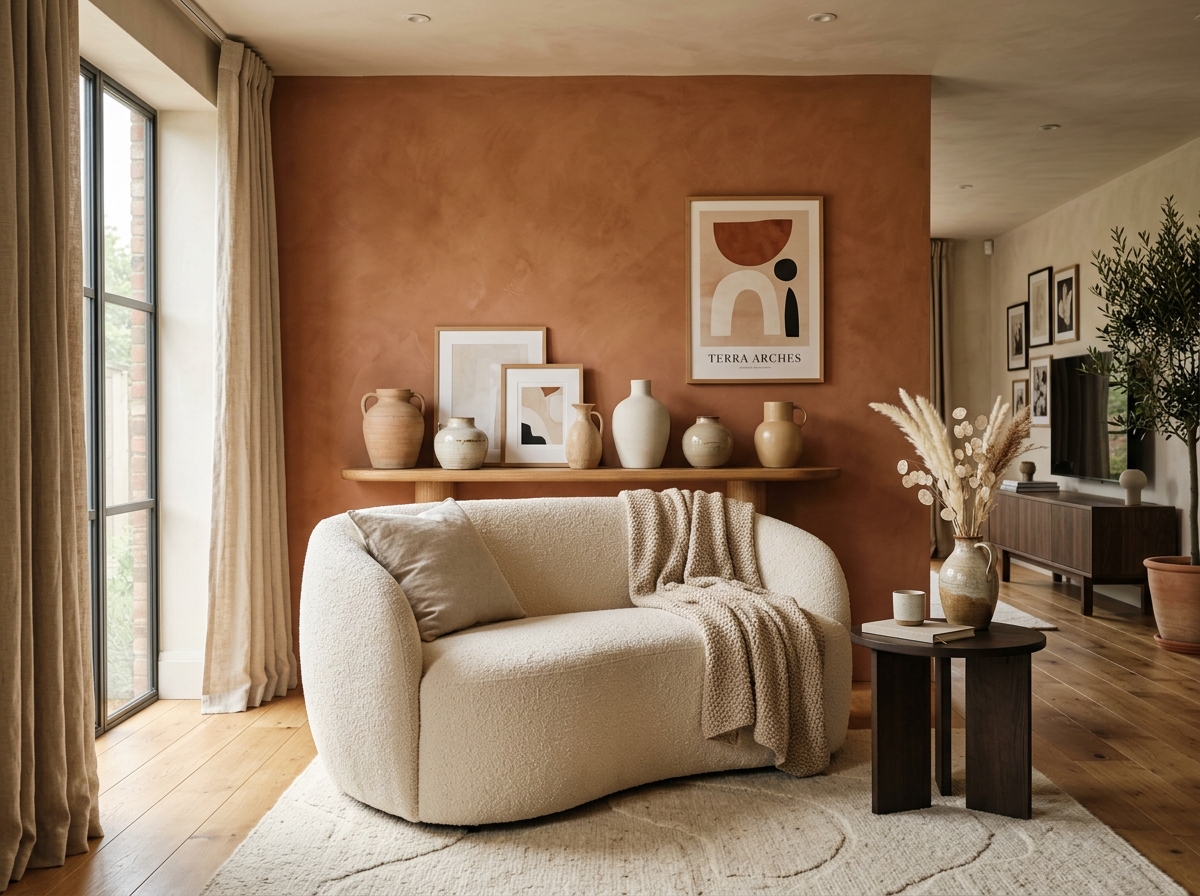
Curved furniture, earthy tones, and warm lighting shape contemporary living rooms.
Urban Grit and Authenticity in the Industrial Aesthetic
Born in the converted factory lofts of 1950s and 60s New York, industrial design appeals to anyone who appreciates honest architectural structure. Rather than hiding building bones, this style showcases exposed red brick, concrete columns, and black metal conduits.
To keep rooms from feeling cold or commercial, the secret lies in pairing raw elements with worn cognac leather, solid reclaimed wood countertops, and thick natural rugs. For deeper material advice, explore our industrial home design guide and discover smart ideas for small bathroom tile selections.
Boho Chic Freedom and Nature-Connected Biophilic Living
Not everyone thrives in monochromatic or purely minimalist spaces. Boho Chic embraces personal history, travel souvenirs, vintage flea-market finds, patterned rugs, and handmade ceramics.
When joined by biophilic principles, the home fills with living energy: trailing pothos, fiddle-leaf figs, and abundant daylight. Greenery refreshes indoor air and softens urban life, keeping nature close at hand every day.
How to Mix Styles Without Creating Chaos
Most memorable homes rarely stick to a single rigid style. Designers frequently rely on the 80/20 guideline: anchor roughly 80% of your large surfaces (flooring, wall paint, kitchen cabinetry) in a consistent base palette, and use the remaining 20% for contrasting statement pieces like a vintage armchair or a sculptural modern light fixture.
Keeping walking paths clear and sticking to a calm palette ensures items from different decades sit comfortably side by side.
Find the best interior style for your room
Snap a quick smartphone photo of your living room or bedroom and test Scandinavian, Industrial, Contemporary, or Minimalist redesigns in seconds with the Arquitet IA app.
Simulate Rooms in Arquitet IA →Quick Comparison of Interior Design Styles
| Style | Core Palette | Key Materials | Atmosphere |
|---|---|---|---|
| Scandinavian / Japandi | Warm white, sand, light oak | Pale wood, linen, wool, ceramic | Quiet, bright, and restorative |
| Contemporary | Terracotta, taupe, sand, olive | Bouclé fabric, slatted wood, matte metal | Warm modern sophistication |
| Industrial | Concrete gray, matte black, cognac | Burnished concrete, exposed brick, steel | Urban character and authentic grit |
| Boho Chic | Warm mustard, ochre, earthy browns | Rattan, jute, vintage rugs, plants | Relaxed, storied, and cheerful |
| Biophilic | Natural botanical greens, earth tones | Vertical planters, stone, natural fibers | Fresh air and deep nature connection |
Frequently Asked Questions
Can you blend multiple interior design styles in one home?
Yes. Most authentic homes follow an 80/20 guideline: keep about 80% of surfaces and key furniture within a neutral, consistent base, and use the remaining 20% for accents like vintage armchairs, industrial lamps, or artisanal ceramics.
What is the key difference between modern and contemporary design?
Modern design refers to a specific mid-20th-century historical movement featuring straight lines and strict functionalism. Contemporary design refers to current living trends: soft curved seating, textured bouclé fabrics, and warm earthy palettes.
How do you pick the right color palette for a room?
Start with one dominant neutral tone for walls and floors (such as warm white, greige, or sand), a secondary color for larger furniture pieces, and an accent hue for pillows, art, and ambient lighting.
Which design style works best for smaller apartments?
Warm minimalism and Scandinavian design are great for compact spaces because they maximize natural daylight, employ bright reflective neutrals, and keep furniture silhouettes uncluttered and multifunctional.