
During the mid-2000s, Academy Award winner Nicolas Cage commanded astronomical paydays exceeding $150 million. Yet rather than allocating his wealth to diversified equities or conventional luxury apartments, the Hollywood star embarked on an eccentric real estate buying binge: acquiring authentic European medieval fortresses, private Bahamian atolls, and historic mansions. His most dramatic purchase was Schloss Neidstein, a 16th-century fortress nestled in the Bavarian hills that he acquired and was forced to sell just a few years later.
The Quest for Medieval Castles and Fortresses
Enamored with Arthurian mythology, gothic history, and architectural rarities, Nicolas Cage built an astonishing personal property portfolio. Alongside multi-million-dollar estates in Los Angeles and Las Vegas, he acquired Leaf Cay (a private Bahamian island), the eerie LaLaurie Mansion in New Orleans' French Quarter, and even a 9-foot white marble pyramid tomb in St. Louis Cemetery No. 1.
This artistic romance with unique architecture shares deep roots with other historic creative visionaries, as explored in our dossier on Salvador Dalí's surrealist restoration of Púbol Castle and the outsider sculptures of Postman Ferdinand Cheval's Ideal Palace.
Schloss Neidstein & Midford Castle: European Crowns
In 2006, Cage purchased Schloss Neidstein in Neukirchen bei Sulzbach-Rosenberg, Germany, for approximately $2.3 million. The property encompassed 28 rooms, ancient defensive stonework, and over 400 acres of protected woodland whose records stretch back to 1513.

Schloss Neidstein: the imposing 28-room Bavarian fortress purchased by Nicolas Cage in 2006.
The following year, in 2007, Cage expanded his medieval footprint by buying Midford Castle in Somerset, England. Built in the late 18th century in the whimsical shape of an ace of clubs, the fortress represented the apex of British romantic gothic architecture.
The Hidden Architectural Burden of Heritage Ownership
Acquiring a historic stronghold is merely the entry ticket; the real challenge lies in the continuous physical upkeep. Centuries-old stone construction poses steep structural hurdles:
- Thermal Inertia Without Modern Insulation: Meter-thick solid limestone walls require massive heating infrastructure and tens of thousands of liters of fuel each winter to stave off deep dampness.
- Strict Heritage Laws (Denkmalschutz): Across Germany and the UK, any repair to slate roofs, timber rafters, or stone masonry requires government oversight and certified master artisans.
- Rising Damp Management: Lacking modern foundation waterproofing, historic stone requires continuous airflow and dedicated dehumidification to prevent mortar degradation.
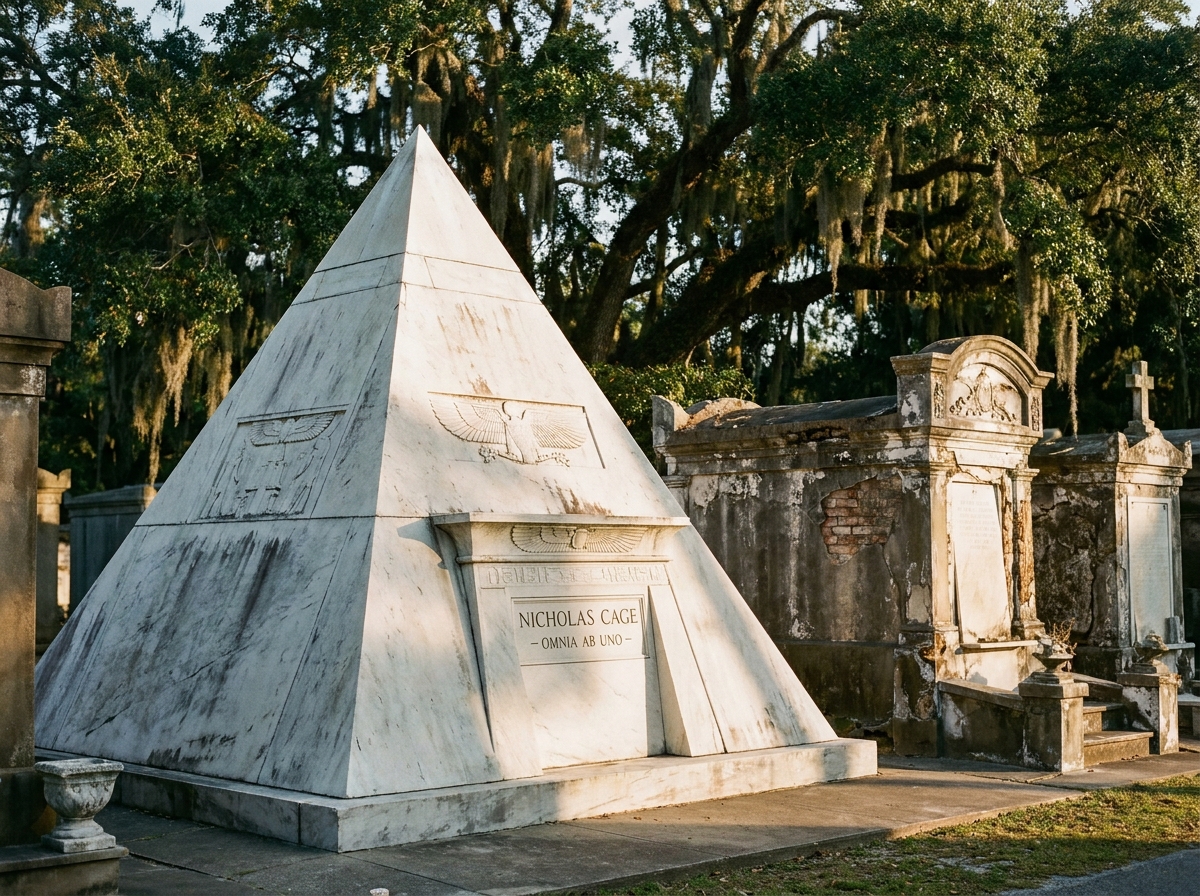
The 9-foot marble pyramid tomb in New Orleans: a monument to the actor's architectural eccentricities.
Portfolio Unwinding and Rapid Liquidations
When the global financial crisis struck in 2008, holding dozens of high-maintenance estates simultaneously became unsustainable under heavy tax liabilities.
In 2009, Schloss Neidstein was sold to a German attorney, just three years after its acquisition. Midford Castle and various American mansions were similarly liquidated. The experience offered a masterclass in real estate reality: historic castles are not merely private trophies, but living cultural monuments demanding continuous care and patient capital.
Bringing Historic Grandeur into Contemporary Interiors
You do not need a Bavarian fortress to enjoy the timeless dignity of classical craftsmanship. Today's design movements integrate noble historic finishes into contemporary residences through the modern neoclassical style with boiseries, natural stone, and tailored moldings.
With the Arquitet IA app, simply snap a picture of any room in your home to experiment with elegant wainscoting, stone accent walls, custom millwork, and warm ambient lighting powered by artificial intelligence.
Incorporate Classic Details into Your Home
Upload a photo of your living room, bedroom, or entryway to visualize boiseries, marble finishes, and warm architectural lighting instantly with Arquitet IA.
Try It Free →