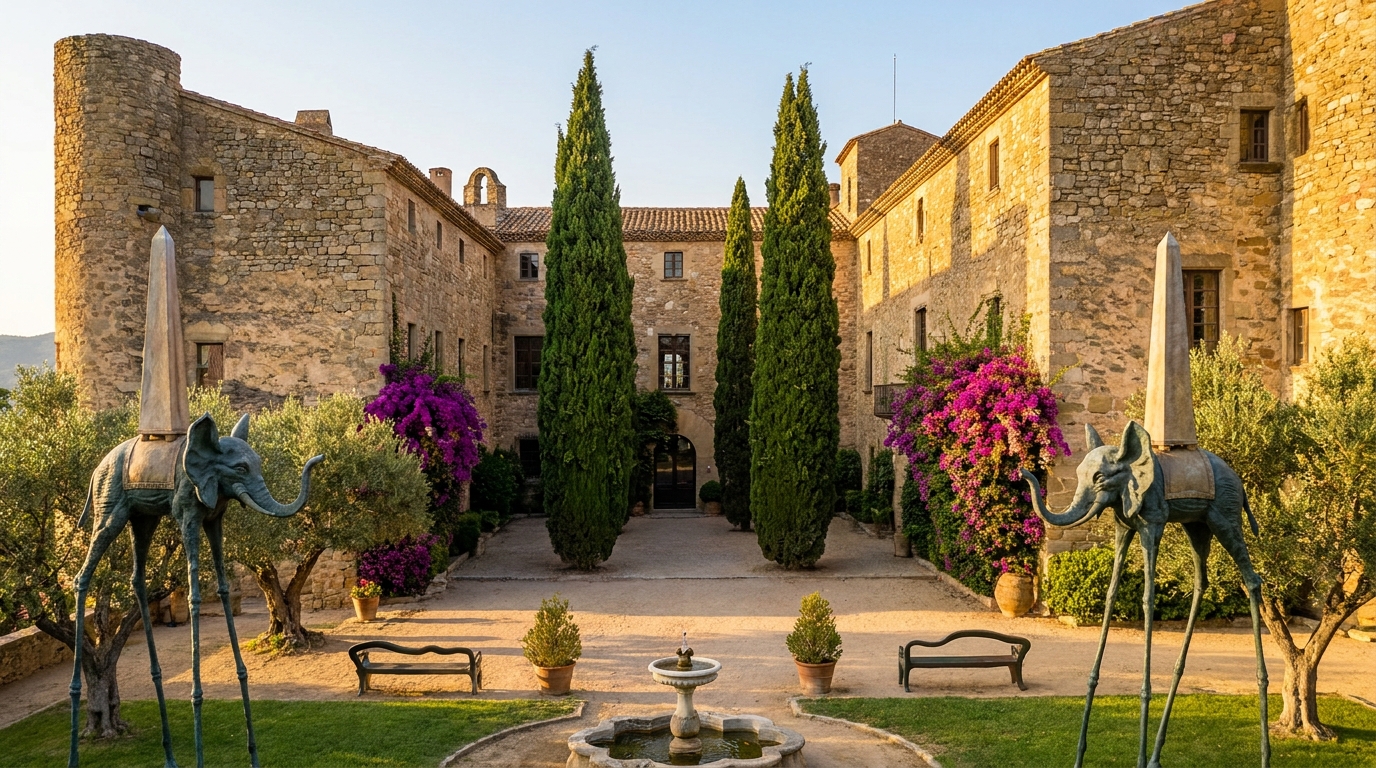
Salvador Dalí staged an existence where the borders between architecture, theatricality, and subconscious dreams dissolved entirely. Among the most remarkable aspects of his life was an unwavering refusal to settle into conventional domesticity. For decades, Dalí and his lifelong muse, Gala, made presidential suites in the world's most opulent grand hotels their primary residences. And when the painter finally purchased an authentic 11th-century castle for Gala in Spain, he gladly accepted an extraordinary condition: he could only enter through the fortress gates with a formal written invitation signed by his wife.
"Gala transformed the Castle of Púbol into an impregnable fortress. I entered only as a medieval knight summoned by his sovereign queen." — Salvador Dalí.
Permanent Living in Grand Suites: The St. Regis and Le Meurice
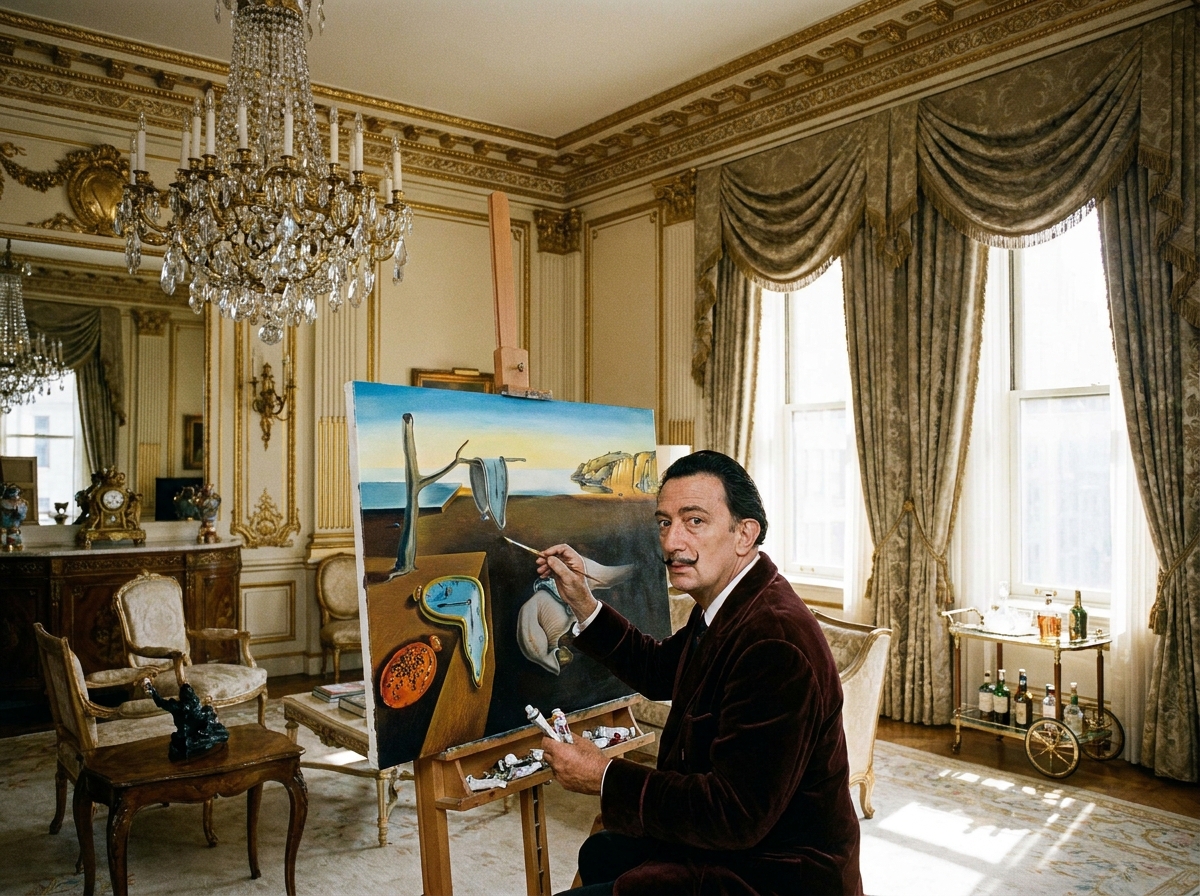
For more than thirty consecutive winters, Salvador Dalí's official mailing address was Suite 1603 at The St. Regis Hotel in Manhattan. When spring arrived in Europe, the couple relocated to the royal suite of the historic Hotel Le Meurice along the Rue de Rivoli in Paris.
To Dalí, domestic maintenance represented an unwelcome distraction from creative impulses. The high ceilings, ornate boiseries, and round-the-clock white-glove hospitality of luxury hotels served simultaneously as art studios, high-society reception halls, and performance stages. Persian silk rugs and Louis XV armchairs were strewn with paint easels, where guests ranging from Andy Warhol to John Lennon were routinely received.
The Castle of Púbol: Gala's Medieval Sanctuary
In 1969, Dalí fulfilled a youthful vow to Gala by purchasing a ruined 11th-century medieval fortress in the quiet village of Púbol, in Catalonia's Baix Empordà region.
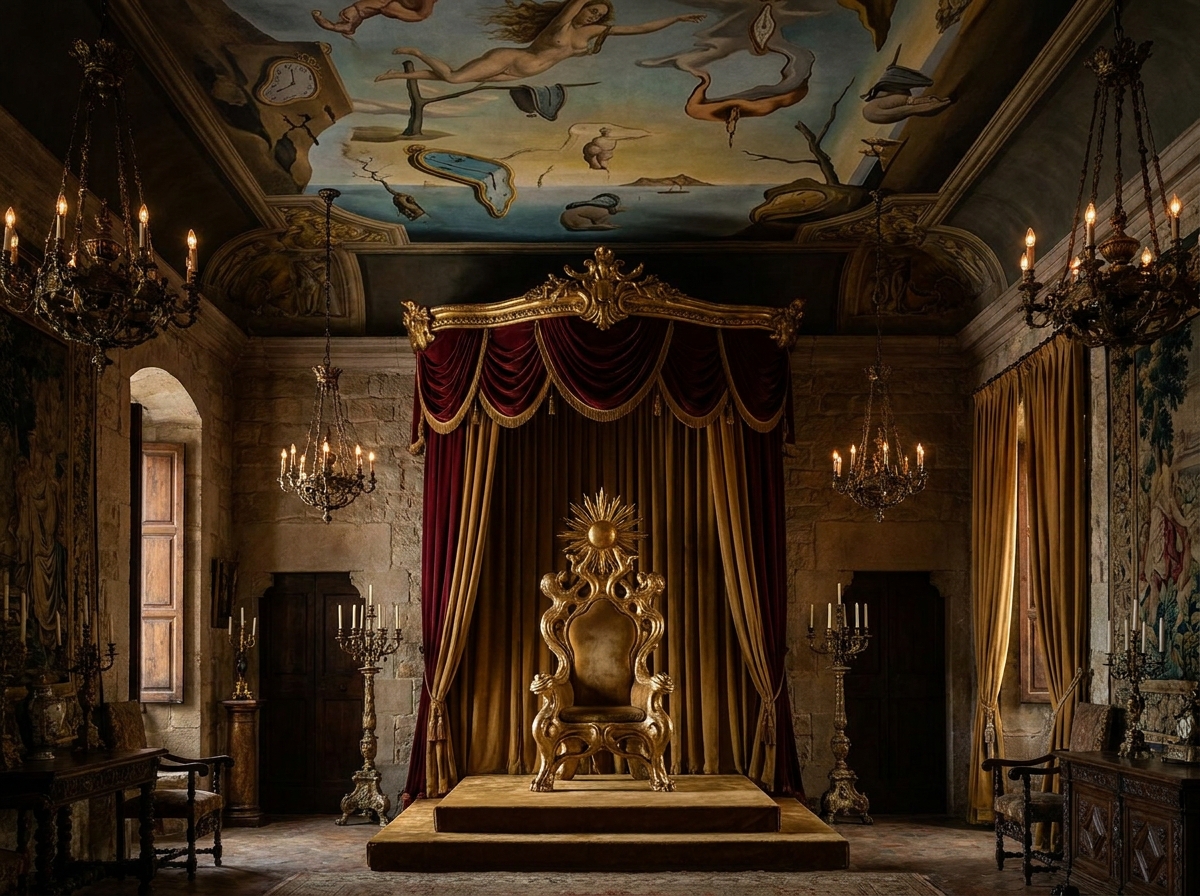
The architectural restoration avoided historical purism. Dalí celebrated the weathered stone walls while weaving in distinct surrealist interventions: vaulted halls received trompe-l'œil perspective frescos, a golden throne was placed under a dramatic canopy for Gala, and secluded gardens were decorated with Wagnerian fountain sculptures and spindly long-legged elephants reminiscent of his paintings.
The Surrealist Pact: Access by Written Invitation Only
Despite funding the purchase and directing the elaborate restoration, Dalí agreed to Gala's uncompromising rule: the artist was forbidden from entering Púbol without a formal handwritten letter of invitation sent in advance.
Púbol served as Gala's private refuge away from the intense media spotlight that followed Dalí. When she wished for his company, she mailed a formal letter stating the precise date and duration of his visit. Far from feeling rejected, Dalí treasured the protocol, viewing the ritual as a genuine enactment of medieval courtly love.
The Seaside Labyrinth of Portlligat and Mediterranean Light
Complementing the castle and hotel suites was their seaside residence in Portlligat, near Cadaqués. Over forty years, Dalí purchased adjacent fishermen's huts, connecting them into an organic labyrinth of whitewashed rooms, stepped courtyards, and narrow corridors precisely oriented to welcome the first rays of Iberian sunlight each dawn.
The seamless interaction between intimate interior spaces and the rugged landscape of the Costa Brava highlighted Dalí's sophisticated spatial intuition.
Surrealist Lessons for Contemporary Interior Design
Dalí's spatial philosophy provides lasting inspiration for modern architecture and interior curation:
- Sculptural Furniture as Focal Art: Iconic sculptural pieces, such as the Mae West Lips Sofa or sculptural chairs with anthropomorphic brass legs, transform functional furniture into fine art.
- Illusion, Scale, and Perception: Clever mirror placements, recessed niches, and grazing lighting alter spatial depth, as explored in our study of the Ames Room in architecture.
- Heritage Reinterpretation: Merging historic masonry with bold avant-garde details mirrors famous industrial conversions, including Ricardo Bofill's La Fábrica.
Design Spaces with Bold Artistic Character Using AI
Whether imagining classical palace-inspired rooms or sleek modern interiors featuring sculptural accents, Arquitet IA transforms your photos into photorealistic 3D concepts in seconds.
Explore Arquitet IAFrequently Asked Questions About Salvador Dalí's Spaces
Why did Salvador Dalí live in hotels rather than an ordinary home?
Dalí rejected bourgeois domestic routines as an impediment to creativity. For over thirty years, he spent winters in Suite 1603 at The St. Regis New York and springs at Le Meurice in Paris, using the grand salons as painting studios and theatrical stages.
What was Gala's rule at the Castle of Púbol?
When Dalí purchased and restored the 11th-century castle in 1969 as a gift for Gala, she mandated that he could visit only after receiving a formal handwritten invitation specifying the exact date and time.
How did Dalí decorate Púbol Castle?
Dalí created dreamlike scenery: a gilded throne beneath a velvet canopy for Gala, trompe-l'œil ceiling murals, a gothic crypt, and gardens filled with sculptures of long-legged surrealist elephants.
Where is Dalí's labyrinthine seaside home located?
In Portlligat, near Cadaqués on Catalonia's Costa Brava. Over forty years, Dalí purchased small fishermen's huts and connected them into an organic labyrinth designed to catch the very first morning rays of Iberian sunlight.