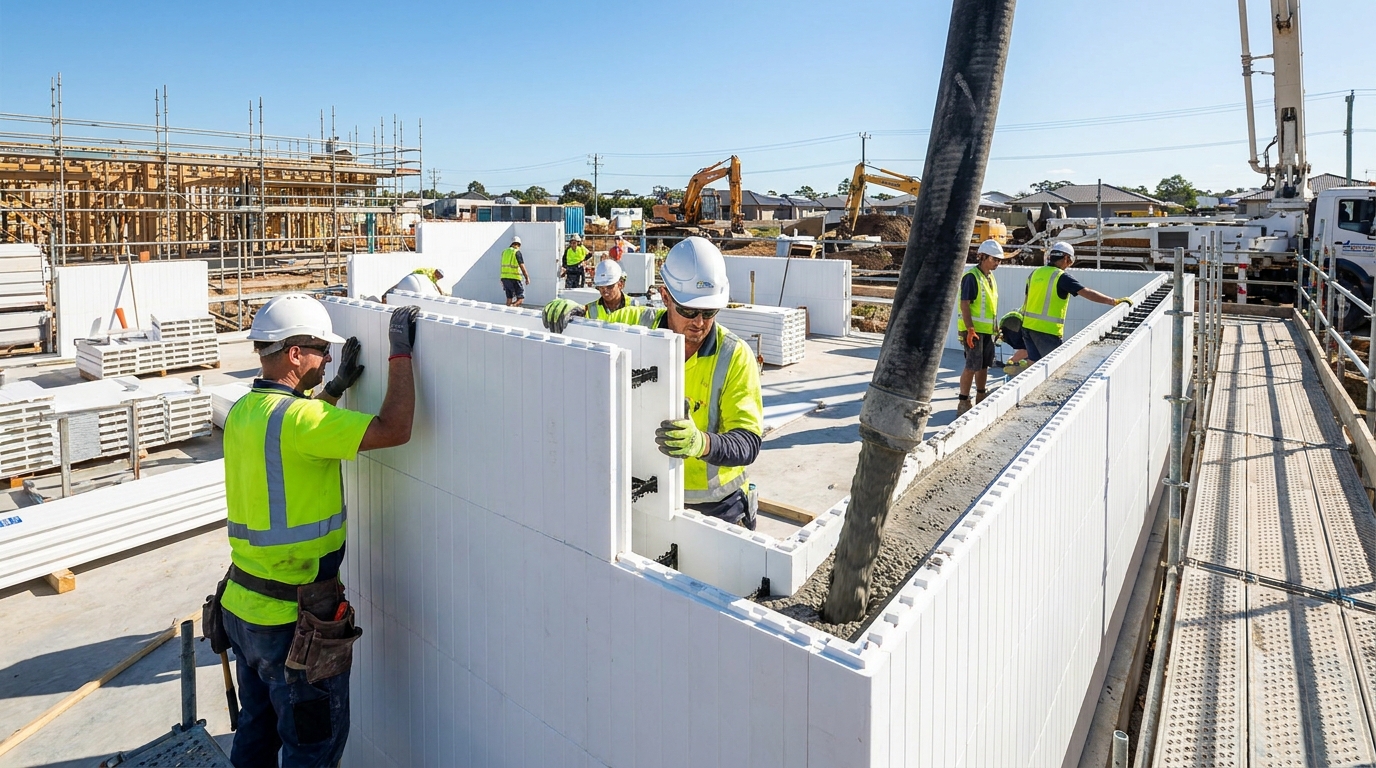
The growing global demand for streamlined industrialized construction that dramatically reduces project timelines without sacrificing structural integrity has positioned concrete-filled PVC wall panels as a transformative construction technology. Known across modern building sectors as permanent polymer formwork systems, the technique combines the dimensional accuracy of UV-stabilized polymer extrusions with the monolithic strength of reinforced concrete.
"Industrialized structural PVC formwork eliminates disposable timber shuttering and wet plastering, reducing job-site schedules by up to 50% while operating with virtually zero waste." — Structural Building Systems Review.
Modular Engineering: Speed & Monolithic Structural Integrity
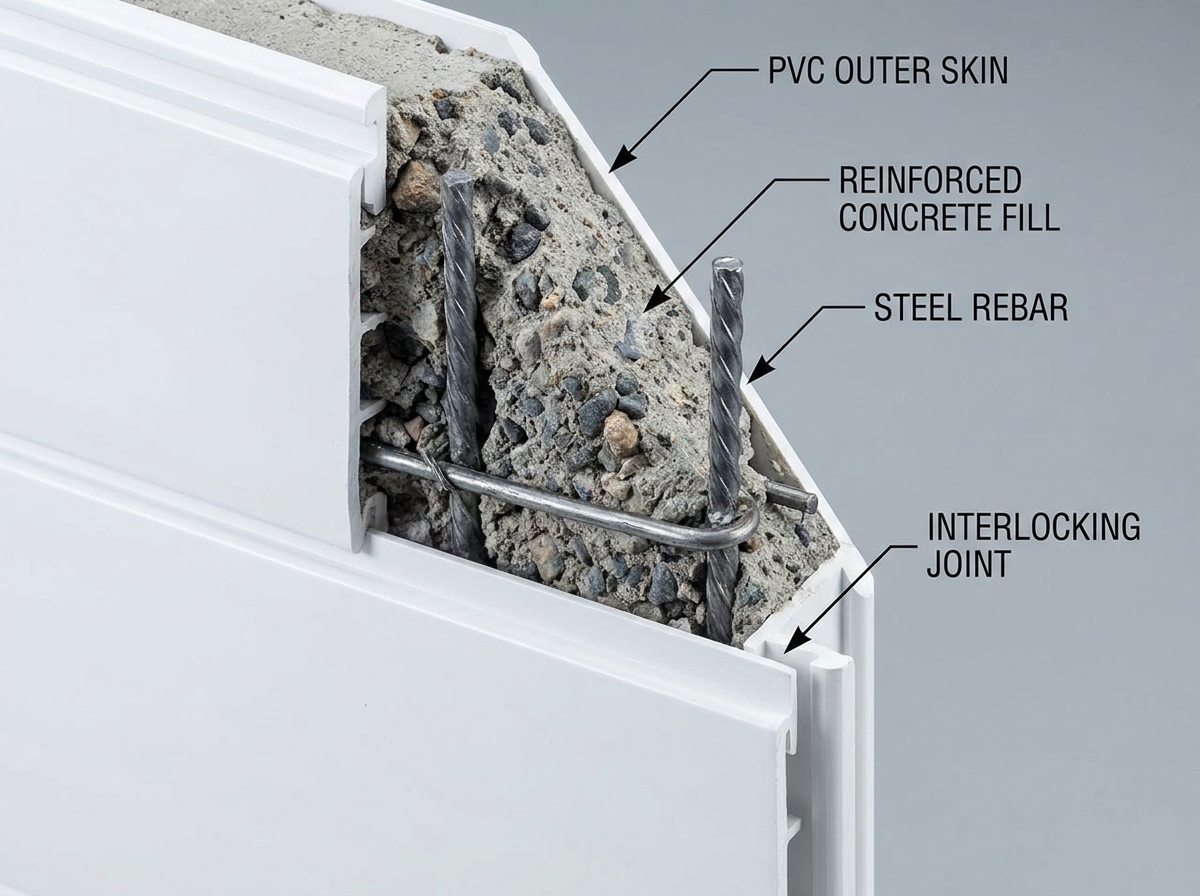
The core technology utilizes self-extinguishing rigid PVC profiles fitted with precision tongue-and-groove locking joints. The lightweight modules assemble rapidly onto concrete raft slabs or stem foundations without requiring wet laying mortars.
Internal hollow cavities accommodate vertical and horizontal rebar cages along with pre-routed electrical conduits and plumbing lines. Crews then pump self-compacting high-flow concrete into the cells, consolidating into a dense monolithic load-bearing wall.
Thermal-Acoustic Performance & Moisture Immunity
Unlike traditional blockwork vulnerable to micro-cracking, efflorescence, and rising damp, the outer polymer envelope provides complete impermeable protection. The material resists chemical degradation, mold accumulation, and severe coastal salt-spray environments.
The dense mass of the core concrete combined with outer hollow dampening chambers delivers exceptional sound insulation and thermal mass, maintaining stable indoor temperatures through shifting climate extremes.
Performance Matrix: Concrete-Filled PVC vs. Brick Masonry vs. Light Steel Frame
| Evaluation Metric | Concrete-Filled PVC | Traditional Masonry | Light Steel Frame |
|---|---|---|---|
| Construction Velocity | Ultra-Fast (-50% timeline) | Slow & labor-intensive | Fast |
| Site Waste & Debris | Near-Zero (No chipping) | High (constant rubble skips) | Low |
| Moisture & Mold Resistance | 100% Watertight & Immune | Prone to capillary damp | Requires vapor wraps |
| Impact & Structural Robustness | Maximum (Solid concrete core) | Medium to High | Board-dependent |
Sustainability & Clean Modern Job Sites
The rigid PVC formulation is 100% recyclable and curtails the environmental footprint of residential construction by bypassing massive timber usage for temporary formwork. This ethos of perpetual structural endurance mirrors our research into Ancient Roman Concrete Longevity and modern AI-Powered Construction and Renovation Planning.
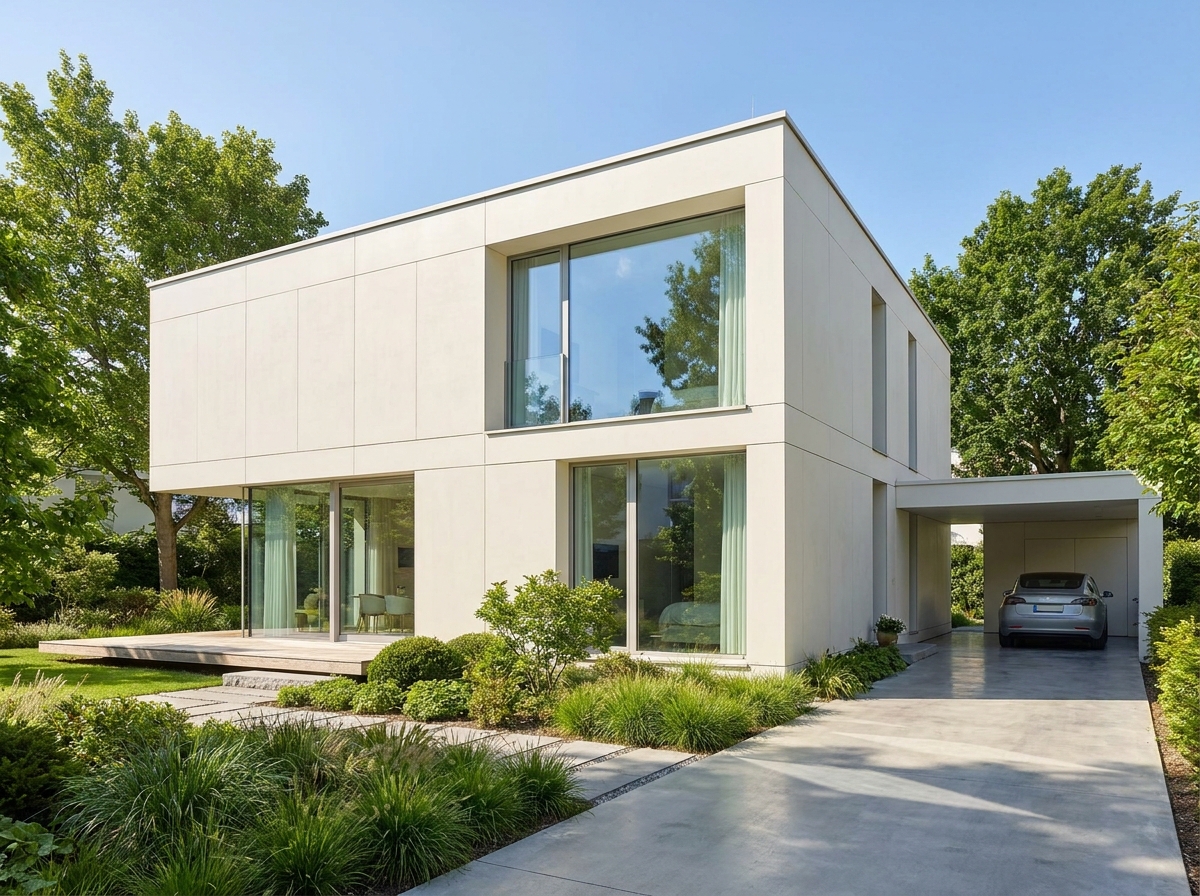
Furthermore, the modular surfaces accept specialty adhesion primers, elastomeric textured coats, or architectural timber battens, harmonizing with sophisticated residential aesthetics.
Simulate Modern Building Methods with AI
Eager to visualize how modular structural systems, textures, and exterior finishes will look on your plot or home renovation? Arquitet IA generates photorealistic 3D simulations in seconds.
Try Simulator in Arquitet IAFrequently Asked Questions
How do concrete-filled PVC structural wall panels work?
The system utilizes hollow, interlocking rigid PVC profiles that serve simultaneously as stay-in-place formwork, protective waterproofing skin, and ready-to-use wall finish. Once panels are erected and conduits placed, hollow cores are filled with flowable concrete and steel reinforcing rebar.
What are the primary advantages over conventional brick masonry?
The technology cuts build times by up to 50%, eliminates timber formwork waste, provides complete resistance against rising damp and mildew, and produces smooth monolithic surfaces that do not require traditional plastering.
Can additional decorative finishes be applied over PVC panels?
Yes. While the pristine washable surface can remain exposed, applying specialty bonding primers allows walls to receive acrylic paints, mineral plasters, stone cladding, or timber batten features.