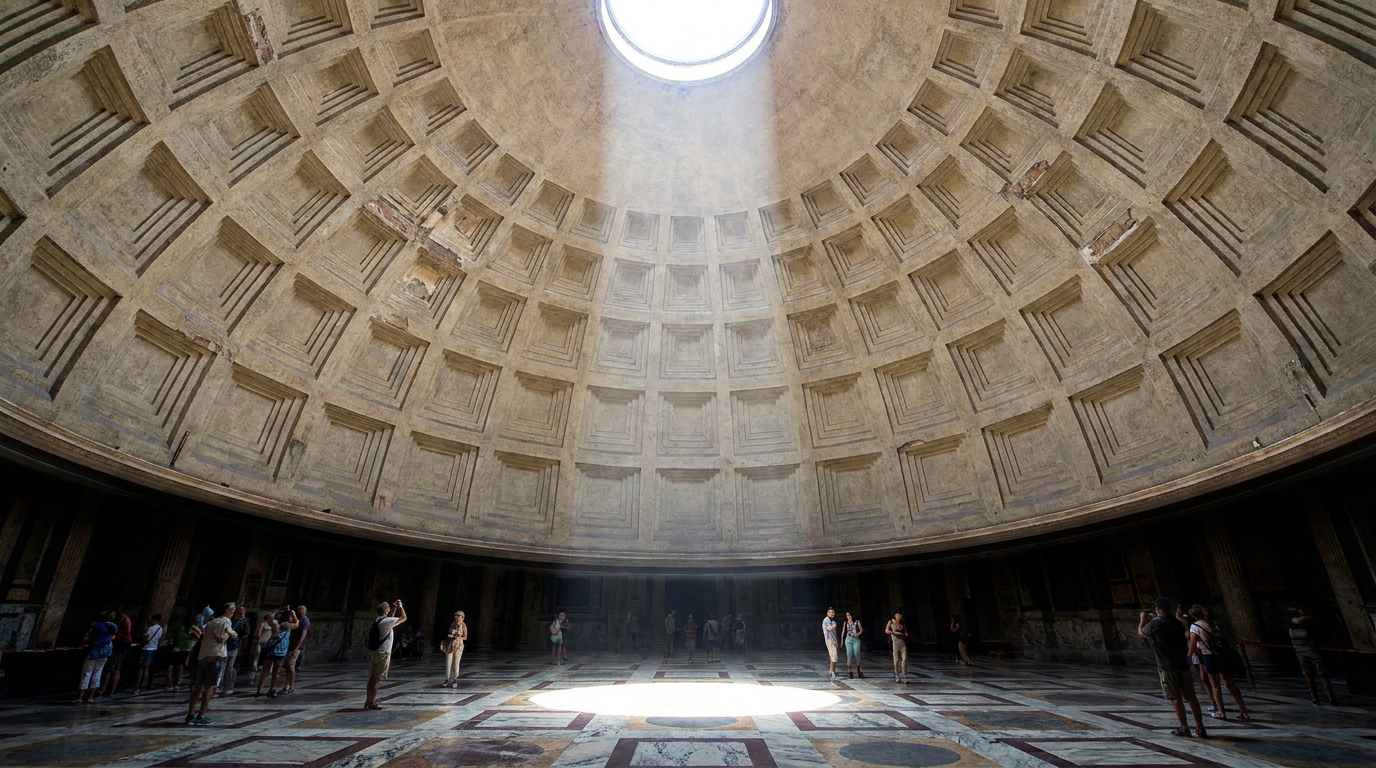
While modern reinforced concrete structures frequently show signs of structural fatigue, spalling, and rebar corrosion within fifty to one hundred years, monuments constructed during the Roman Empire — including the Pantheon, Mediterranean sea breakwaters, and the towering arches of the Colosseum — have stood firm for more than two thousand years.
For generations, civil engineers and architectural historians regarded the endurance of these ancient structures as an impenetrable riddle. Recent material science investigations led by the Massachusetts Institute of Technology (MIT) in collaboration with European laboratories have finally decoded the formula: Roman concrete was chemically engineered to heal its own fractures spontaneously whenever micro-cracks develop.
The Monumental Engineering of Opus Caementicium
Formally designated by ancient builders as Opus Caementicium, Roman concrete fundamentally reshaped architectural possibilities. Rather than depending exclusively on load-bearing stone masonry, Roman builders cast fluid mortar between brick or volcanic stone forms, enabling unprecedented interior spans, monumental barrel vaults, and cross-country aqueducts.
The classic formulation brought together pozzolanic volcanic ash from Pozzuoli, lime, and carefully graded stone aggregate. In marine harbor works submerged in seawater, the prolonged interaction with dissolved minerals triggered the growth of rare aluminous tobermorite crystals, reinforcing the matrix over centuries rather than degrading it.
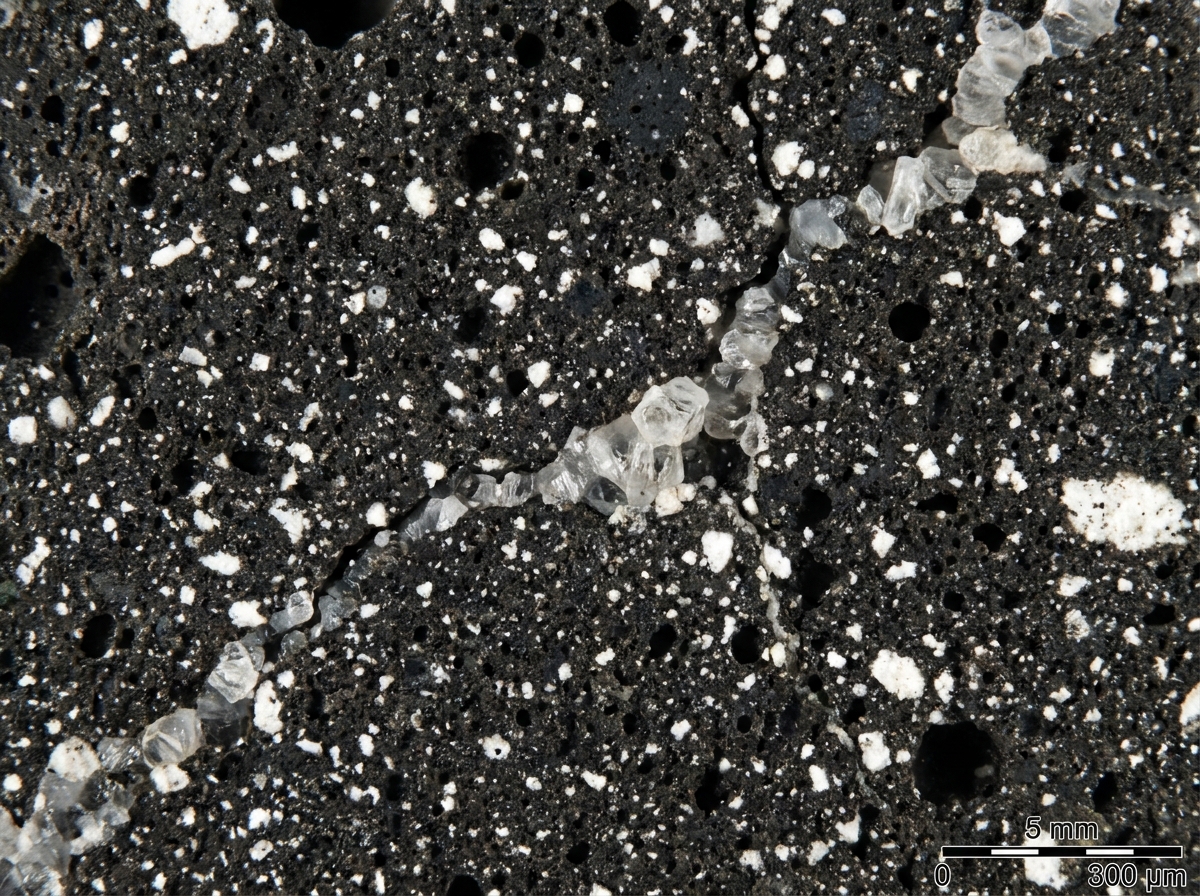
Petrographic analysis: millimeter-sized white lime inclusions (lime clasts) serve as active self-healing chemical reservoirs.
The Pantheon and the World's Largest Unreinforced Concrete Dome
Dedicated around 125 AD during the reign of Emperor Hadrian, the Pantheon of Rome stands as the absolute zenith of ancient concrete mastery. Its unreinforced solid dome, spanning 43.3 meters (142 feet), remains the largest unreinforced concrete dome on Earth to this day.
To prevent catastrophic gravitational failure, Roman master builders applied an ingenious gradation of aggregates: the foundation walls and lower dome rings utilized dense travertine and volcanic tuff, while higher elevations toward the 9-meter central oculus incorporated lightweight volcanic pumice, progressively lightening the crown's downward load.
The Lime Clast Riddle and the Hot Mixing Process
For decades, scholars dismissed the tiny white limestone fragments visible in Roman concrete as sloppy workmanship or poorly mixed slaked lime. Modern microscopic and spectroscopic analyses revealed that these fragments — known as lime clasts — were intentional.
Roman artisans combined quicklime (calcium oxide) directly with pozzolanic ash and water in a dynamic process known as hot mixing. The resulting exothermic reaction heated the mixture, generating unique reactive calcium compounds that remained trapped in the solid matrix, poised to reactivate upon future moisture exposure.
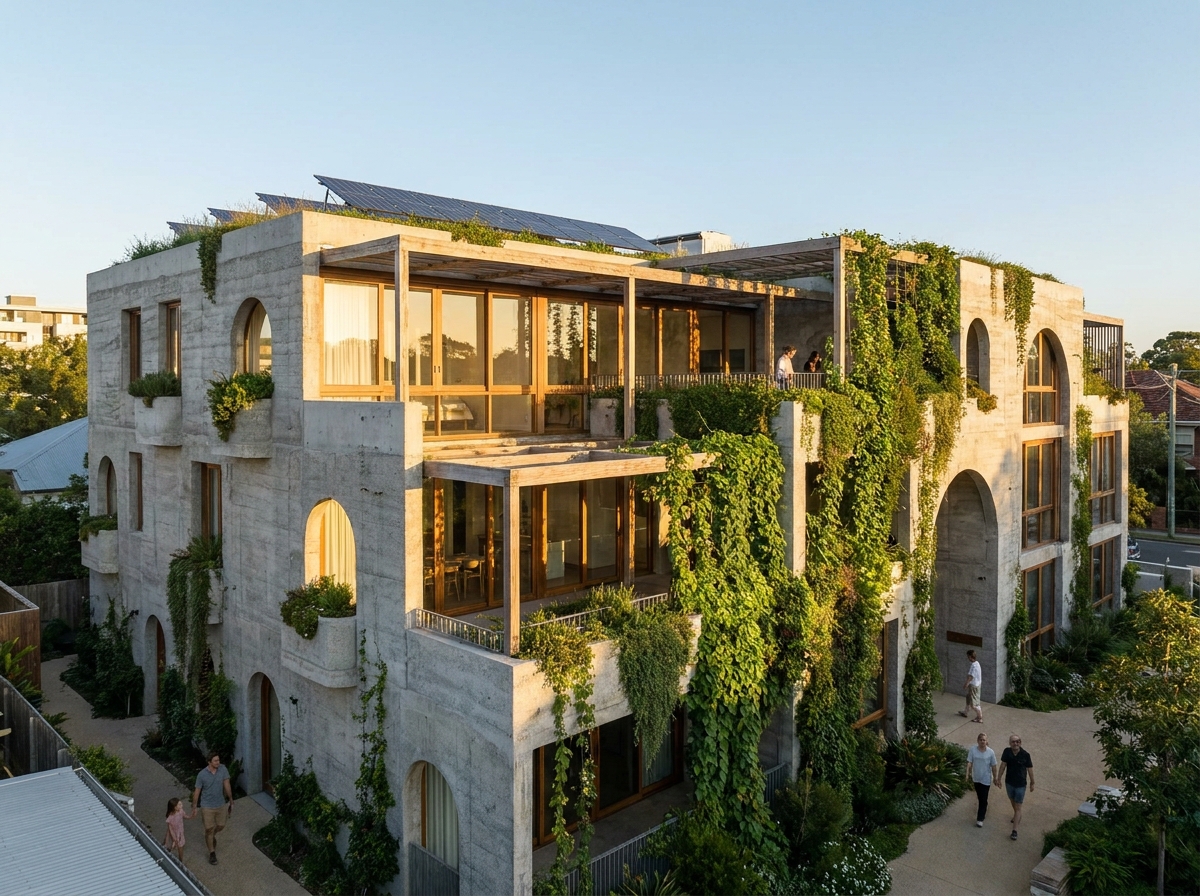
Modern sustainable engineering adopting ancient mineral chemistry for extended structural lifespan.
Autonomous Structural Healing in Action
When seismic shifts or thermal contraction create microscopic cracks in the masonry, rainwater seeps into the fissure and immediately meets the embedded lime clasts.
The reactive calcium dissolves into the infiltrating moisture and reacts with atmospheric carbon dioxide, precipitating as fresh calcite crystals (calcium carbonate). Within days, this newly formed limestone fills the void, re-bonding fractured surfaces and preventing water from penetrating deeper into the structure.
Lessons from Ancient Rome for Modern Sustainable Architecture
Rediscovering ancient material chemistry holds profound implications for 21st-century construction. Conventional Portland cement clinker production is responsible for roughly 8% of all global carbon emissions. Adopting hot mixing principles and pozzolanic binders offers a realistic route toward creating residential structures, infrastructure, and foundations that last for centuries while requiring significantly fewer repairs.
This synergy between historical engineering and refined material aesthetics aligns naturally with other great design stories, including the precision craft of the Versailles mirrors and the raw mineral textures celebrated in industrial home decor styles.
Design Spaces with Natural Stone and Concrete Finishes using AI
Want to preview exposed concrete textures, natural stone features, and architectural finishes in your renovation? Upload a photo of your space to the Arquitet IA app and generate photorealistic simulations in seconds.
Simulate Materials in Arquitet IA →Frequently Asked Questions about Roman Concrete
Why does ancient Roman concrete outlast modern reinforced concrete?
Unlike modern Portland cement structures that degrade as internal steel rebar rusts, Roman concrete incorporates volcanic pozzolana and reactive quicklime clasts created through hot-mixing, conferring lifelong self-healing properties upon contact with water.
How does the self-healing mechanism work?
When hairline fractures form, moisture dissolves calcium from microscopic lime clasts embedded in the matrix. The dissolved calcium reacts with carbon dioxide, precipitating as solid calcium carbonate crystals that autonomously seal the crack.
What is the largest unreinforced concrete structure from antiquity?
The dome of the Pantheon in Rome, completed around 125 AD under Emperor Hadrian with a span of 43.3 meters (142 feet), remains the largest unreinforced solid concrete dome on Earth.
How can modern sustainable architecture benefit from this discovery?
Integrating Roman hot-mixing and pozzolanic principles allows the development of low-carbon cements with multi-century lifespans, dramatically lowering repair cycles and embodied carbon emissions.