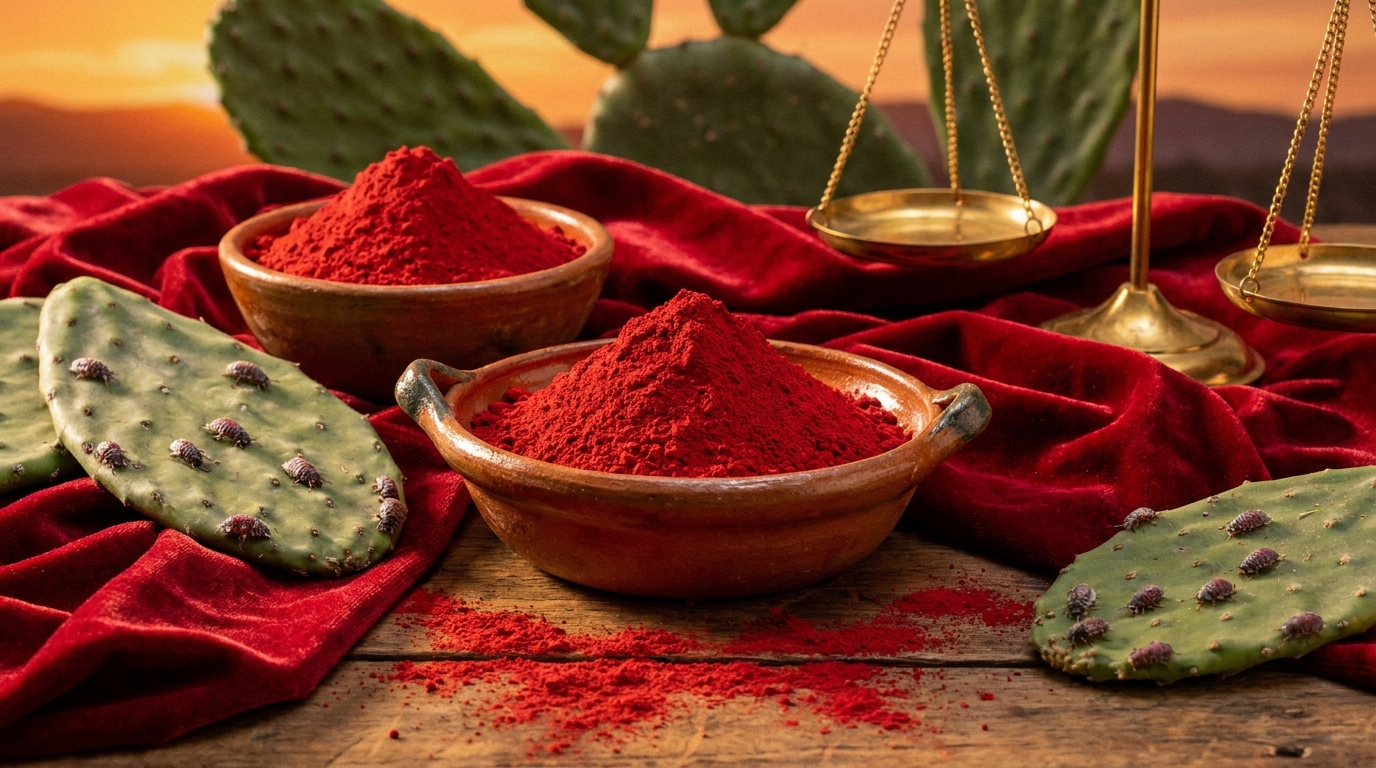
Prior to the emergence of synthetic coal-tar dyes in the mid-nineteenth century, the quest for a permanent, vibrant red ignited transoceanic trade wars and generated vast fortunes. While medieval Europe was restricted to fugitive plant dyes such as madder root or toxic heavy-metal pigments like cinnabar, Mesoamerican civilizations possessed a biological marvel of unmatched chromatic brilliance: carminic acid, produced naturally by the scale insect Dactylopius coccus feeding on the nopal cactus.
When sixteenth-century Spanish fleets encountered the markets of Tenochtitlán and Oaxaca, they discovered scarlet textiles of a luminosity previously unknown in the Old World. Cochineal quickly became Spain’s second most valuable export from the Americas, surpassed solely by silver bullion from Zacatecas and Potosí.
Pre-Columbian Alchemy: The Secret of Nocheztli
For the Zapotec, Mixtec, and Aztec cultures, the dye was known as nocheztli ("blood of the nopal"). Female insects accumulate carminic acid in concentrations up to 20% of their dry body weight as a chemical defense against predatory ants and birds.
Cultivation demanded extraordinary artisanal precision. An estimated 70,000 dried female insects were collected by hand using soft deer-hair brushes to yield a single pound of pure carmine pigment. When bound with alum or mineral mordants, the resulting lake provided a tonal spectrum from brilliant crimson to deep imperial purple.
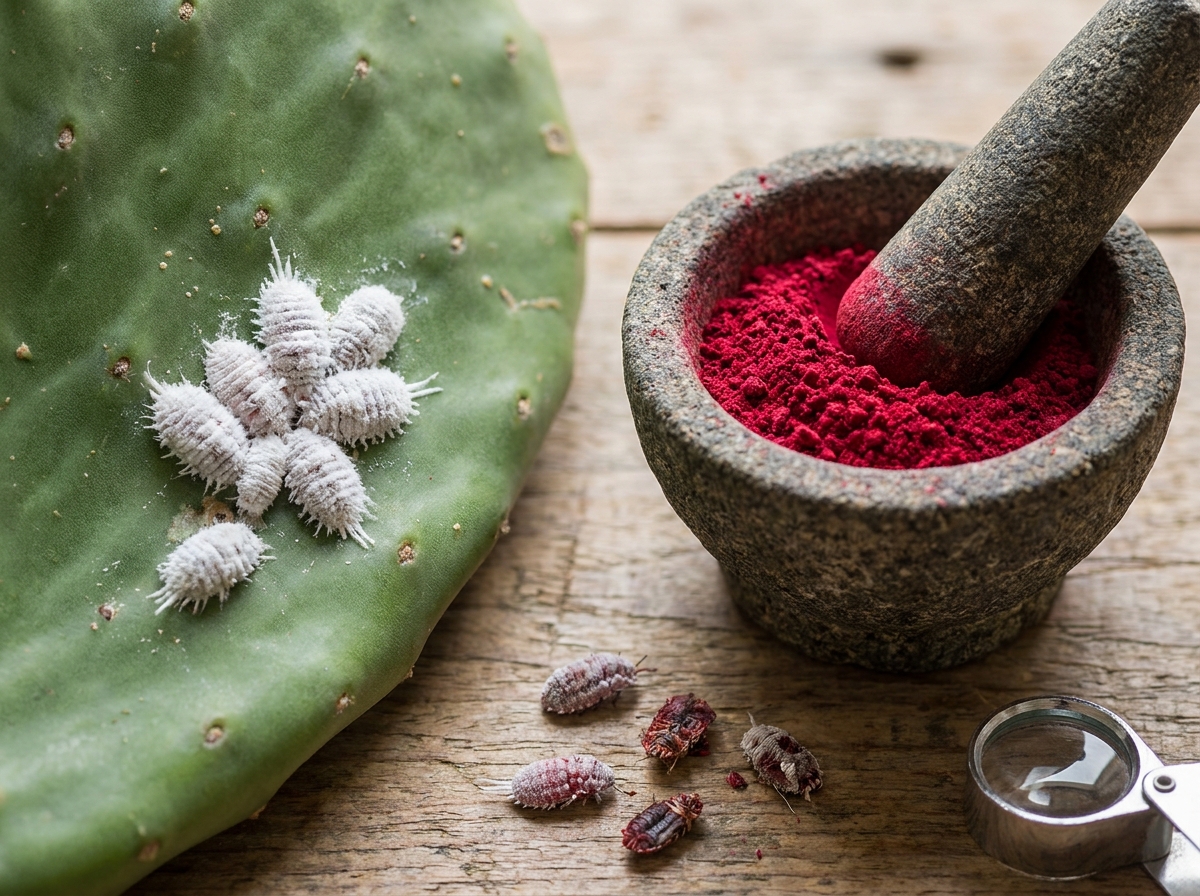
Organic Heritage: Traditional cochineal farming on nopal cacti, yielding the most resilient natural scarlet in human history.
Monopoly of the Spanish Crown and Old Master Canvases
Recognizing the geopolitical value of the crimson dye, the Spanish Crown guarded the origin of cochineal under strict state secrecy for over two hundred years. European scholars vigorously debated whether the miraculous substance was an exotic botanical seed or an enigmatic mineral crystal.
The arrival of carmine in Antwerp, Venice, and London transformed Western art. Titian, Tintoretto, Rembrandt, and Velázquez deployed carmine glazes to render glowing liturgical robes, luminous flesh tones, and velvet drapery that retained their chromatic depth across generations of museum display.
Palatial Interiors: The Theatrical Weight of Imperial Scarlet
Within the royal residences of Versailles, Madrid, and Caserta, cochineal extended far beyond ceremonial garments to define architectural space.
Entire salon walls were hung with crimson silk damasks and Genoese cut velvets dyed with cochineal, framed by ornate gilded boiserie. Under candlelight, these tactile surfaces absorbed and modulated light, creating an enveloping, acoustic intimacy that signaled absolute sovereignty.

Palatial Opulence: Carmine-dyed velvets paired with hand-carved gilded woodwork established red as the definitive tone of regal authority.
The Modern Revival of Natural Pigments in Architecture
Although synthetic azo dyes democratized color production in the industrial era, contemporary architecture has witnessed a thoughtful return to authentic, bio-based pigments.
In heritage architectural conservation, artisan wall coverings, and luxury interior commissions, carmine-derived palettes—spanning mineral terracotta, crushed berry, and deep burgundy—are celebrated for their non-toxic purity and gentle lightfastness. Used on bespoke mohair upholstery, acoustic wall panels, and intimate dining pavilions, these tones bridge centuries of artisanal history with sophisticated contemporary elegance.
Technical Specifications and Material Characteristics of Cochineal Carmine
| Property | Technical Specification | Performance & Architectural Use |
|---|---|---|
| Active Compound | Carminic Acid (C22H20O13) | Water-soluble natural anthraquinone glucosidal dye |
| Biological Source | Dactylopius coccus (females) | Parasitic scale insect on Opuntia ficus-indica |
| Photostability | High (Superior to vegetable dyes) | Retains luminous depth in oil glazes and natural textiles |
| Architectural Applications | Silk damasks, mohair velvets, mineral limewashes | Theatrical dining pavilions, intimate studies, historic restorations |
Frequently Asked Questions on Cochineal Carmine
How is natural cochineal carmine pigment produced?
Carmine is harvested from the dried bodies of female scale insects (Dactylopius coccus) that feed on prickly pear cacti (Opuntia). The insects produce carminic acid as a natural predator deterrent, which is precipitated with aluminum and calcium salts to yield pure carmine lake.
Why was cochineal carmine superior to historical European dyes?
Unlike plant-derived madder root or mineral cinnabar—which yielded duller orange-reds and degraded rapidly—cochineal produced an intensely vibrant, lightfast crimson that maintained its brilliance across centuries.
What was cochineal's economic significance during the Colonial era?
In the 16th to 18th centuries, Mexican cochineal was the Spanish Crown's second most lucrative export, surpassed only by silver bullion, and was traded globally on the London and Amsterdam commodities exchanges.
How are deep carmine and burgundy shades utilized in modern interiors?
In luxury residential design, deep carmine and burgundy velvets are used to envelop dining rooms, studies, and acoustic walls, creating an intimate theatrical atmosphere paired with dark timber and unlacquered brass.
Experiment with Historic Pigments & Palette Simulations in Arquitet IA
Curious to see how deep carmine wall coverings, bespoke millwork, and warm ambient lighting could elevate your dining space or library? Upload a photograph to the Arquitet IA app and explore photorealistic 3D spatial concepts instantly.
Try Color Simulations Free →