Stepping into a living room where every single item came from the exact same page of a modern catalog can feel clean, but it often lacks that genuine warmth and soul that makes a house feel like a real home. That is why retro and vintage interior design is experiencing such a massive resurgence: a mid-century credenza, a turntable on solid teak wood, or a cozy mustard armchair adds character and spark to everyday life.
Just like the tactile comfort of Warm Minimalism or the architectural balance in modern neoclassical spaces, mixing design eras is all about curation, balance, and intentional contrast.
Vintage vs. Retro: Do You Know the Difference?
While the terms are often used interchangeably, the distinction is clear and delightful:
Vintage refers to authentic, original pieces crafted decades ago (typically between the 1920s and 1980s) that have survived with their natural patina intact — like a walnut sideboard inherited from your grandparents. Retro, on the other hand, describes brand-new items made today with modern materials, but styled intentionally with nostalgic shapes and vibrant colors from past decades.
Tapered Legs and Solid Hardwood: Mid-Century Icons
The 1950s and 1960s gave birth to the beloved conical tapered legs (often affectionately called spindle legs).
By elevating storage chests and armchairs off the floor, tapered legs allow natural light to flow underneath, making smaller living rooms feel open and airy. Solid hardwoods like teak, rosewood, and walnut offer a rich grain and structural permanence that flat-pack furniture simply cannot replicate.
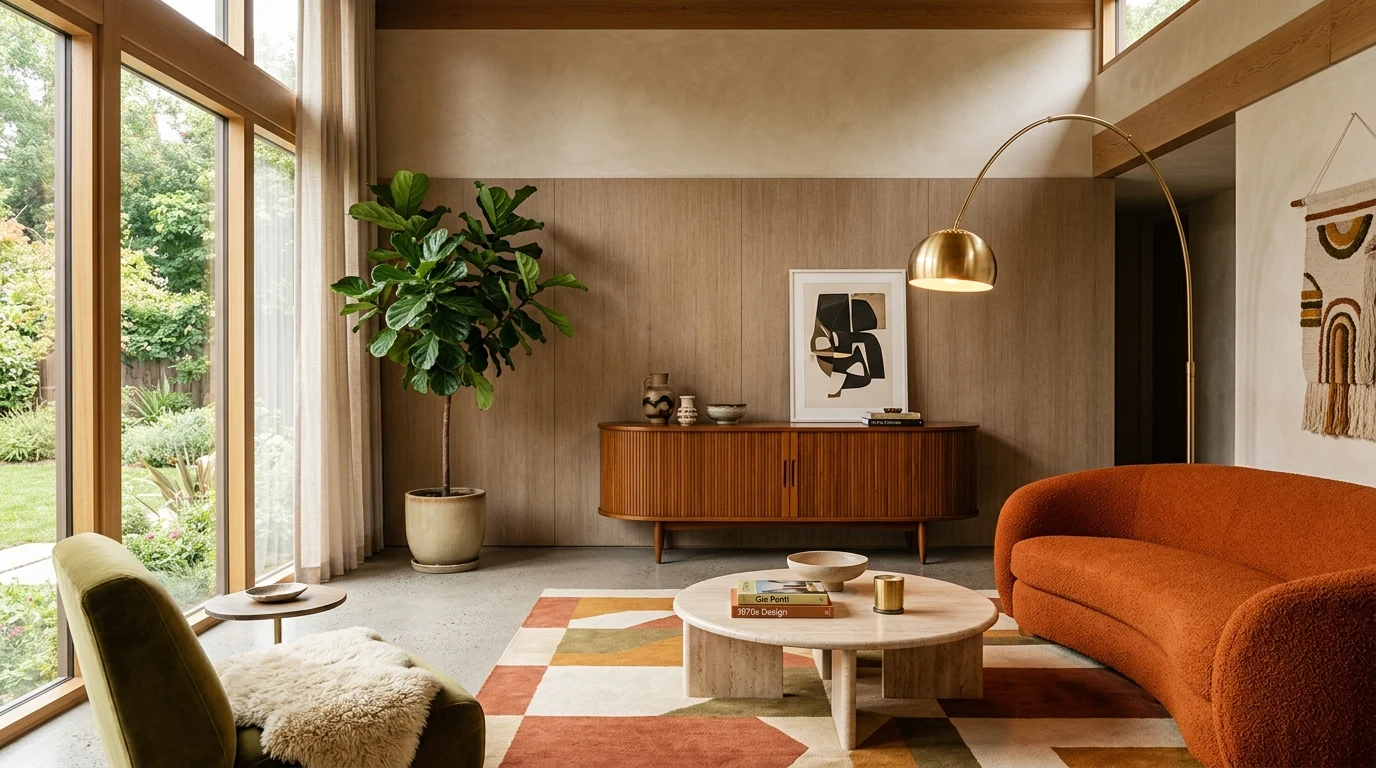
The 1970s Color Palette: Mustard, Terracotta, and Olive
After years of sterile cool grays, interior designers are falling in love again with the joyful warmth of the 1970s.
Colors like soft mustard yellow, burnt terracotta, olive green, and warm caramel look magnificent when layered onto corduroy cushions, textured throws, and a geometric area rug with subtle patterning.
How to Mix Eras Without Overwhelming the Room
The secret to mastering this look is the hero piece rule: pick one or two standout vintage items as the stars of the room, and keep the surrounding backdrop quiet and contemporary.
Crisp neutral walls, a sleek modern linen sectional, and minimalist track lighting provide the perfect counterpoint, allowing your vintage treasures to shine as genuine conversation pieces.
Quick Guide: Vintage Originals vs. Contemporary Retro
| Design Factor | Authentic Vintage Piece | Modern Retro Piece | Styling Recommendation |
|---|---|---|---|
| Origin & Era | Authentic, crafted between 1920–1980 | Brand-new, designed with nostalgic look | Blend the best of history with modern comfort |
| Materials | Solid hardwoods, cast iron, raw brass | Engineered wood, modern resins, stainless | Use solid vintage wood for anchor pieces |
| Sourcing | Flea markets, estate sales, antique shops | Contemporary design showrooms & retail | Take your time curating one treasure at a time |
| Room Ambiance | Deep character, patina, and heirloom value | Playful, vibrant, and hassle-free to clean | Avoid clutter: allow each piece room to breathe |
Frequently Asked Questions
What is the actual difference between vintage and retro decor?
Vintage refers to authentic original pieces made 20 to 100 years ago (sourced from antique markets or family heirlooms). Retro refers to brand-new pieces made today with modern manufacturing that intentionally replicate the visual look, colors, and shapes of previous decades.
How can I blend vintage furniture into a modern room without it feeling like a museum?
The golden rule is the focal point strategy: choose one or two standout vintage pieces (such as a mid-century teak credenza or a 60s lounge chair) and pair them with crisp neutral walls, a comfy contemporary linen sofa, and warm modern lighting.
Which 1970s interior colors are trending right now?
Rich earthy tones like mustard yellow, burnt terracotta, olive green, warm caramel, and chocolate brown, which look stunning on velvet cushions, geometric rugs, and handcrafted ceramics.
How can I preview vintage furniture in my room using Arquitet IA?
Simply snap a photo of your room with your smartphone and upload it into the Arquitet IA app. You can test tapered-leg sideboards, brass lamps, and classic armchairs in photorealistic 3D renders within seconds.
Explore Retro & Vintage Styles with Arquitet IA
Wondering how a vintage mid-century sideboard, warm 70s colors, or a statement armchair would fit into your living room? Take a photo with the Arquitet IA app and preview photorealistic 3D room transformations right from your phone.
Simulate Vintage Furniture in App →