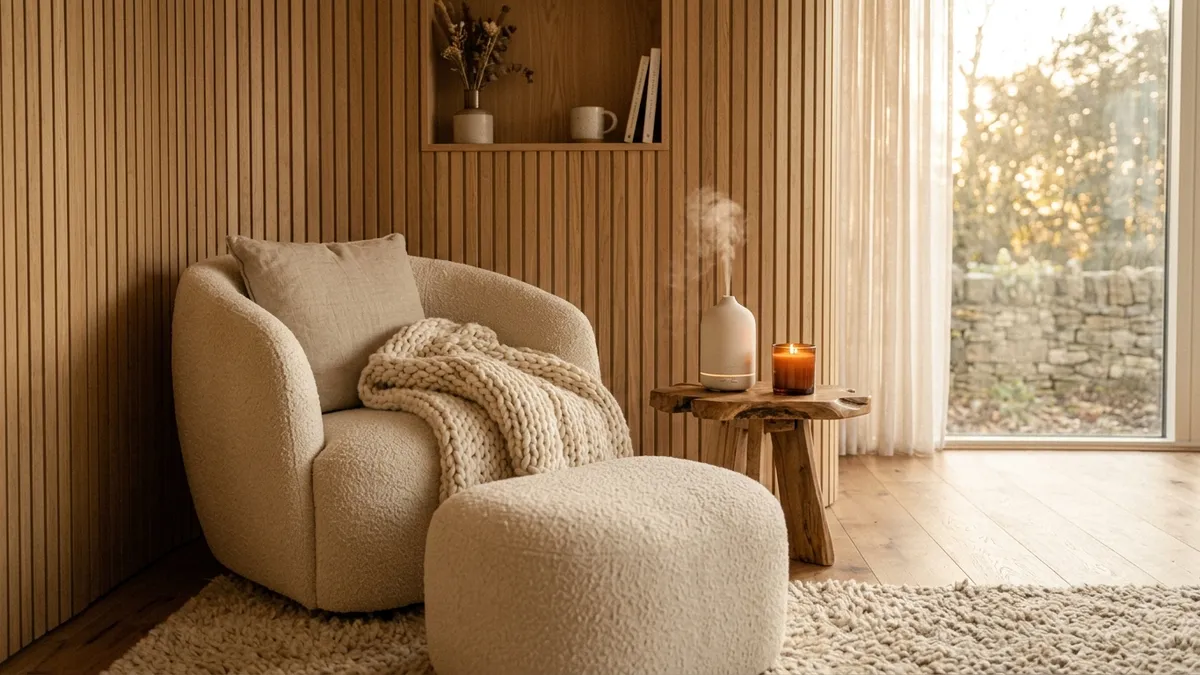
For over a century, Western interior architecture operated under the tyranny of the eye. Spaces were conceived primarily as photogenic stages, prioritizing clean orthogonal geometries and glossy, mirror-flat planes that all too often culminated in echoey, cold, and sensory-sterile environments. Today, leading contemporary architects—informed by breakthroughs in neuroarchitecture and environmental cognitive psychology—have spearheaded a transformative philosophy: the rise of holistic sensory architecture.
True residential luxury is no longer quantified merely by the market valuation of canvas artwork on the wall, but by an interior's biological capacity to quiet the sympathetic nervous system, welcome tactile discovery, scent ambient air with authentic botanicals, and envelop inhabitants in a restorative cocoon of biological stillness.
Neuroarchitecture: The Limbic Highway of Olfactory Design
Among all five human sensory channels, the sense of smell is unique in possessing a direct, unmediated neural bridge to the limbic system and amygdala—the ancient neurological hubs governing emotional memory, heart rate, and hormonal balance. While visual and acoustic inputs must first route through the thalamus for analytical sorting, olfactory molecules are emotionally interpreted in milliseconds before conscious recognition occurs.
In luxury residences, environmental scenting has moved past synthetic room sprays in favor of bespoke architectural olfactive branding. Central HVAC networks integrate sub-micron cold-air nebulization modules that atomize pure essential oils into microscopic dry aerosols, dispersing botanicals evenly across cubic space.
For living salons and reception galleries, accords of wild green fig, Virginia cedarwood, and Calabrian bergamot introduce crisp spatial elevation and mental clarity; within master bedroom suites and spa sanctuaries, infusions of French alpine lavender, Baltic amber, and Mysore sandalwood stimulate GABA neurotransmitters and melatonin synthesis, easing the body into deep physiological rest.
Haptic Depth: Tactile Honesty in Natural Materiality
Haptics—the perceptual science of touch and cutaneous feedback—represents the sensory foundation most neglected by screen-centric design. Synthetic, plasticized laminates and high-gloss polyester textiles trigger subtle biological friction, as human skin intuitively craves the warmth and organic porosity of honest, breathing materials.
High-end sensory design layers authentic textures with deliberate contrast: the cool, irregular slub of 100% pure Belgian linen on oversized sofas, the cloud-like warmth of curly sheep bouclé on library reading armchairs, the velvety softness of vegetable-tanned full-grain leather, and the grounding tactile grain of wire-brushed solid oak where natural growth rings can be felt under fingertips.
On hard surfaces, honed matte finishes and brushed *leather-finish* natural stones replace high-gloss polish, inviting bare feet and communicating a profound sense of mineral permanence and geological groundedness.

Soundscape Design and the Physics of Restorative Silence
Urban noise pollution—the relentless low-frequency rumble of metropolitan traffic and mechanical cooling towers—keeps human brainwaves trapped in an unnatural state of chronic low-grade vigilance (the fight-or-flight response). Creating an authentic home haven requires both sound isolation and the introduction of a positive biophilic soundscape.
Architectural laminar-flow indoor fountains and atrium water rills generate gentle natural pink noise that effectively masks harsh street frequencies. Simultaneously, ultra-linear invisible architectural speakers play subtle spatial field recordings and binaural soundscapes at whisper levels, encouraging alpha (relaxed alertness) and theta brainwave states.
Circadian Lighting Calibration and Warm Dimming
Vision closes the sensory circle not as a tyrant, but as the master regulator of human chronobiology. Sensory interiors eliminate harsh overhead downlights in favor of layered indirect ambient glows tuned to natural solar Kelvin temperatures (4000K during energetic daytime focus, stepping down to 2700K and finally 2200K via *Warm Dimming* technology at dusk).
Combining textured linen sconces, low-level grazing LEDs washing over textured stone feature walls, and clean-burning beeswax candles with crackling wood wicks creates a hypnotic, fireside glow that prepares the brain for restorative slumber.
Technical Specifications & Multi-Sensory Matrix for Luxury Interiors
| Sensory Dimension | Material & Technological Element | Neurophysiological Response | Architectural Application |
|---|---|---|---|
| Olfaction (Scent) | HVAC cold-air nebulization with green fig, cedar, and bergamot | Direct amygdala stimulation; rapid reduction in serum cortisol | Grand foyers, main living salons, and master wellness suites |
| Haptics (Touch) | Belgian linen, virgin wool bouclé, brushed oak, honed marble | Cutaneous mechanoreceptor activation; oxytocin release | Modular sofas, custom reading nooks, and barefoot flooring |
| Audition (Soundscape) | Laminar water fountains and hidden architectural pink noise | Alpha brainwave induction; masking of urban traffic transients | Internal courtyards, spa bathrooms, and private libraries |
| Vision (Illumination) | Warm Dimming 2200K–2700K indirect LED reveals (CRI > 95) | Melatonin preservation; relief of retinal and cognitive fatigue | Joinery reveals, inverted baseboards, and fabric wall sconces |
Frequently Asked Questions on Sensory Interior Architecture
How does neuroarchitecture explain the neurological impact of ambient scenting on residential stress reduction?
The human olfactory bulb possesses an immediate and unmediated neuroanatomical link to the limbic system and amygdala, the brain structures regulating emotional valence and deep memory. Pure botanical volatile fractions such as linalool (lavender) and limonene (bergamot) trigger the parasympathetic nervous system in milliseconds, measurably lowering resting heart rate and serum cortisol levels.
What is 'haptic architecture' and why is it essential to contemporary luxury interiors?
Haptics is the science of tactile perception and cutaneous proprioception. In luxury design, engaging the skin with raw, honest textures—such as unadulterated Belgian linen, curly sheep bouclé, honed matte marble, and open-grain brushed oak—elicits an instinctive biological response of safety, permanence, and bodily ease.
What defines a residential 'soundscape' and how does it differ from standard background music?
A residential soundscape is an acoustically engineered sonic environment designed to mask intrusive mechanical urban noise with beneficial natural sound frequencies, such as the gentle pink noise of laminar water streams, rustling leaves, or subtle binaural frequencies that induce alpha (relaxed focus) and theta (deep meditative) brain states.
How can homeowners preview multi-sensory materials and lighting schemes before remodeling?
Through the Arquitet IA spatial AI application, users can photograph their living room or master suite to explore combinations of natural brushed oak cabinetry, textured woven bouclés, honed stone walls, and warm 2700K indirect cove lighting in photorealistic 3D.
Explore Sensory Interior Compositions with Arquitet IA
Discover how authentic tactile textures, natural stone surfaces, and warm 2700K ambient illumination can elevate the comfort of your home. Upload a photo in the Arquitet IA app to generate photorealistic 3D concepts in minutes.
Simulate Sensory Interiors Free →