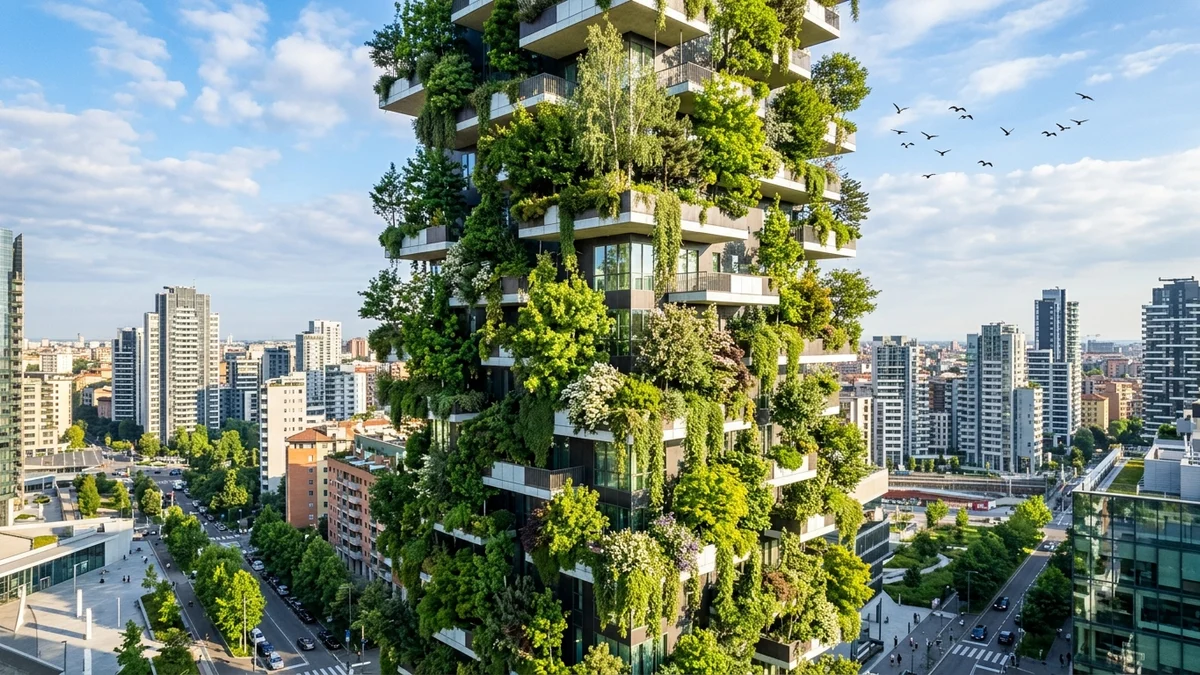
For over a century, urban expansion has meant cold concrete, mirrored glass, and endless asphalt. While this classic model housed millions of people, it produced a severe environmental toll: stifling urban heat islands and dense smog trapped between high-rises. Today, an inspiring shift in modern architecture is turning this paradigm on its head. By pitting concrete against chlorophyll, pioneering architects are engineering living skyscrapers that breathe for their cities, proving that dense metropolitan living can actively restore atmospheric health rather than merely depleting it.
Concrete versus Chlorophyll: The Rise of Living High-Rises
The vertical forest concept first captivated the world through Milan's famous Bosco Verticale, quickly evolving into an international movement across cities such as Singapore, Utrecht, Sydney, and Nanjing.
Unlike standard rooftop gardens or simple potted plants, these towers are structurally engineered from their foundations to support hundreds of full-grown deciduous trees and thousands of flowering shrubs within reinforced cantilevered terraces.
The result is a vertical woodland equivalent to tens of thousands of square meters of natural forest, concentrated within the ground footprint of a single metropolitan residential block.
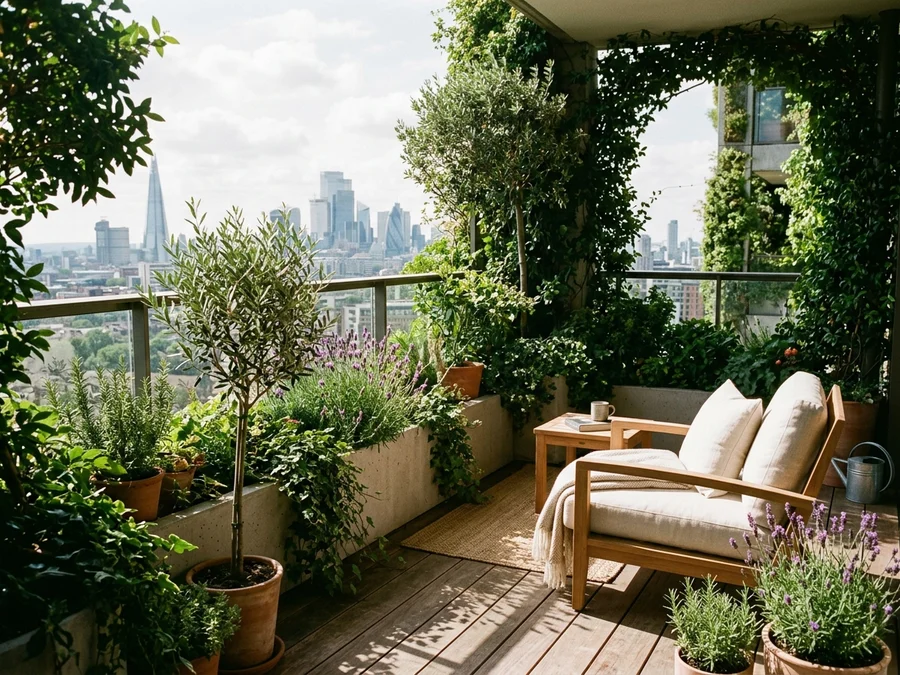
Private woodland sanctuary: residents enjoy the natural shade of real trees and blooming flowers dozens of stories above ground.
How Living Facades Filter Smog and Cool Neighborhoods
The dense plant canopy growing along the exterior serves vital environmental and human functions:
Trapping Particulate Matter: Tree leaves act as natural biological filters, capturing fine soot, brake dust, and airborne pollutants before they can enter homes or lungs.
Carbon Sequestration: A single vertical forest tower can absorb dozens of tons of carbon dioxide every year, releasing clean, humidified oxygen directly into the urban core.
Natural Microclimate Cooling: Through moisture transpiration, the foliage reduces surrounding facade temperatures by up to 5°C, effectively combating the oppressive urban heat island effect.
Gentle Acoustic Shielding: Dense tree branches and greenery absorb street traffic noise, creating peaceful, calm interiors for residents inside.
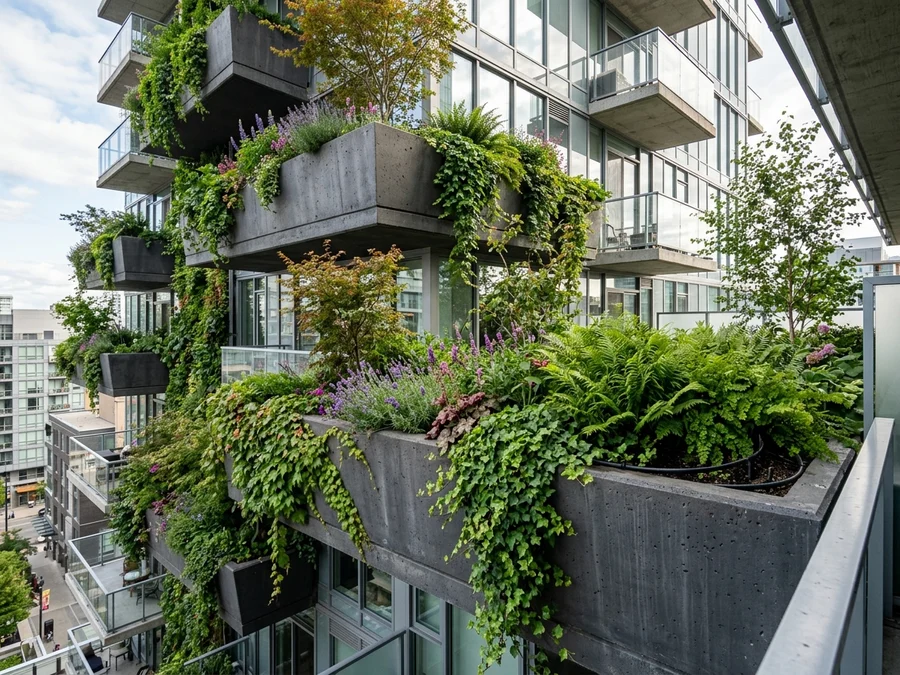
Botanical engineering: deep structural planters with automated drip lines recycle rainwater to sustain thriving plant life.
Botanical Engineering and the Return of Urban Wildlife
Building a thriving woodland in the sky demands close collaboration between architects, botanists, and structural engineers.
Each plant species is carefully selected based on wind resistance and sunlight exposure at varying building elevations. Native perennials and resilient shrubs ensure vibrant foliage throughout all four seasons.
Automated drip irrigation lines draw from rooftop rainwater harvesting systems and treated building graywater, ensuring not a single drop of municipal water is wasted.
This rich vertical habitat welcomes dozens of species of songbirds, butterflies, and pollinating bees back into urban centers, creating vital ecological corridors in dense concrete districts.
Bringing Biophilic Greenery to Your Balcony
You do not need to live in an architectural landmark to enjoy the calming benefits of living nature at home:
Transform your balcony or sunny window with varied planter heights, combining small potted trees like olive or citrus with fragrant herbs such as lavender and rosemary.
Trellised climbing plants create natural sunshades that keep your living room cooler in summer while framing your view with calming green textures.
Planning Biophilic Spaces with Arquitet IA
Whether you want to transform a balcony into an outdoor oasis, add a vertical garden to your patio, or find plants suited to your home's natural light, Arquitet IA makes visualizing green renovations effortless.
Simply snap a photo of your balcony or living room on your phone to preview stylish planters, wooden decking, lush foliage, and outdoor seating in seconds before heading to the nursery.
Frequently Asked Questions
What is a vertical forest in modern architecture?
A vertical forest is a high-rise residential or commercial building engineered with reinforced cantilevered planters that host hundreds of mature trees and thousands of shrubs, creating a living vertical ecosystem that purifies city air.
How do tree-covered skyscrapers reduce urban air pollution?
The tree leaves capture airborne dust, soot, and fine particulate matter from urban traffic, while naturally absorbing carbon dioxide through photosynthesis and releasing humidified, clean oxygen into surrounding neighborhoods.
How are trees on upper skyscraper floors irrigated?
The buildings use smart automated drip-irrigation networks powered by recycled rainwater collected on rooftops and treated graywater from the building, requiring zero municipal drinking water waste.
Do vertical forests reduce indoor energy consumption?
Yes. The dense living canopy shades glass facades from intense summer sun, lowering interior apartment temperatures by 3°C to 5°C and drastically cutting air-conditioning electricity demands.
How can I design a green biophilic balcony using Arquitet IA?
By snapping a photo of your balcony or patio in the Arquitet IA app, you can preview lush potted plants, small fruit trees, and vertical green walls on your smartphone in seconds before purchasing supplies.
📱 Bring Nature Home with Artificial Intelligence
Ready to turn your balcony or patio into a green sanctuary? Download Arquitet IA to test biophilic designs and botanical arrangements directly on your photo.
Try Arquitet IA Free