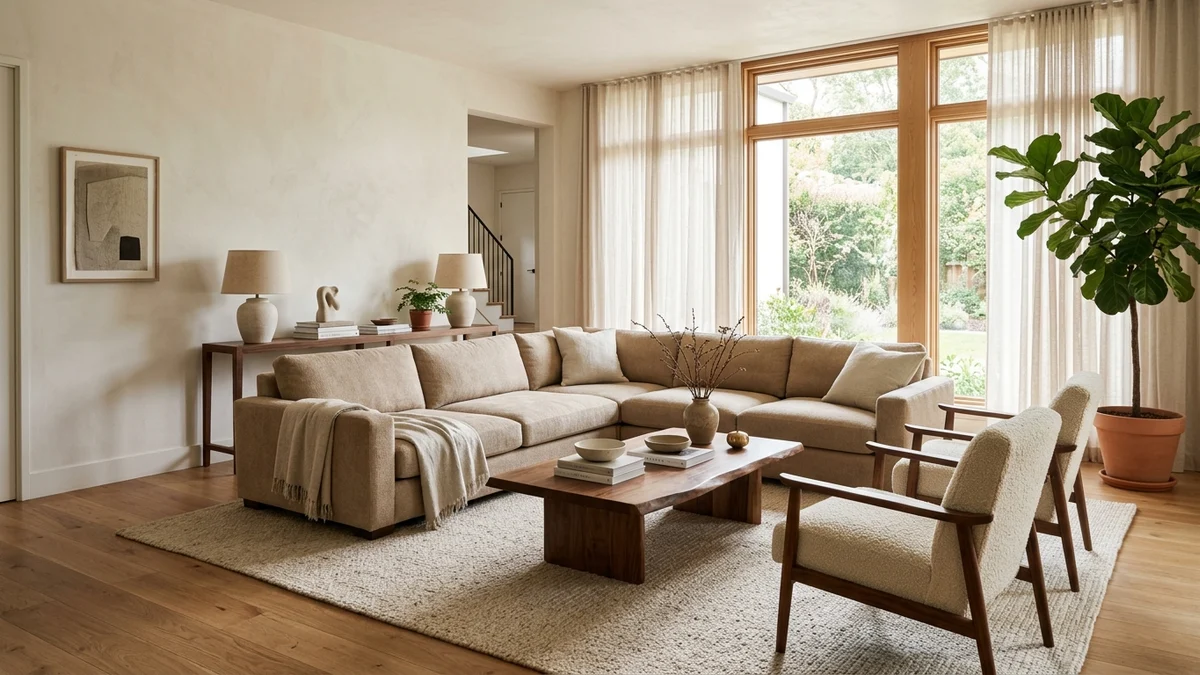
Almost everyone has experienced this instinctive urge: when moving into a new home or redecorating a living room, the first impulse is to push every sofa, armchair, and cabinet tightly against the walls. The logic seems clear at first glance, believing that leaving a vast open center will maximize floor space. In reality, the opposite occurs. When furniture is pinned against the perimeter, the room loses warmth, conversation feels distant, and the space ends up looking like an impersonal waiting room.
The Waiting Room Effect: Why Walls Should Not Anchor Everything
Pushing furniture against the perimeter creates a wide, underutilized central dead zone. Family members sitting on opposite sides of the room have to raise their voices to speak, which diminishes everyday coziness.
Furthermore, shoving bulky seating directly against drywall can scuff wall paint, collect hard-to-reach dust, and hide elegant home features like decorative baseboards or the natural drape of sheer curtains.
Thoughtful interior design thrives when a room invites people closer together. By pulling seating inward—even by just a few inches—the living room feels immediately intentional, comfortable, and stylish.
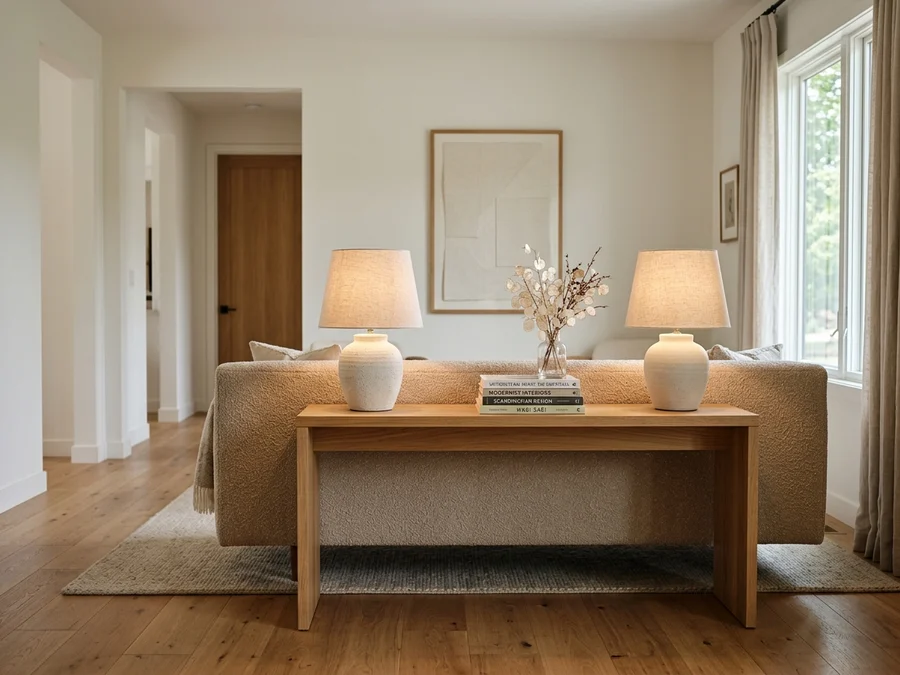
Functional elegance: a slim console table placed behind the sofa creates a natural walkway and holds lamps and books.
Understanding Visual Breathing Room and Depth
Visual breathing room is the deliberate space left around furniture pieces. Our eyes judge the true scale of an interior through the subtle cast shadows and light pockets that flow between objects and walls.
When a sofa floats just a few inches away from the wall, your brain registers that the room has ample space to breathe rather than feeling crowded. This gentle distance highlights the silhouette of your seating and imparts an airy, relaxed atmosphere.
Traffic flow improves noticeably as well. Instead of walking across the center rug and blocking the television view, people can naturally move behind or around seating islands, preserving a serene lounging area.
Creating Intimate Seating Islands: The Role of Rugs
To float furniture confidently without creating a floating, unmoored feeling, the secret lies in choosing the right area rug. A generous rug acts as a visual foundation that unifies the layout:
Front Legs on the Rug: In medium and compact living rooms, ensure at least the front feet of the sofa and armchairs rest upon the rug. This anchors the seating around the coffee table into a unified, welcoming island.
Closer Connection: Arranging seating pieces facing inward invites relaxed eye contact and effortless conversation without having to lean across a cavernous room.
The Behind-the-Sofa Console: Placing a narrow wooden console table behind the sofa conceals the upholstered back, offers surface space for ambient table lamps, and defines natural walking corridors.
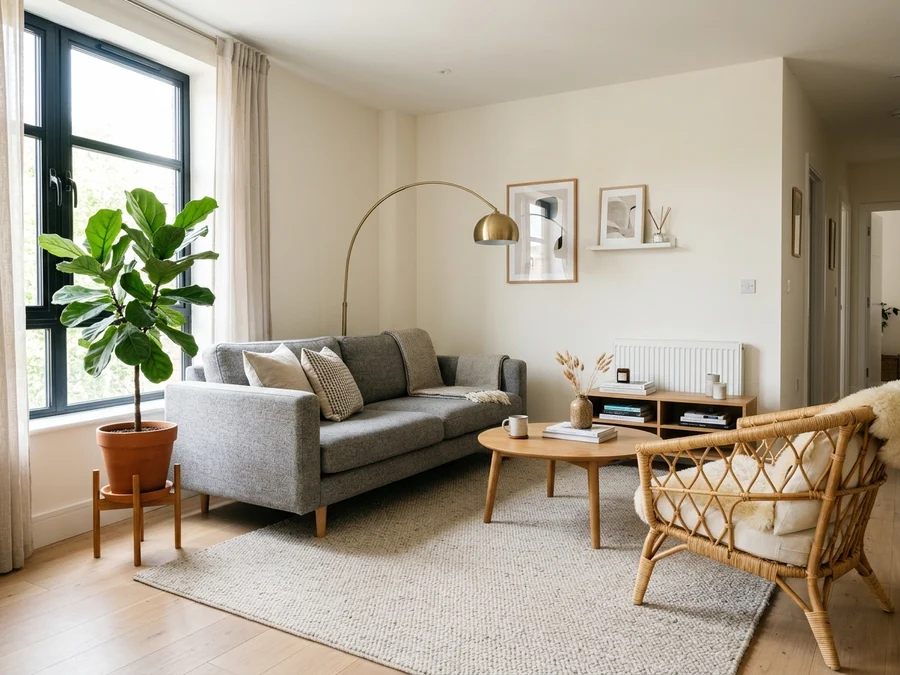
Small rooms with breathing space: pulling the sofa just 4 inches off the wall enhances natural light and makes rooms feel bigger.
How to Apply Floating Layouts in Compact Apartments
Many homeowners believe floating furniture is reserved solely for expansive mansions. In truth, compact apartments benefit the most from this principle:
You do not need a full walking hall behind the sofa in a modest room. Giving the couch just 4 to 6 inches of breathing room prevents cushion friction against walls, lets window drapes hang freely, and gives the illusion of a broader room.
Choose furniture with raised legs rather than heavy solid-block bases. When sofas and chairs allow light and flooring to be visible underneath, your eyes perceive more continuous square footage throughout the space.
Testing Furniture Arrangements with Arquitet IA
Dragging heavy sectionals across hardwood floors and guessing rug dimensions can be exhausting and risky. With Arquitet IA, you can test furniture layouts effortlessly.
Simply snap a photo of your living room on your phone to visualize floating sofas, proportionate rugs, console tables, and accent armchairs in seconds before shifting a single piece of furniture.
Frequently Asked Questions
Why is pushing all furniture against the walls considered a design mistake?
Pushing everything against the perimeter creates a cold, empty central void that resembles a waiting room. It also separates seating too far apart for comfortable conversations and hinders smooth traffic flow across the room.
What is 'breathing room' in interior design?
Breathing room refers to the small intentional gaps left between furniture and walls. These gaps create gentle cast shadows and visual depth, tricking the brain into perceiving the entire room as more open, airy, and expansive.
Can I float furniture in a small living room without wasting space?
Yes. In compact spaces, you do not need a full walking corridor behind the sofa. Pulling the sofa just 4 to 6 inches away from the wall provides the necessary breathing room and allows curtains to fall gracefully without eating into usable floor area.
How does an area rug help when floating furniture?
The rug acts as an anchor that connects the floating seating pieces into a cohesive conversation zone. Placing at least the front legs of sofas and armchairs on the rug unifies the arrangement beautifully.
How can I preview different furniture layouts before moving heavy pieces?
You can use the Arquitet IA app. By taking a quick photo of your living room on your phone, you can visualize floating sofas, console tables, armchairs, and area rugs in seconds with zero physical effort.
📱 Visualize Your Ideal Layout on Your Phone
Want to see how floating furniture and a proportionate rug can elevate your living room? Download Arquitet IA to test new arrangements and decor directly over a photo.
Try Arquitet IA Free