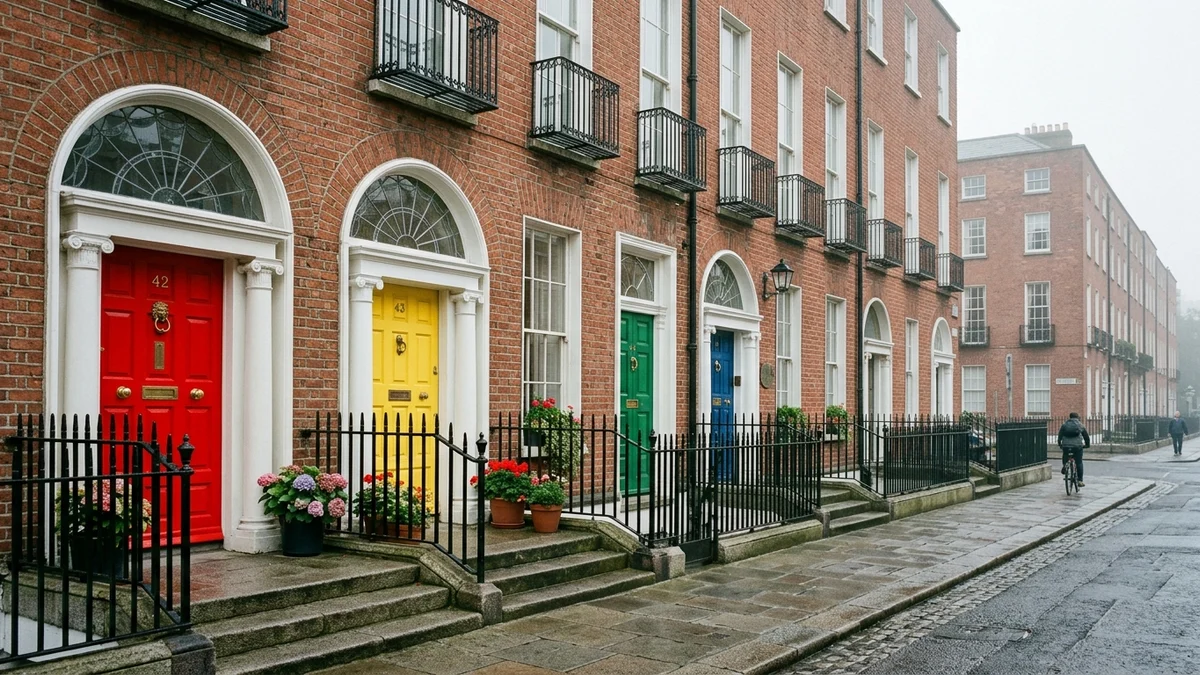
Anyone strolling through Dublin's historic residential quarters, particularly around leafy Georgian squares like Merrion Square and Fitzwilliam Square, is met with an enchanting spectacle: rows of uniform red brick townhouses where every single entrance door is painted in a brilliantly distinct color. From radiant canary yellows and deep cobalt blues to rich emerald greens and vibrant scarlets, these doors seem designed to brighten Ireland's notoriously gray and drizzly skies. Yet, this celebration of color was never a random decorative trend. The true origin of Ireland's colorful doors emerged from the intersection of strict architectural laws, an innate human desire for personal identity, and delightfully witty local legends passed down through generations.
Georgian Symmetry and the Quest for Individuality
Between the mid-eighteenth and early nineteenth centuries, Dublin experienced a golden era of urban development known as the Georgian Period. During this time, affluent aristocrats and merchants commissioned grand terraced townhouses encircling private garden squares.
To maintain an uncompromising standard of classical symmetry, municipal building codes were remarkably rigid. Every home along a street was required to share the exact same height, identical red brickwork, precisely aligned sash windows, and uniform stone porticos with fanlights above the entrances.
With almost every exterior element regulated down to the inch, the front door remained the single architectural feature where homeowners enjoyed creative freedom. Painting the wooden door in a vivid hue and mounting polished brass lion-head knockers became an elegant way to break visual monotony, asserting personal individuality without violating civic regulations.
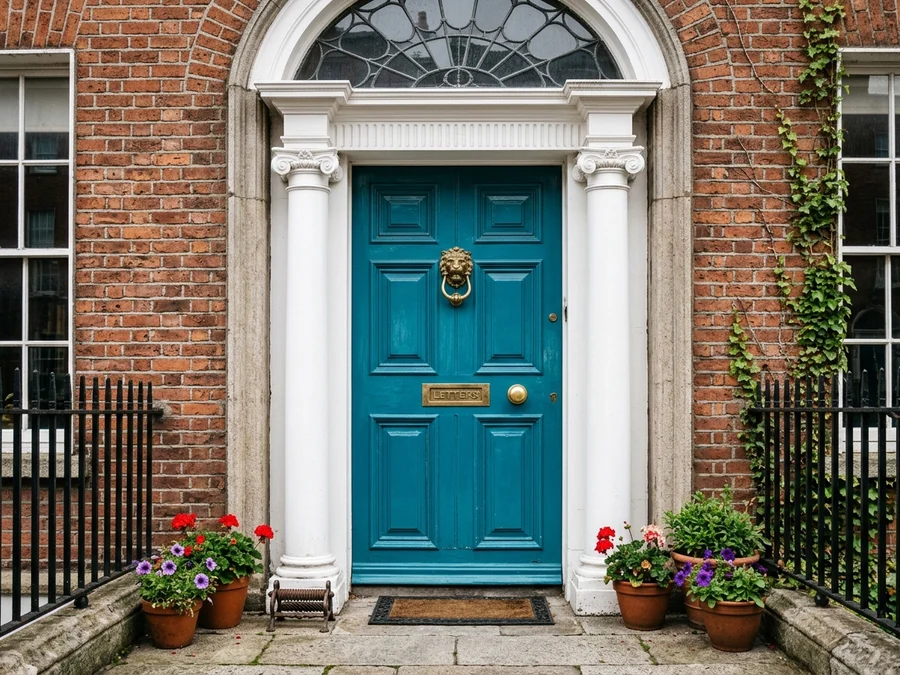
Elegance in the details: the striking contrast between peacock blue, polished brass hardware, and classical white columns.
Pub Tales, Neighborly Rivalries, and Quiet Rebellion
Beyond the historical architecture, Irish culture is renowned for its storytelling and humor, producing several beloved legends that offer more colorful explanations for the tradition.
One famous tale centers on two celebrated early-twentieth-century Dublin literary figures: writers George Moore and Oliver St. John Gogarty. Living as next-door neighbors on Ely Place, both men were enthusiastic regulars at local pubs. According to Dublin folklore, Gogarty would frequently stumble home late after a few pints of stout, mistake Moore's identical door for his own, and hammer on the knocker.
Tired of being awakened in the middle of the night, Moore painted his door a bright, unmistakable green so Gogarty wouldn't confuse the two. In playful retaliation, Gogarty painted his own door bold scarlet red to ensure Moore wouldn't mistakenly knock on his house either.
Another widespread story dates back to 1861 upon the death of Prince Albert. Queen Victoria allegedly issued an imperial decree demanding that all doors throughout British dominions be painted black in observance of official mourning. In Dublin, as a quiet display of cultural independence and defiance against imperial grief, many residents painted their doors in the brightest and most cheerful colors they could find.
A charming domestic legend also claims that Irish wives began painting their front doors unique, bright colors so their husbands, returning home after lively evenings with friends at the pub, could easily identify their own doorstep and avoid knocking on the neighbor's door by mistake.
The Poster That Made Dublin's Doors a Global Icon
While painted doors had been part of Dublin's daily scenery for over a century, their rise to worldwide fame happened in 1970.
In preparation for the annual St. Patrick's Day celebration in New York City, American advertising executive Bob Fearon visited Dublin to develop a tourism campaign. Enamored by the rhythmic variety and charm of the colored doors along the Georgian streets, he photographed dozens of doorways and assembled them into a vibrant mosaic poster.
The poster, titled simply The Doors of Dublin, was displayed in the Irish Tourist Board's Fifth Avenue windows and became an overnight sensation. The artwork traveled around the globe, making Dublin's doors an international symbol of Irish welcome and inspiring locals to maintain their colorful entrances with pride.
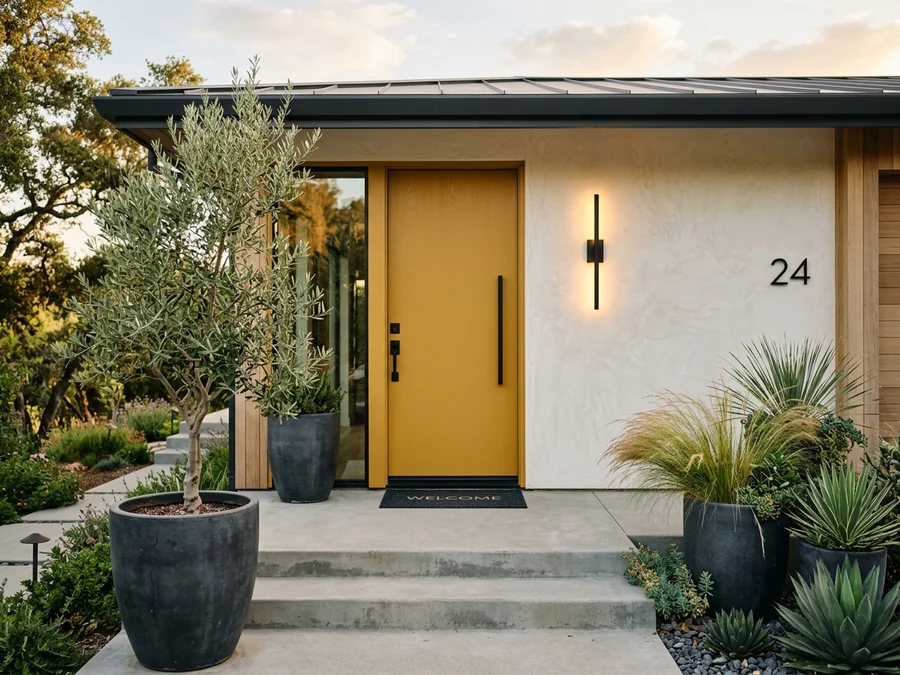
A warm modern welcome: a mustard yellow front door on a neutral facade creates an inviting focal point full of personality.
Bringing Front Door Curb Appeal into Modern Design
Highlighting the entrance with an intentional pop of color remains one of the most effective and affordable ways to elevate home exterior design. A thoughtfully painted door creates an immediate visual anchor and radiates hospitality:
Mustard or Sunflower Yellow: Pairs beautifully with light gray, off-white, or concrete walls, injecting an instant sense of warmth, optimism, and daylight.
Deep Navy or Cobalt Blue: Complements red brick, natural wood siding, and light stone, conveying timeless sophistication, calm, and architectural depth.
Forest or Sage Green: Harmonizes naturally and fluidly with surrounding gardens and entryway planters, bridging the transition between outdoor greenery and indoor comfort.
Terracotta or Crimson Red: A timeless, high-energy choice that delivers immediate warmth and presence to both standalone houses and modern apartment entryways.
Previewing Front Door Colors with Arquitet IA
Choosing the perfect front door shade does not have to rely on small paper swatches that look completely different under real outdoor sunlight.
With Arquitet IA, you can snap a photo of your front porch, facade, or apartment hallway and test dozens of paint colors in seconds. The app respects your home's natural lighting, materials, and surroundings, allowing you to choose with complete peace of mind before buying paint.
Frequently Asked Questions
Why do Georgian houses in Dublin have such brightly colored doors?
During the Georgian era in the 18th and 19th centuries, strict architectural guidelines mandated identical red brick facades and uniform window proportions. Painting entrance doors in vibrant colors and adding ornate brass knockers became the only legal outlet for homeowners to express individuality and break urban monotony.
What is the urban legend about writers George Moore and Oliver Gogarty?
Popular legend says the two Irish writers lived next door to each other on Ely Place and often confused their identical houses when returning late from pubs. George Moore painted his door bright green so Gogarty wouldn't mistakenly knock on his house, and Gogarty retaliated by painting his door bright red.
Were the colorful doors a protest against Queen Victoria?
According to folk tradition, when Prince Albert died in 1861, Queen Victoria ordered all doors in British territories painted black in mourning. In Dublin, many residents supposedly chose to paint their doors in cheerful, radiant colors as a quiet gesture of cultural independence.
How did the Doors of Dublin become an international symbol?
In 1970, American advertising executive Bob Fearon visited Dublin for a St. Patrick's Day campaign in New York. Enchanted by the colorful entrances, he photographed dozens of Georgian doors and created the famous "The Doors of Dublin" collage poster, sparking global fame.
How do I choose the best front door color for my home?
Warm tones like mustard yellow and terracotta red inject energy and welcome on neutral facades. Cool hues like navy blue, forest green, and slate gray bring timeless sophistication. You can use AI visualization apps like Arquitet IA to preview multiple colors directly on a photo of your home before painting.
📱 Transform Your Home Entrance with Arquitet IA
Want to refresh your front door color or redesign your facade without guesswork? Download Arquitet IA to test paint shades and exterior ideas directly on your phone in seconds.
Try Arquitet IA Free