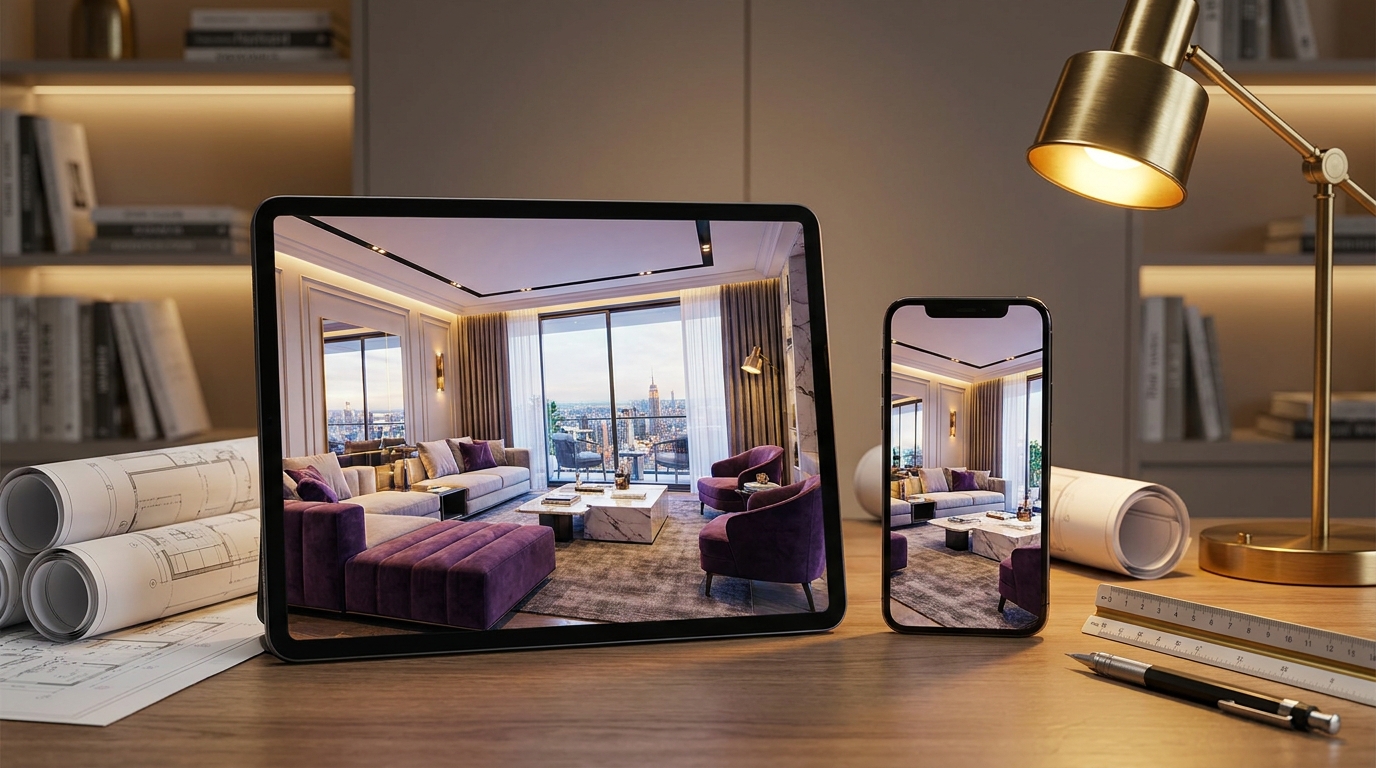
The residential design and remodeling market is experiencing a rapid technological evolution. Traditional 3D modeling programs that once required weeks of manual effort and high-end desktop workstations now operate alongside generative artificial intelligence applications capable of reinterpreting room photographs into complete interior concepts in mere seconds.
Whether you are a homeowner seeking to visualize a full renovation before purchasing finishes or a design professional wanting to accelerate early moodboards, we examined the top AI interior design applications available in 2026.
Evaluation Criteria and Spatial Performance
To identify the standout platforms, our editorial team evaluated key practical benchmarks:
- Photorealism and Ambient Lighting: Ability to compute realistic soft shadows, reflections on stone and glass, and accurate 2700K color temperatures.
- Smartphone Usability: Smooth mobile capture experience with fast cloud generation times.
- Aesthetic Nuance: Authentic handling of modern design vocabularies like Japandi, Warm Minimalism, and Contemporary Luxury.
- Renovation Feasibility: Producing layouts with sensible furniture proportions that translate into real rooms.
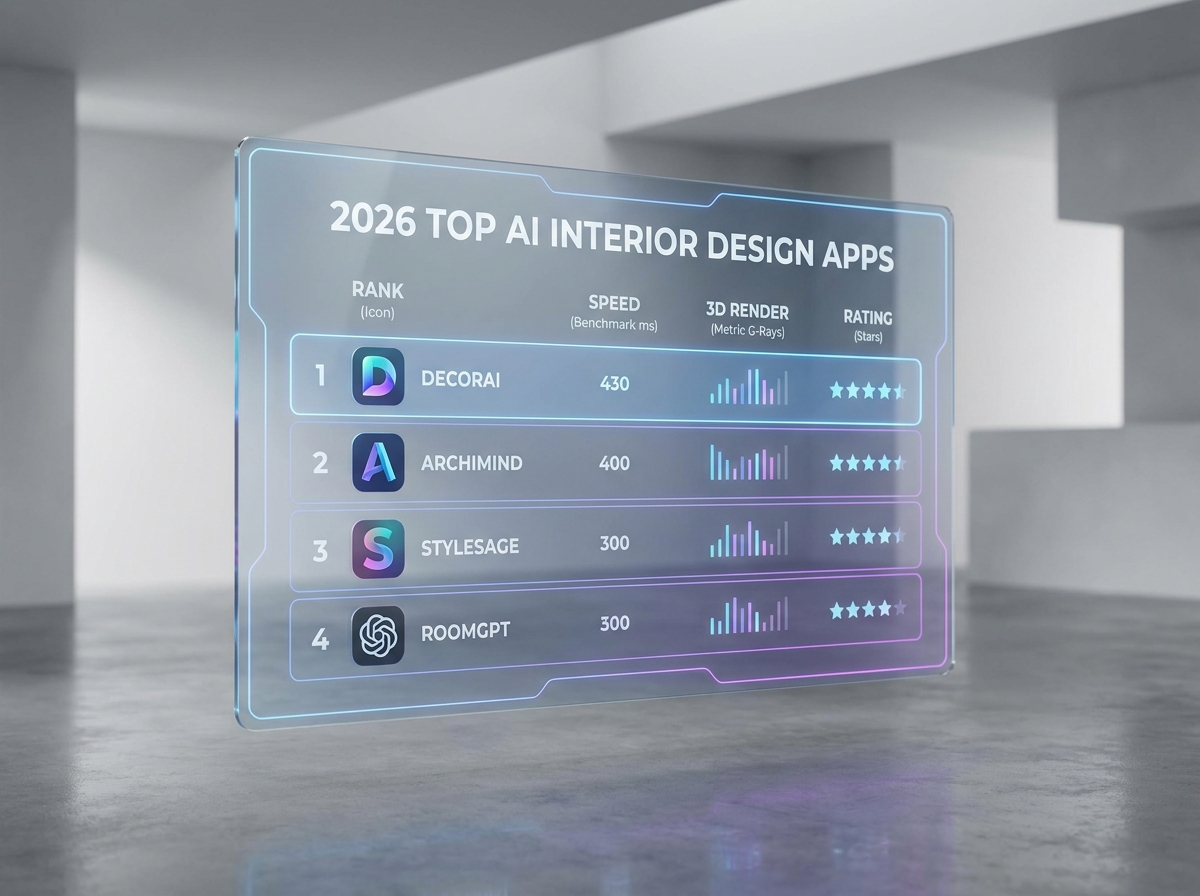
In-Depth Review of Leading Apps
Arquitet IA: Speed and Photorealism on Smartphone
Arquitet IA leads the ranking through its seamless mobile experience and magazine-grade rendering quality. The app allows users to photograph an empty or outdated room and generate a bespoke 3D visualization — complete with walnut millwork, indirect cove lighting, and stone finishes — in under 10 seconds.
- Key Strengths: High visual fidelity, native mobile experience, and balanced spatial scaling.
- Best For: Homeowners planning renovations and designers presenting rapid visual options.
Planner 5D: Structural Layouts and 2D Blueprints
A venerable name in 2D and 3D architectural floor planning, Planner 5D incorporates AI tools to convert hand-drawn sketches into editable digital models.
- Key Strengths: Great for dimensioning walls, doors, and exact architectural measurements.
- Best For: Users who want to draft technical layouts before focusing on decoration.
RoomGPT: Fast In-Browser Simulations
A pioneer in making AI style transfer accessible on the web, RoomGPT offers fast, no-fuss visual explorations directly inside any browser.
- Key Strengths: No heavy installation required, handy for early conceptual brainstorming.
- Best For: Casual visual inspiration without custom millwork adjustments.
Homestyler: Extensive Brand Furniture Catalogs
Focusing on partnerships with commercial furniture manufacturers, Homestyler allows users to place specific retail items within virtual spaces.
- Key Strengths: Broad catalog of commercially available chairs, sofas, and lighting.
- Best For: Planners working primarily on desktop computers with mouse controls.
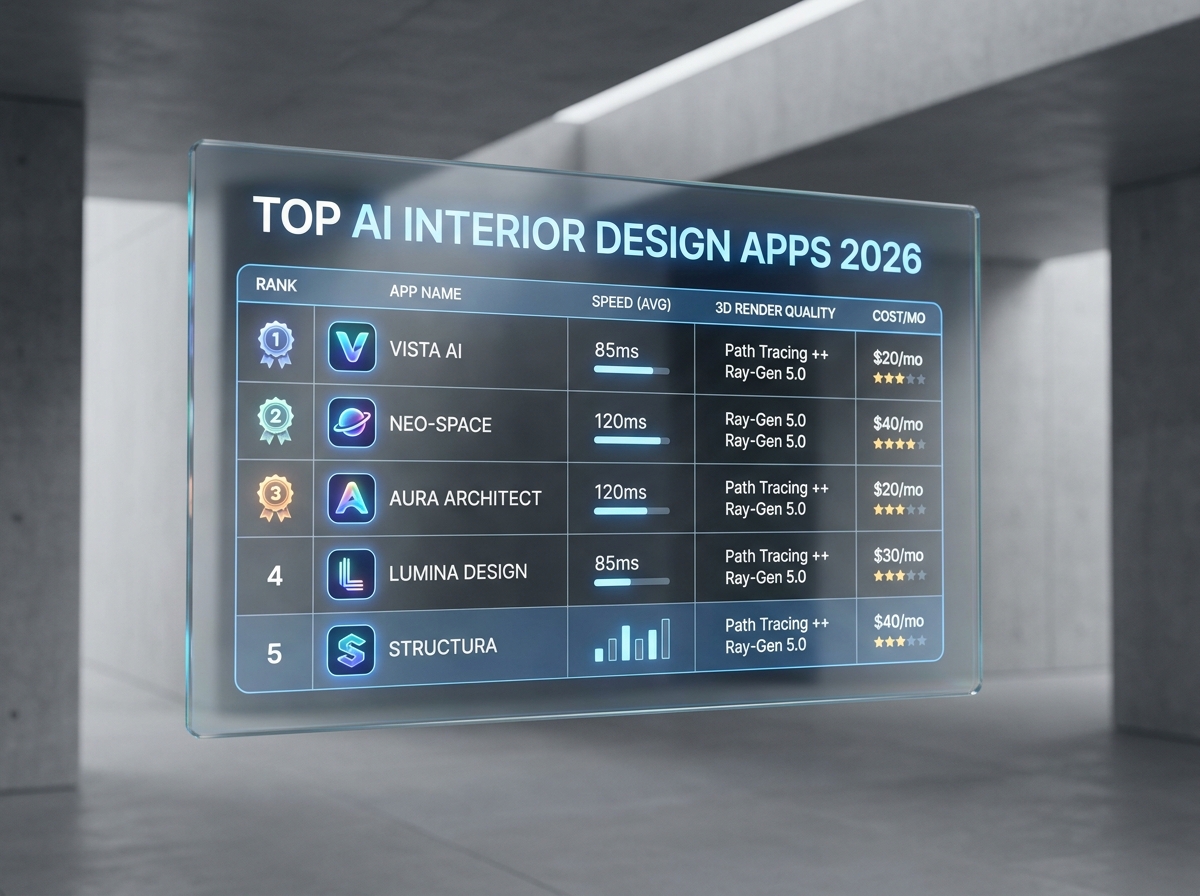
Selecting the Right Tool for Your Project
Choosing the best tool depends on your current renovation stage. For detailed structural drawings, plumbing blueprints, and CAD schematics, technical modeling software remains essential.
However, when the goal is to visualize completed decor, compare paint palettes, and prevent costly furniture scale errors, AI tools like Arquitet IA offer unmatched speed and visual clarity.
Try Arquitet IA on Your Smartphone
Upload a photo of your existing space and receive high-definition 3D interior design proposals within seconds.
Download Arquitet IA FreeFrequently Asked Questions About AI Design Apps
What is the fastest app for visualizing room makeovers on mobile?
Arquitet IA delivers rapid rendering times, turning standard room photos into high-resolution 3D interior renders in under 10 seconds directly on smartphones without demanding heavy desktop hardware.
Do I need architectural or design experience to use these apps?
No. Modern AI-powered applications are designed with intuitive interfaces: upload a room photo, select a design style, and view completed decorative proposals instantly.
Do AI design apps replace licensed interior architects?
They act as powerful visual preview and alignment tools. For technical construction blueprints, structural modifications, and electrical/plumbing installations, professional architectural oversight remains essential.
How does AI calculate realistic daylight and materials from a single photo?
Neural networks trained on millions of architectural photographs detect vanishing points, window placements, and ambient light, generating realistic shadows and authentic reflections on hardwood, stone, and glass.