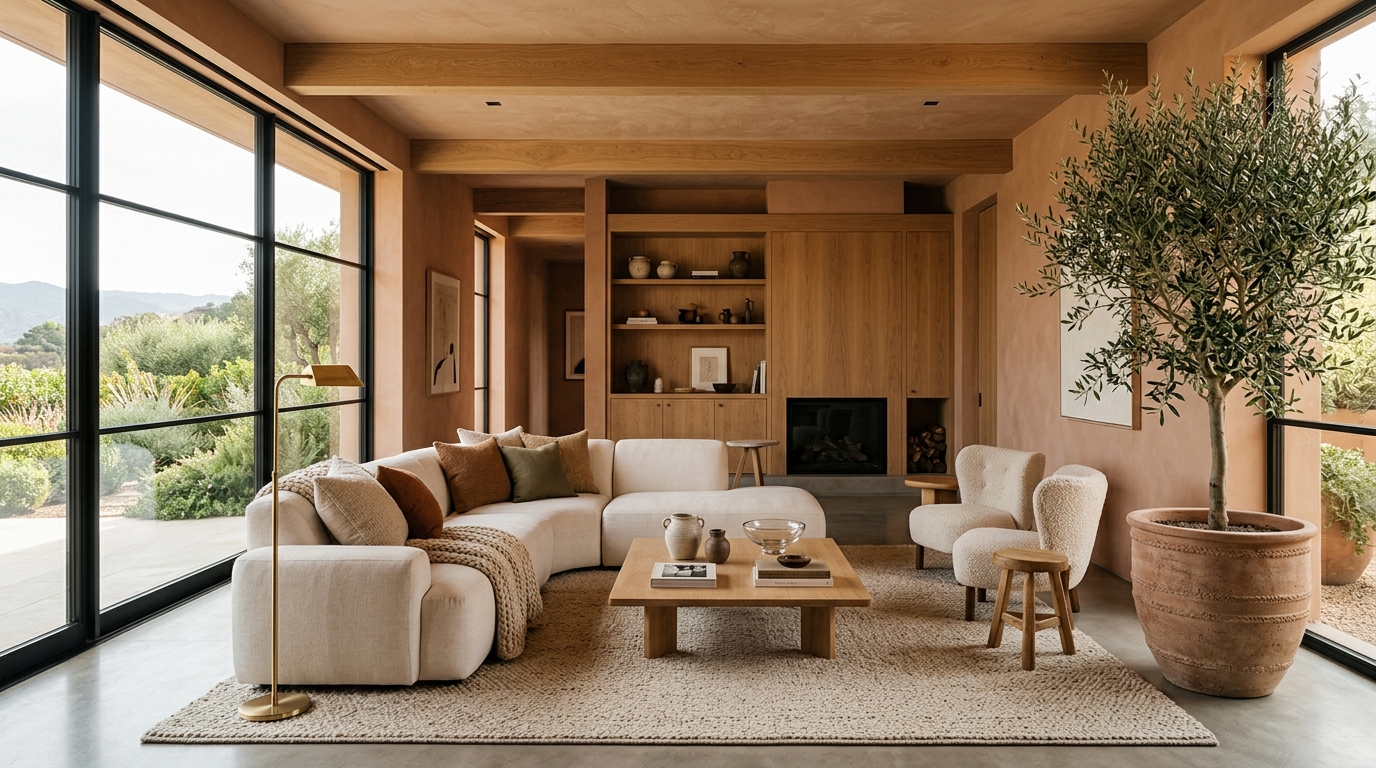
Following a decade dominated by industrial concrete grays, clinical polished quartz surfaces, and sterile minimalist rigidity, the world of interior architecture has reached an undeniable turning point. Today's discerning homeowners reject emotionless catalog staging in favor of biological resonance, tactile richness, and authentic domestic comfort.
"True luxury lives in the organic grain of natural materials and tactile warmth, not in the sterile replication of cold industrial monotones." — Warm Minimalism Manifesto.
Chromatic Evolution: From Cold Grays to Mineral Earth Tones
Sterile cool grays and chalky blue undertones are stepping aside for saturated, mineral-rich pigments: burnt terracotta, raw earthenware, soft ochre, warm travertine, and calming sage.
These mineral hues imbue rooms with visual warmth without overwhelming the senses, harmonizing naturally with expressive hardwoods such as white oak, walnut, and teak, as well as brushed natural quartzites and veined marbles.
Silhouettes & Textures: From Sharp Prisms to Enveloping Curves
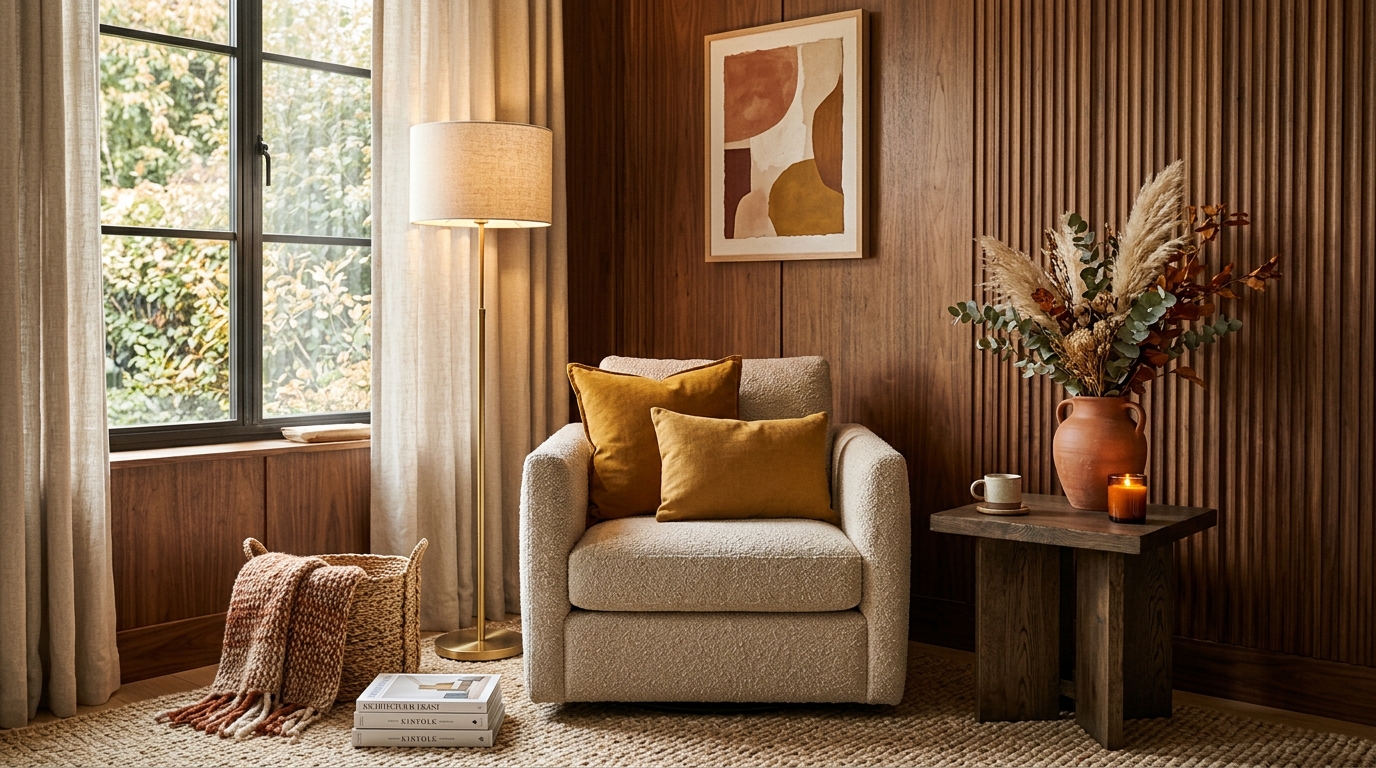
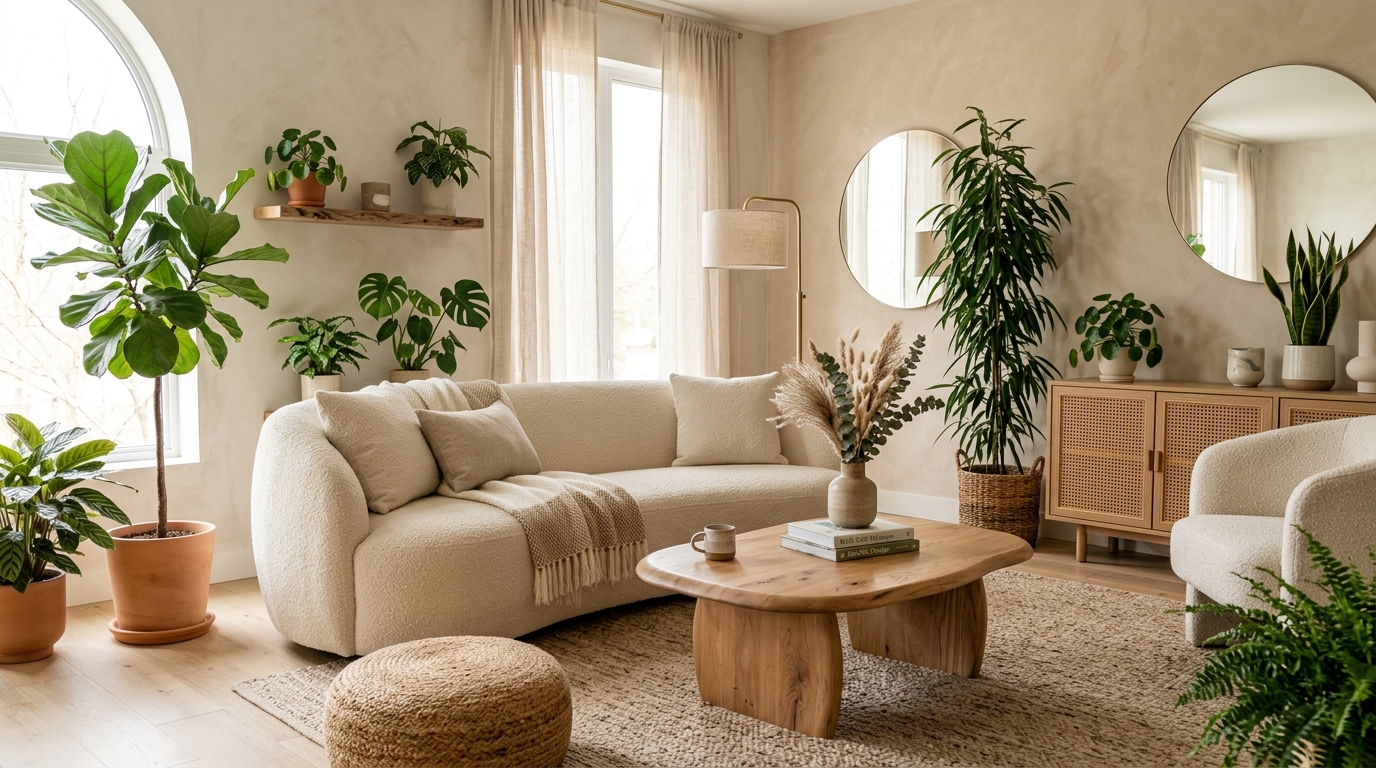
Sharp orthogonal angles and harsh blocky furniture are being supplanted by fluid, sculptural curves. Half-moon crescent sofas, organic pebble cocktail tables, and arched architectural niches soften room circulation and encourage sustained relaxation.
In upholstery, glossy artificial fabrics are giving way to deeply textured, sensory-rich textiles: heavy-gauge bouclé, slubby Belgian linen, and matte brushed cotton velours that reward the touch.
Comparative Matrix: The 'In vs. Out' Guide for Modern Interiors
| Design Element | OUT (Declining) | IN (Rising) | Spatial Transformation |
|---|---|---|---|
| Wall Palette | Chilly industrial gray & hospital white | Terracotta, ochre, sand & lime wash | Thermal comfort & visual calm |
| Furniture Profiles | Sharp orthogonal boxes with rigid edges | Curved sofas & rounded bullnose millwork | Fluid flow & ergonomic comfort |
| Surface Materials | High-gloss synthetics & faux veneers | Solid timber, natural quartzite & clay | Authenticity & graceful aging |
| Lighting Scheme | Harsh overhead white floodlights (6000K) | Layered, dimmable 2700K ambient glow | Circadian balance & cozy mood |
Spatial Philosophy: Beyond Showroom Clichés to Soulful Living
The modern home is curated to chronicle the unique narrative of its inhabitants. Mass-produced showroom uniformity is yielding to artisanal ceramics, regional craftsmanship, curated vintage discoveries, and biophilic indoor greenery.
Deepen your design knowledge by exploring our guides on Warm Minimalism, technical best practices in Residential Lighting Design, and expert advice on Selecting Area Rugs and Natural Textures.
Preview Earthy Palettes and Curved Layouts with AI
Eager to see how mineral wall colors, curved sofas, and indirect lighting will transform your home before lifting a paintbrush? Arquitet IA renders photorealistic 3D simulations straight from your room photo.
Try Simulator in Arquitet IAFrequently Asked Questions
Why has the cool gray industrial aesthetic fallen out of favor?
After a decade of overuse, cool gray finishes proved emotionally sterile and visually chilling. Modern design embraces mineral earth tones (terracotta, ochre, sand, warm travertine) paired with 2700K warm lighting to foster biological comfort and emotional warmth.
What is the primary shift in modern furniture design and millwork?
Rigid geometric furniture with knife-edge corners is being replaced by organic, sinuous silhouettes (curved sofas, pill-shaped tables, rounded cabinetry) combined with deeply textured bouclé, raw linen, and natural hardwood grains.
How does artificial intelligence help homeowners test new interior palettes without repainting?
With the Arquitet IA application, homeowners can snap a photo of any room to preview mineral wall paints, curved furniture layouts, and ambient layered lighting in photorealistic 3D before making material investments.