
In an era dominated by fleeting design trends and cookie-cutter catalog interiors, American designer Nate Berkus has emerged as a foremost advocate for soulful, timeless living spaces. For Berkus, a home is never a static showroom engineered to impress guests; it is a living narrative woven from personal memories, travels, and honest materials.
"Your home should tell the story of who you are, and be a collection of what you love." — Nate Berkus.
The Home as a Reflection of Soul: Berkus's Curation Philosophy
Berkus's design authority stems from his refusal to create overly matched spaces. Rather than purchasing entire furniture suites from a single showroom, he champions the layering of eras: family heirlooms, flea-market antique sculptures, and clean-lined contemporary seating coexisting in organic balance.
The true value of an interior does not lie in the price tags of its furnishings, but in their emotional resonance and the tactile integrity of natural materials—such as reclaimed hardwoods, unlacquered brass, pure linen, and stone with natural patina.
Pillars of Narrative Design: Authentic Materials & Layered Light
To curate spaces endowed with identity and enduring elegance, Berkus's practice centers on four core tenets:
Blending Eras: Juxtaposing a mid-century modern accent table with clean contemporary armchairs breaks spatial formality and introduces relaxed sophistication.
Warm Neutral Palettes: Walls washed in warm sand, ivory, and soft alabaster create a calming canvas that lets artwork, books, and dark millwork command visual depth.
Layered Illumination: Forgoing harsh central overhead lighting in favor of articulated wall sconces, fabric-shaded lamps, and low-level 2700K uplights creates intimate, warm vignettes at dusk.
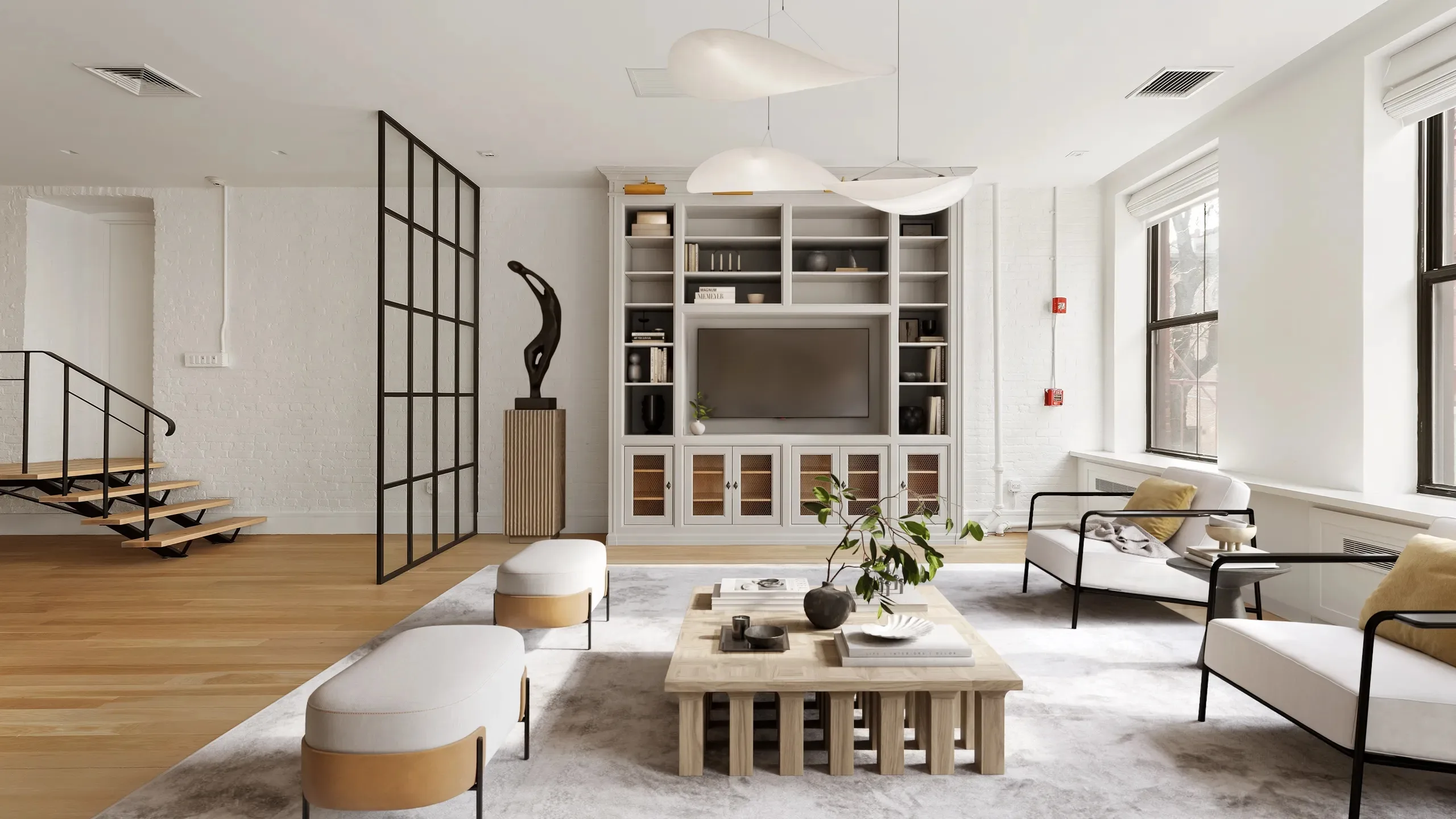
Spatial Analysis: From Industrial Loft to Historic Townhouse
In his celebrated NoHo Loft in Manhattan, Berkus preserved the building's industrial heritage by keeping cast-iron structural columns and original brickwork exposed, contrasting raw architectural bones with deep linen sofas and large-scale abstract canvases.
In his West Village Townhouse, designed alongside Jeremiah Brent, 19th-century carved marble fireplaces converse with vintage gilded French mirrors and custom dark oak joinery, creating a warm sanctuary tailored for daily family living.
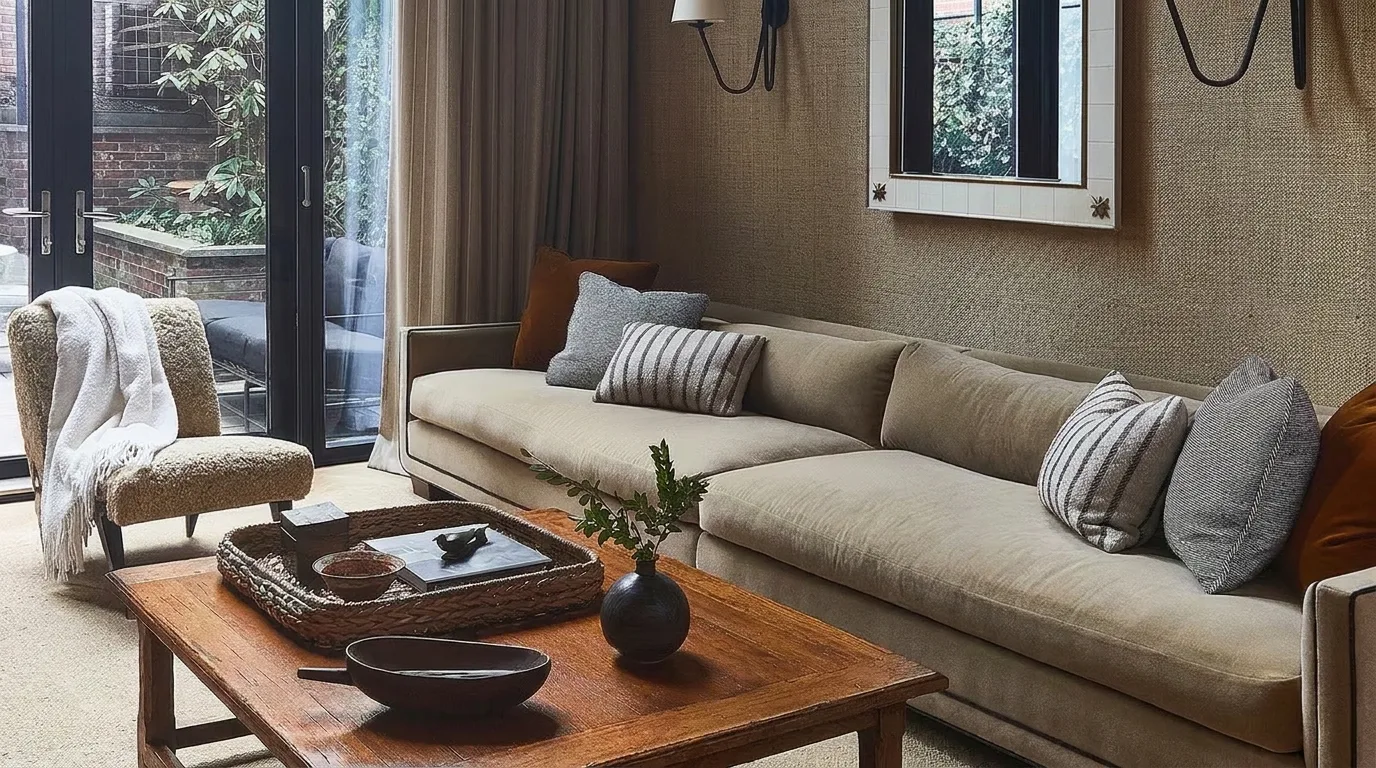
Composition Guide: Essential Elements of the Nate Berkus Style
| Design Element | Design Application | Spatial Impact |
|---|---|---|
| Curated Vintage Furniture | Brass accent tables, mid-century lounge chairs | Infuses patina, distinct identity, and breaks uniformity |
| Warm Neutral Canvas | Sand walls, raw linen drapery, walnut accents | Enhances daylight and fosters a restful environment |
| Tactile Layering | Chunky wool throws, jute rugs, honed marble slabs | Sensory depth without relying on loud patterns |
| Meaningful Object Vignettes | Art monographs, handcrafted ceramics, travel mementos | Genuine narrative warmth and lived-in authenticity |
Applying Narrative Curation to Everyday Homes
Embracing Berkus's design philosophy does not require extensive structural remodels. It begins by letting go of disposable decor and highlighting objects that carry true sentimental significance: an artisan vessel found on a memorable trip, framed photographs in solid timber, or a restored ceramic lamp base.
This approach aligns with our studies on Philippe Starck's Democratic Design, the principles of a Residential Lighting Plan, and the timelessness of Antique Solid Wood Furniture.
Simulate Warm Neutrals & Vintage Layers with AI
Eager to test curated vintage accents, warm neutral palettes, and ambient lighting schemes in your own room photo? Arquitet IA generates photorealistic 3D renders in seconds.
Try Simulation in Arquitet IAFrequently Asked Questions
What is Nate Berkus's primary interior design philosophy?
Nate Berkus advocates that a home must tell the personal story of its inhabitants, composed of meaningful memories, vintage treasures, collected objects, and organic materials that age gracefully over time.
How do you mix vintage antiques with modern furniture without visual clutter?
Start with a quiet, neutral backdrop (sand, chalk, warm linen). This allows one or two vintage focal pieces with rich historical patina to stand out as sculptural accents, balanced by clean-lined contemporary seating.
How does layered lighting transform a room according to Berkus?
By eliminating harsh overhead central fixtures and combining wall sconces, fabric-shaded table lamps, and floor up-lights at 2700K, spaces gain depth, soft shadows, and an inviting ambiance.