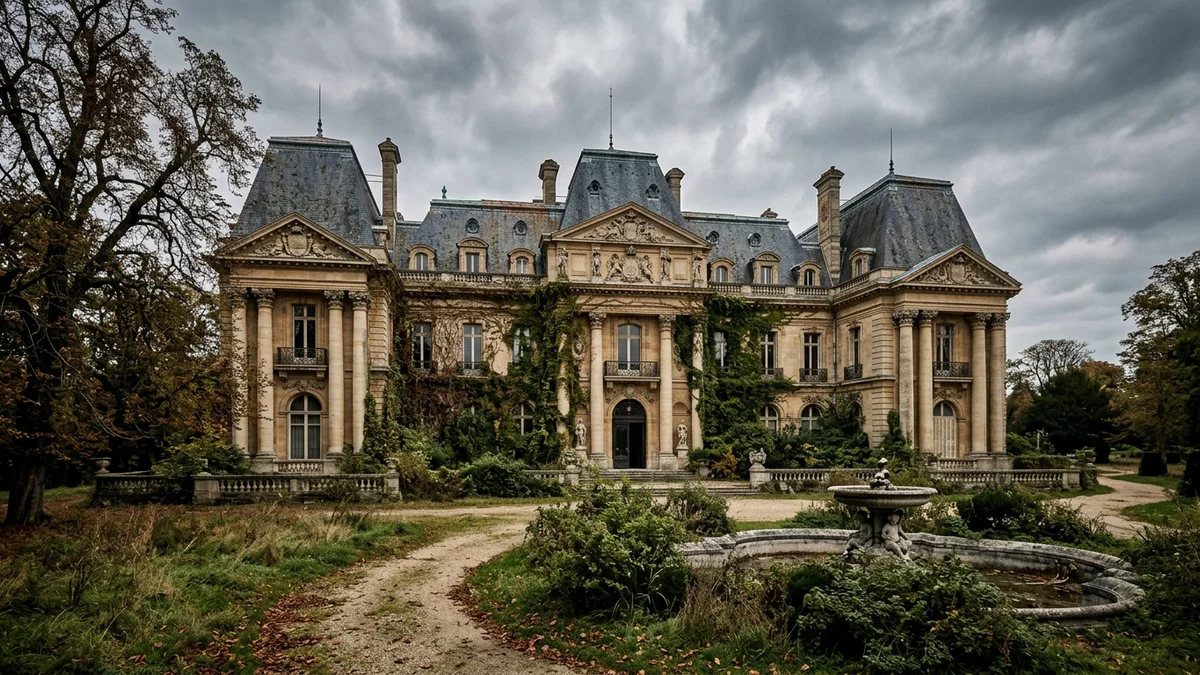
Just moments from Paris' western outskirts in Boulogne-Billancourt stands one of France's most captivating architectural mysteries: the Château de Rothschild. Built between 1855 and 1861 for banking patriarch Baron James Mayer de Rothschild, this magnificent estate once marked the absolute pinnacle of Second Empire aristocractic glamour. Yet for more than four decades, this carved limestone giant slept as an eerie ghost palace, with peeling gilded boiseries, stolen marble mantels, and weathered walls, before undergoing one of Europe's most talked-about historic restorations.
"A historical monument in ruins does not lose its structural dignity; it strips bare the raw anatomical truth of its stone, iron, and timber beneath the marks of time." — Jean-Michel Wilmotte, French conservation architect.
Le Goût Rothschild and the Splendor of Boulogne
Picture Paris in the mid-19th century: horse-drawn carriages, lavish soirées that lasted until dawn, and a visionary financial dynasty determined to make an indelible mark on French soil. When Baron James de Rothschild purchased the riverside land in 1855, his ambition was clear: create a countryside palace rivaling Versailles in sheer scale and refinement. He commissioned architect Joseph-Armand Berthelin, who drew inspiration directly from the lost Château de Clagny by baroque master Jules Hardouin-Mansart.
The result was the birth of what historians celebrate as Le Goût Rothschild (The Rothschild Taste). It was an opulent aesthetic blending crisp Parisian ashlar limestone (*pierre de taille*), slate mansard roofs, sculpted pediments, and reception rooms wrapped in hand-carved oak boiseries gilded with 24-karat gold leaf.
The surrounding 74-acre park was an international horticultural triumph, combining French formal parterres, an English hunting reserve, and France's first authentic Japanese garden, created with arched vermilion bridges and authentic stone pagodas by Tokyo master gardener Hatta.
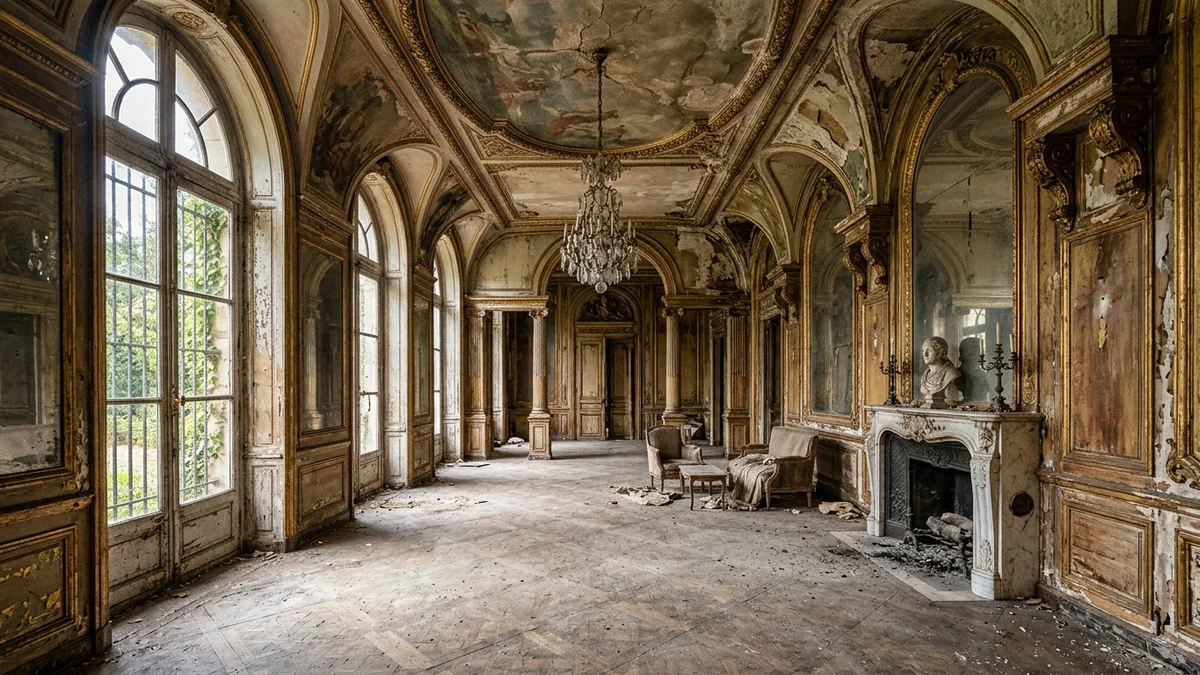
The ceremonial grand salon during decades of abandonment: peeling gold leaf and light streaming through broken arched windows.
From World War II to Four Decades of Silence
How did such an extraordinary monument fall into decay? The turning point came with the outbreak of World War II. In 1939, facing the advancing German forces, the Rothschild family was forced to flee the estate. Shortly after, the German naval command (Kriegsmarine) requisitioned the property as its communications headquarters.
During the occupation and Paris' liberation, the residence suffered extensive looting. Invaluable paintings, historic Gobelins tapestries, and ornate bronze fixtures vanished without a trace.
In post-war years, rapid urban expansion fractured the original parkland to make way for municipal hospitals and housing. Stripped of its grounds and burdened by unsustainable upkeep costs, the palace stood officially abandoned from 1986 onwards.
Decades of weather took a toll: punctured slate roofs allowed rainwater to rot structural oak rafters and rust load-bearing iron beams, while vandals pried antique Carrara marble fireplaces from walls. Two fires in 1994 and 2003 added a haunting aura, drawing urban explorers and photographers from around the globe.
The Science of Heritage Restoration and Hydraulic Lime
Rescuing a classified French *Monument Historique* is far more than applying fresh paint or replacing floorboards; it is a blend of forensic structural engineering and ancient craftsmanship. When conservation teams began work on the Château de Rothschild, they followed strict historic protocols:
The exterior limestone cannot be patched with standard Portland cement, which would trap moisture. Instead, engineers inject micro-slurries of natural hydraulic lime (*coulis de chaux*) under low pressure, consolidating interior fissures while allowing the stone to breathe and release vapor naturally.
On the roofs, master carpenters rebuild load-bearing oak trusses using traditional mortise-and-tenon joinery, mounting natural slate tiles secured with copper nails. Indoors, conservators use fine scalpels to remove soot and restore carved boiseries using traditional water gilding (*dorure à l'eau*) over Armenian bole.
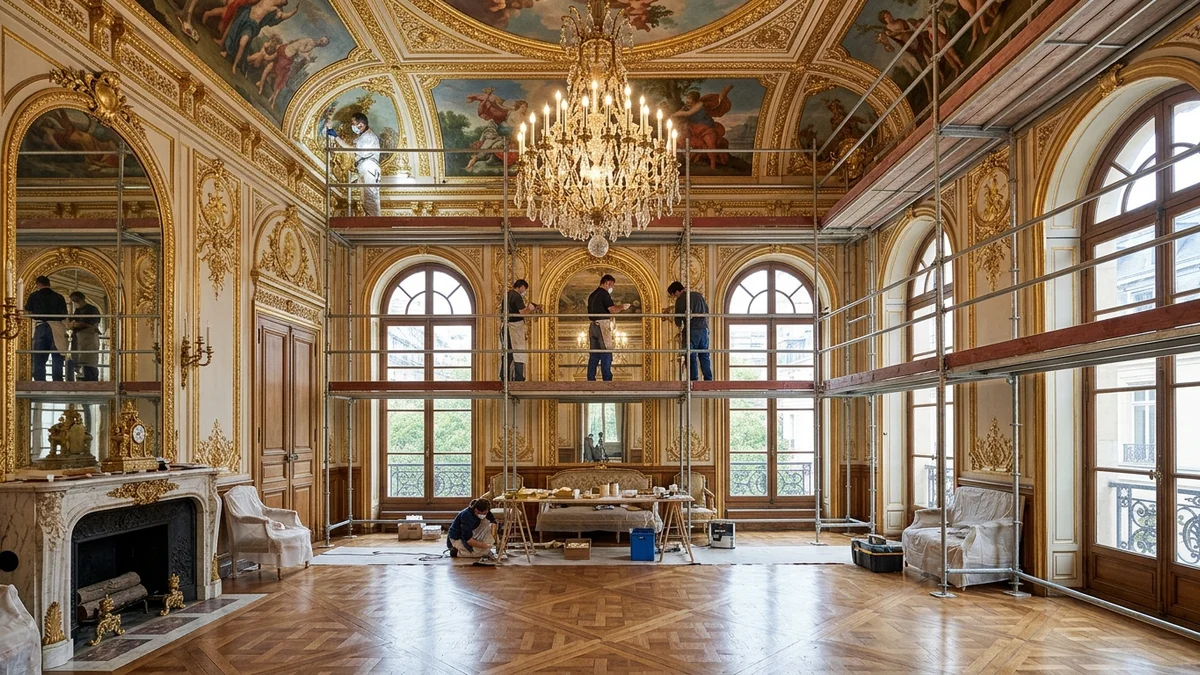
Conservators and master gilders on scaffolding restoring period wood moldings and ceiling frescoes.
Echoes of Neoclassicism in Contemporary Homes
The enduring allure of Rothschild architecture continues to inspire modern interior designers. Today's residential projects often reinterpret classical French proportions with a clean, airy touch:
Wall moldings (boiseries), once sculpted in heavy plaster or carved wood, are now recreated in high-density architectural polymers, creating tailored rhythm on high-ceiling living rooms in harmony with our Modern Neoclassical Interior Guide and Warm Minimalist Guide.
Brushed French oak floors in Chevron or Versailles patterns bring instant tactile luxury, while warm 2700K ambient lighting replicates the golden, flattering glow of historic candlelit chandeliers.
Dossier: The Great Rothschild Estates of Greater Paris
| Estate | Architectural Style | Construction Date | Current Status |
|---|---|---|---|
| Château de Rothschild (Boulogne) | Neo-Louis XIV / Clagny Inspiration | 1855–1861 | Protected monument undergoing long-term restoration |
| Hôtel Lambert (Île Saint-Louis) | 17th-Century Classical Baroque (Le Vau) | 1640 (Rothschild era 20th c.) | Fully restored; private residence |
| Hôtel Salomon de Rothschild (8th arr.) | Eclectic Neoclassical | 1872–1878 | National Graphic Arts Foundation & cultural venue |
| Château de Ferrières (Seine-et-Marne) | Italian Renaissance Revival / Paxton | 1855–1859 | Luxury hospitality and culinary school |
Frequently Asked Questions
Why was the Château de Rothschild in Paris abandoned for so long?
Following wartime confiscation by the German Kriegsmarine and severe looting, the estate lost most of its grounds to urban parceling. Stripped of its surrounding gardens and facing prohibitive maintenance budgets, the mansion stood vacant from 1986 onwards until conservation efforts began.
How do conservators restore damp, historic limestone walls?
Specialized engineers inject pure hydraulic lime slurry into cracks under low pressure. This natural mineral compound consolidates internal stone voids while maintaining vapor permeability, allowing moisture to evaporate naturally without spalling the stone face.
Can classic French boiserie moldings be adapted to modern apartments?
Yes! Pairing clean white boiserie paneling and chevron hardwood floors with sleek modern furniture, warm accent lighting, and contemporary artwork creates an inviting, sophisticated balance of old-world charm and modern comfort.
Want to preview French boiseries and classic styles in your space?
With the Arquitet IA app, explore classic moldings, chevron parquet, and luxury finishes instantly on a smartphone photo of your room.
Try Simulator on Arquitet IA →Architectural Resilience Across Centuries
The saga of the Château de Rothschild encapsulates the fragile yet enduring nature of historic architecture. More than a forgotten ruin, it stands as an open textbook of French masonry, period carpentry, and classical balance. As its carved facades and gilded moldings are brought back to life, Paris reclaims a cherished chapter of its built heritage to inspire future generations.