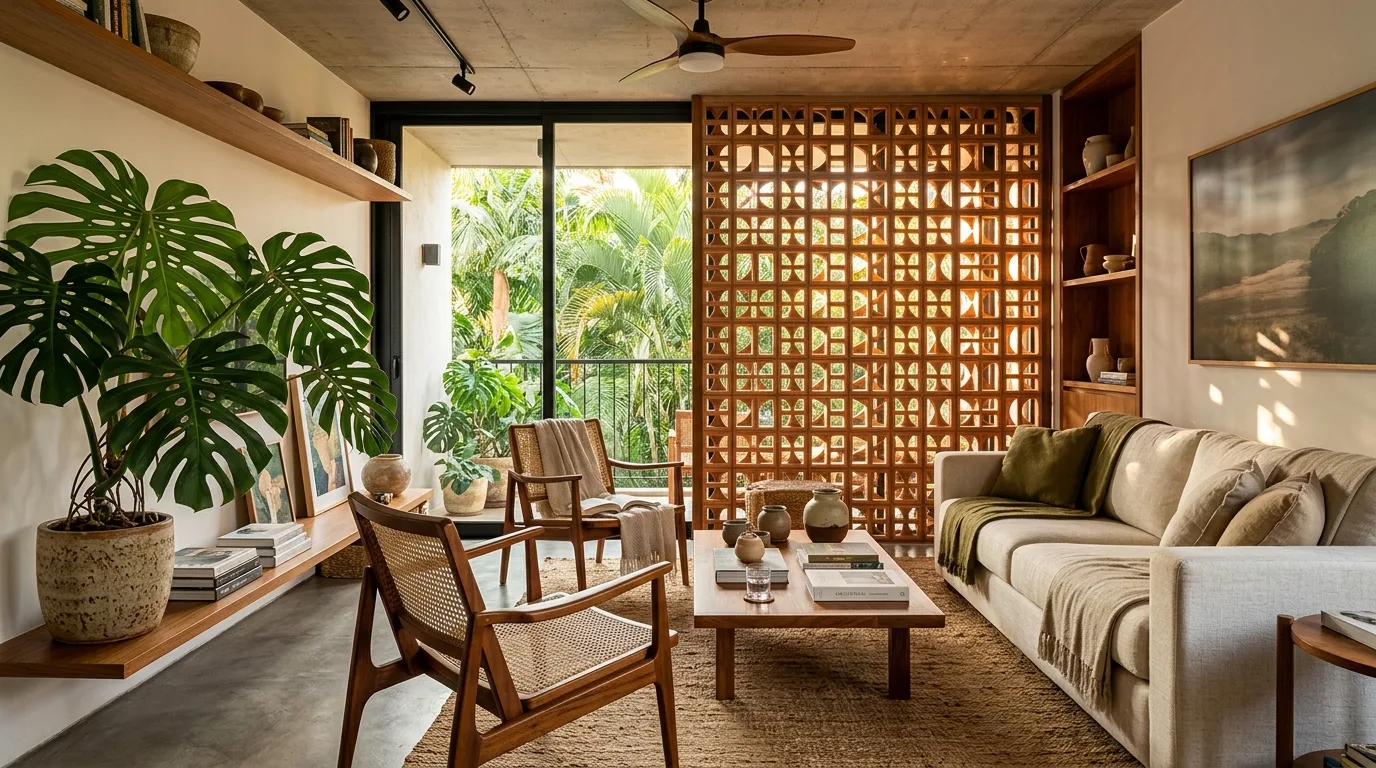
- The Soul of Brazilian Living: Light, Wind, and Warmth
- The Five Pillars of Brazilian Spatial Identity
- Artisan Woodwork and the Delicacy of Cane Webbing
- Integrated Verandas and Authentic Tropical Biofilia
- How to Incorporate Brazilian Bossa into Modern Living
- Key Materials and Specification Guide
- Simulating Your Tropical Retreat with Arquitet IA
- Frequently Asked Questions
Brazilian interior design does not conform to sterile catalog formulas. It emerges from an intimate relationship with tropical light, continuous airflow, and an unpretentious quest for warmth. This is the essence of "bossa": blending architectural rigor with tactile native woods, breathable screens, and lush indoor nature to create vibrant, poetic living spaces.
The Soul of Brazilian Living: Light, Wind, and Warmth
In a country bathed in year-round sun, refined living means dissolving the rigid boundary between interior comfort and the outdoors. Brazilian master designers such as Sergio Rodrigues, Joaquim Tenreiro, and the visionary Lina Bo Bardi and her human-centered modernism demonstrated that furniture and rooms should intuitively cradle the human body.
Rather than cold, sealed volumes, Brazilian homes breathe with afternoon breezes, filter sunshine through sculptural screens, and embrace residents with honest materials that mature gracefully, echoing the core tenets of quiet luxury in contemporary architecture.
The Five Pillars of Brazilian Spatial Identity
Five defining elements shape modern Brazilian residential interiors:
- Warm Native Hardwoods: Freijó, cumaru, and reclaimed peroba rosa provide the visual anchor for wall paneling and custom credenzas.
- Breathable Cane Webbing: Natural woven cotton or raffia mesh allows breezes to pass freely through chair backs and armoire doors.
- Cobogó Screen Blocks: Invented in Recife, hollow ceramic and concrete breeze blocks cast poetic patterns of light and shadow throughout the day.
- Tactile Natural Stones: Brushed granites and Brazilian quartzites with satin finishes, perfectly aligning with natural stone wall and floor coatings.
- Generous Tropical Biofilia: Large terracotta planters housing native flora that purify the air and inject vibrant botanical life indoors.
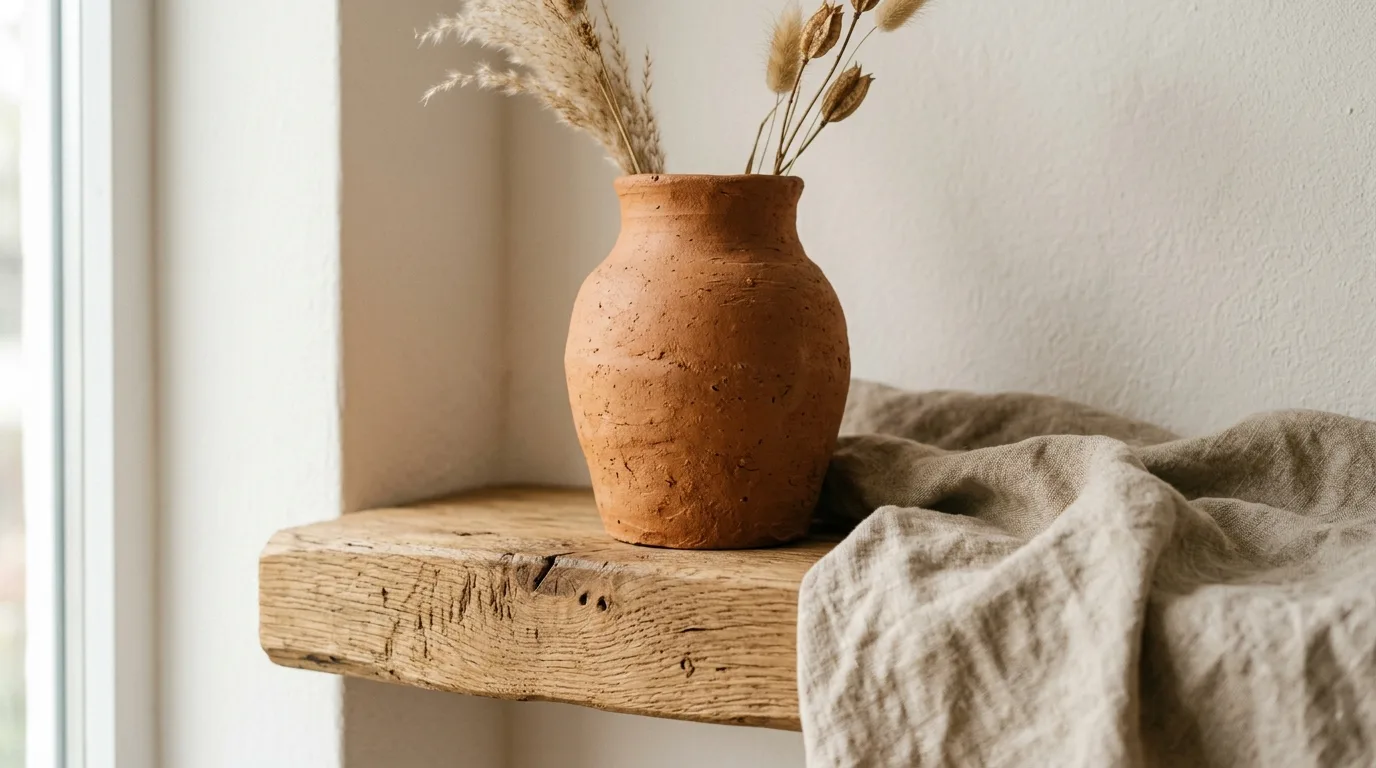
The harmonious dialogue between warm freijó timber and delicate cane webbing creates immediate comfort.
Artisan Woodwork and the Delicacy of Cane Webbing
Mid-century Brazilian modernism gained global acclaim because it prioritized ergonomic relaxation over industrial stiffness. Iconic seating like the Mole armchair, recognized among history's most influential chair designs, proved that genuine luxury lies in tactile leather and turned hardwood joints.
In contemporary homes, cane webbing is reimagined in custom bed headboards, folding room dividers, and credenza doors, ensuring spatial privacy without blocking daylight.
Integrated Verandas and Authentic Tropical Biofilia
Leveling the main living room floor with an outdoor balcony and removing heavy partition doors represents one of Brazil's greatest contributions to modern apartment design.
This creates an expansive indoor garden where *Monstera deliciosa*, philodendrons, marantas, and hanging ferns flourish in unglazed earthenware pottery, keeping residents closely tethered to natural rhythms.
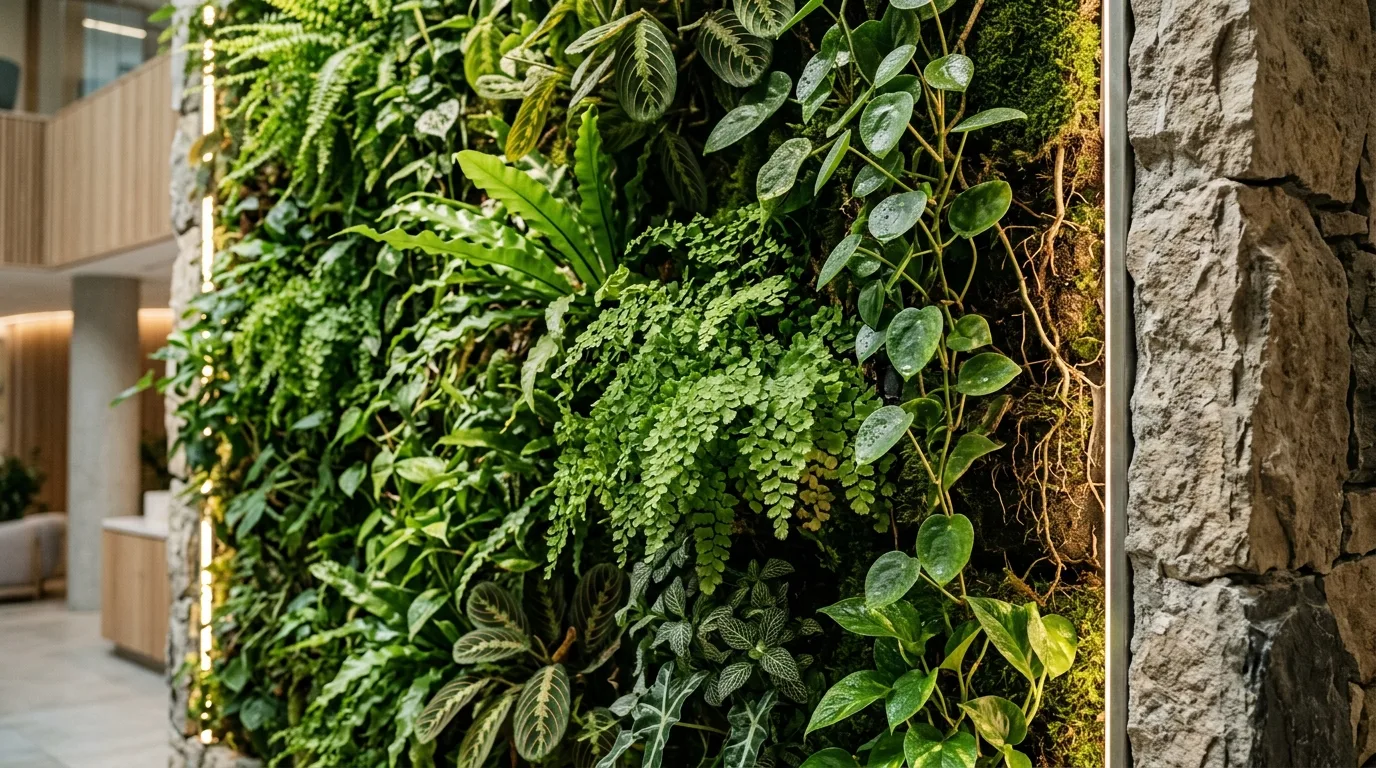
Integrated veranda featuring natural stone, 2700K ambient illumination, and flourishing tropical vegetation.
How to Incorporate Brazilian Bossa into Modern Living
To infuse your home with authentic Brazilian character and balanced warmth:
- Warm Sunlit Palette: Choose warm sand, ivory, oatmeal, and subtle terracotta or olive accents for perimeter walls.
- Signature Wood Piece: Introduce a statement solid wood lounge chair or a cane-webbing sideboard in your entryway.
- Authentic Folk Crafts: Integrate handmade clay pottery, indigenous woven basketry, and hand-loomed natural throws.
- Layered Warm Lighting: Use 2700K warm LED light sources in floor lamps and wall sconces to highlight wood grain textures at night.
Key Materials and Specification Guide
| Brazilian Element | Recommended Material | Spatial Feel | Practical Application |
|---|---|---|---|
| Warm Timber | Freijó, Cumaru, Reclaimed Peroba | Acoustic warmth and visual softness | Slatted wall panels, credenzas, coffee tables |
| Cane Webbing | Natural woven cotton or raffia mesh | Visual airiness and cross ventilation | Armchair backrests, cabinetry, bed headboards |
| Cobogó Screens | Terracotta clay, raw cement, glazed ceramic | Filtered daylight and sculpted shadows | Room partition between kitchen, foyer, or patio |
| Tropical Plants | Monstera, Maranta, Bird of Paradise | Air purification and organic vibrancy | Unglazed raw terracotta floor planters |
Simulating Your Tropical Retreat with Arquitet IA
Curious how freijó wood paneling, cane webbing armchairs, and tropical botanicals would look inside your specific floor plan?
With the Arquitet IA app, simply snap a picture of your room to render photorealistic simulations of contemporary Brazilian living in seconds powered by generative AI.
Bring Brazilian Bossa to Your Home
Photograph your living room or veranda to preview freijó woodwork, cane webbing, and tropical plants in seconds with Arquitet IA.
Try It Free →