- The Futuristic Monastery and the Monochromatic Phenomenon
- Spatial Psychology: Why Sterile Rooms Induce Sensory Fatigue
- The Architectural Pivot: The Rise of Warm Minimalism
- Sensory Textures, Biophilia, and Personal Storytelling
- Finding Your Balanced Palette with Arquitet IA
- Frequently Asked Questions
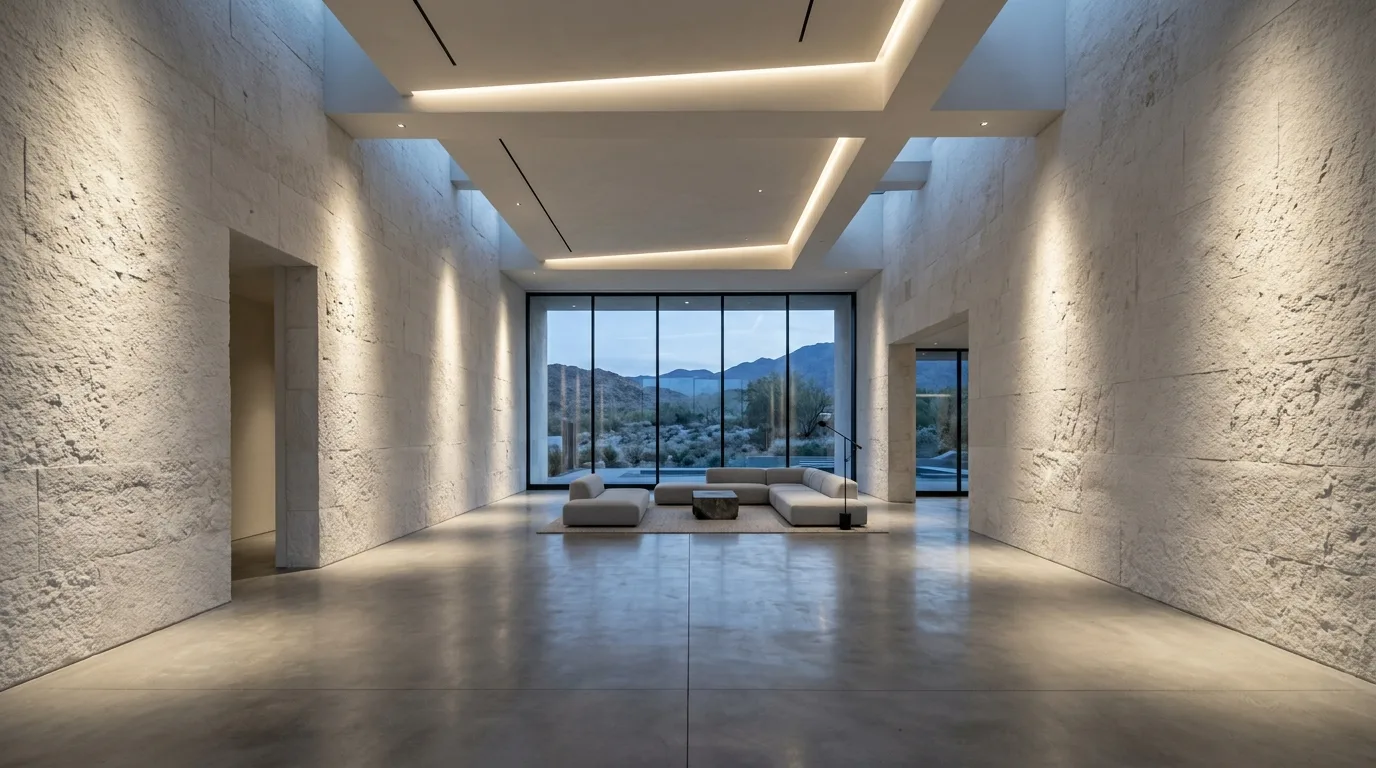
When video tours of Kim Kardashian's Hidden Hills compound first circulated online, global reaction was immediate and divided. Designed by Belgian master Axel Vervoordt as a contemplative "futuristic monastery," the estate stunned with its austere purity: vaulted hallways coated in seamless white plaster, rimless sinks, and vast rooms devoid of color or framed memories. Online commentators humorously dubbed it a *"hospital pavilion."* While intended as an antidote to media chaos, this radical emptiness highlighted the psychological boundaries of cold minimalism.
The Futuristic Monastery and the Monochromatic Phenomenon
For celebrities constantly immersed in flashing cameras, noise, and visual overload, the desire to return home to absolute sensory quiet is entirely understandable. Strict minimalism served as a cleansing filter against the chaos of public life.
However, stripping away every trace of warmth risks turning a home into a photoshoot stage rather than a sanctuary, a challenge closely linked to our analysis on why eccentric celebrity mansions struggle on the real estate market.
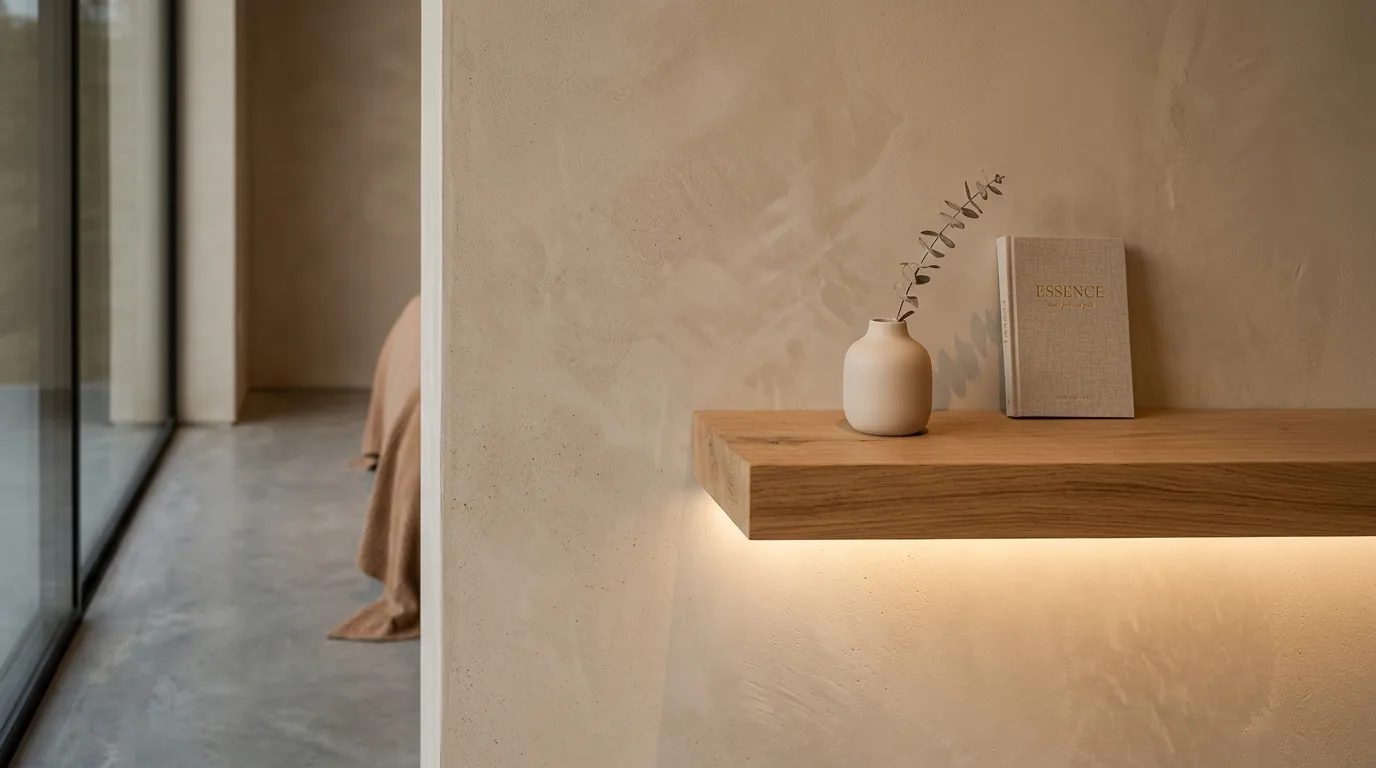
Transitioning from stark clinical white to sand microcement and warm timber restores shelter and intimacy to the home.
Spatial Psychology: Why Sterile Rooms Induce Sensory Fatigue
Research in environmental psychology and neuroarchitecture demonstrates that human brains require micro-variations in texture, shadow, and organic materials to feel truly at rest. In an environment dominated by flat, reflective white surfaces, several involuntary reactions take place:
- Acoustic Discomfort and Echo: Without rugs, heavy drapery, and upholstered furniture, sound waves bounce off hard surfaces, creating a sterile clinical echo.
- Subconscious Alertness: Lacking tactile reference points and warm natural elements, sensory receptors stay in a subtle state of vigilance.
- The Feeling of Disconnection: A living space where setting down a personal item disrupts the "flawless perfection" induces subtle anxiety rather than relaxation.
The Architectural Pivot: The Rise of Warm Minimalism
In response to sterile fatigue, premier design studios worldwide have embraced warm minimalism (or organic minimalism).
This philosophy preserves clean architectural sightlines and uncluttered openness while reintroducing tactile materials: lime plasters, honed travertine, heavy bouclé fabrics, and grain-rich timbers. This movement connects naturally with the celebrated warmth of Brazilian interior design and bossa nova style and the soulful curation championed by Nate Berkus on crafting homes that tell a story.
Sensory Textures, Biophilia, and Personal Storytelling
Achieving modern harmony does not mean returning to heavy historical clutter. As outlined in our guide to in vs out interior design trends, key principles include:
- Warm Dimmable 2700K Lighting: Concealed LED coves that wash plaster walls in gentle golden light.
- Earthy Color Palettes: Shifting from icy greys to warm oatmeal, terracotta, soft sand, and raw linen.
- Sculptural Biophilia: Adding substantial houseplants in artisanal ceramic pots to soften geometric corners.
Finding Your Balanced Palette with Arquitet IA
You do not need to embark on costly demolition to discover whether your living room would benefit from warm microcement or custom timber paneling.
With the Arquitet IA app, simply snap a photo of any room to visualize warm textures, organic furniture, and ambient lighting schemes in real time using artificial intelligence.
Balance Minimalism and Warmth in Your Space
Upload a photo of your living room or bedroom and test natural wood, warm plaster, and soft lighting instantly with Arquitet IA.
Try It Free →