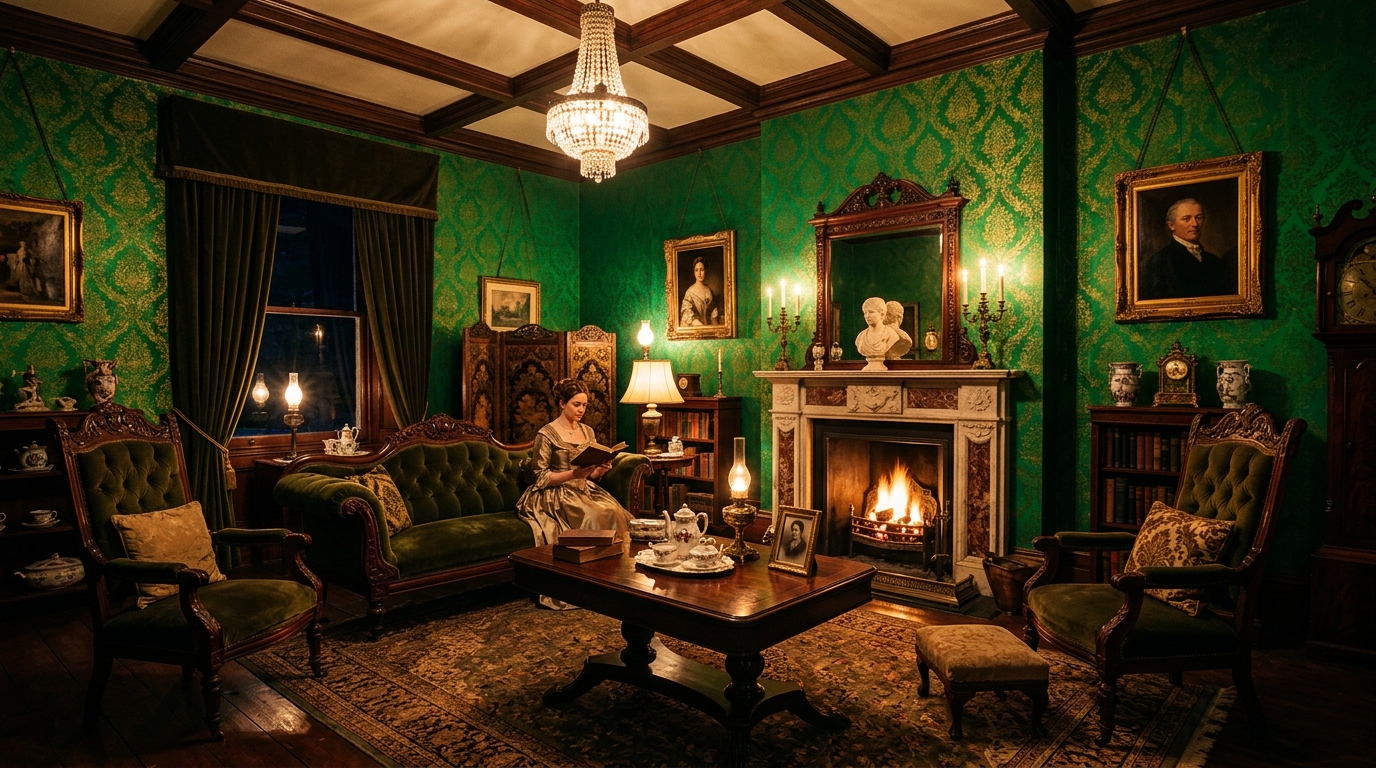
In mid-19th-century Victorian Britain, few interior details commanded as much admiration as a remarkably vivid emerald green. The color shimmered brilliantly beneath early gas lamps, coating silk ballgowns, heavy velvet drapery, and, most prominently, the ornate floral wallpapers that graced parlors, dining rooms, and nurseries across the country.
What fashionable society took decades to discover was that this mesmerizing vibrancy carried a lethal secret: walls slowly off-gassed an odorless, poisonous vapor that poisoned entire families inside their own homes.
The Quest for Vivid Green and Copper Arsenite Chemistry
Until the late 18th century, achieving a deep, enduring green dye was notoriously difficult. Plant-based colorants faded quickly and dulled under indoor lighting into drab grayish-browns.
In 1775, Swedish-German chemist Carl Wilhelm Scheele formulated a synthetic compound by mixing copper sulfate with arsenic trioxide. Named Scheele's Green (and later refined as Paris Green), the resulting pigment was luminous, colorfast, and remarkably cheap to produce. Wallpaper manufacturers across London and Manchester soon printed millions of rolls adorned with lush botanical motifs.
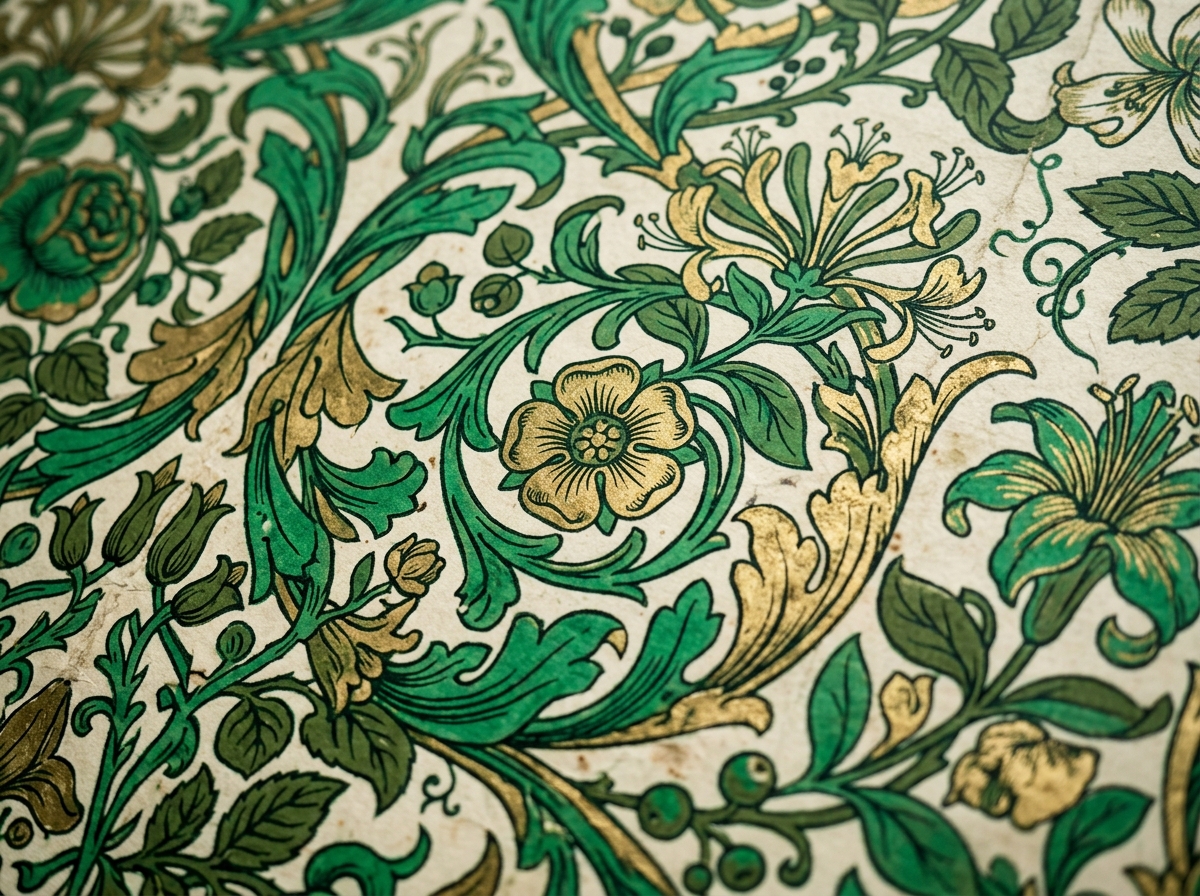
Intricate Victorian botanical patterns: copper and arsenic pigments yielded intensely vibrant, long-lasting greens.
Damp Bedrooms, Household Mold, and Lethal Off-Gassing
The true danger escalated when these wallpapers lined the damp, poorly ventilated masonry homes of the British Isles. Harsh, humid winters caused moisture to condense against interior walls, softening the organic starch paste used for installation.
Common household molds (most notably Penicillium brevicaule) flourished in the damp paste and pigment slurry. As the fungi metabolized the copper arsenite, they released toxic volatile compounds, including trimethylarsine gas. Inhabitants inhaled micro-particles night after night, suffering debilitating migraines, chronic nausea, skin lesions, and unexplained respiratory collapse that Victorian physicians initially misdiagnosed as mysterious childhood fevers.
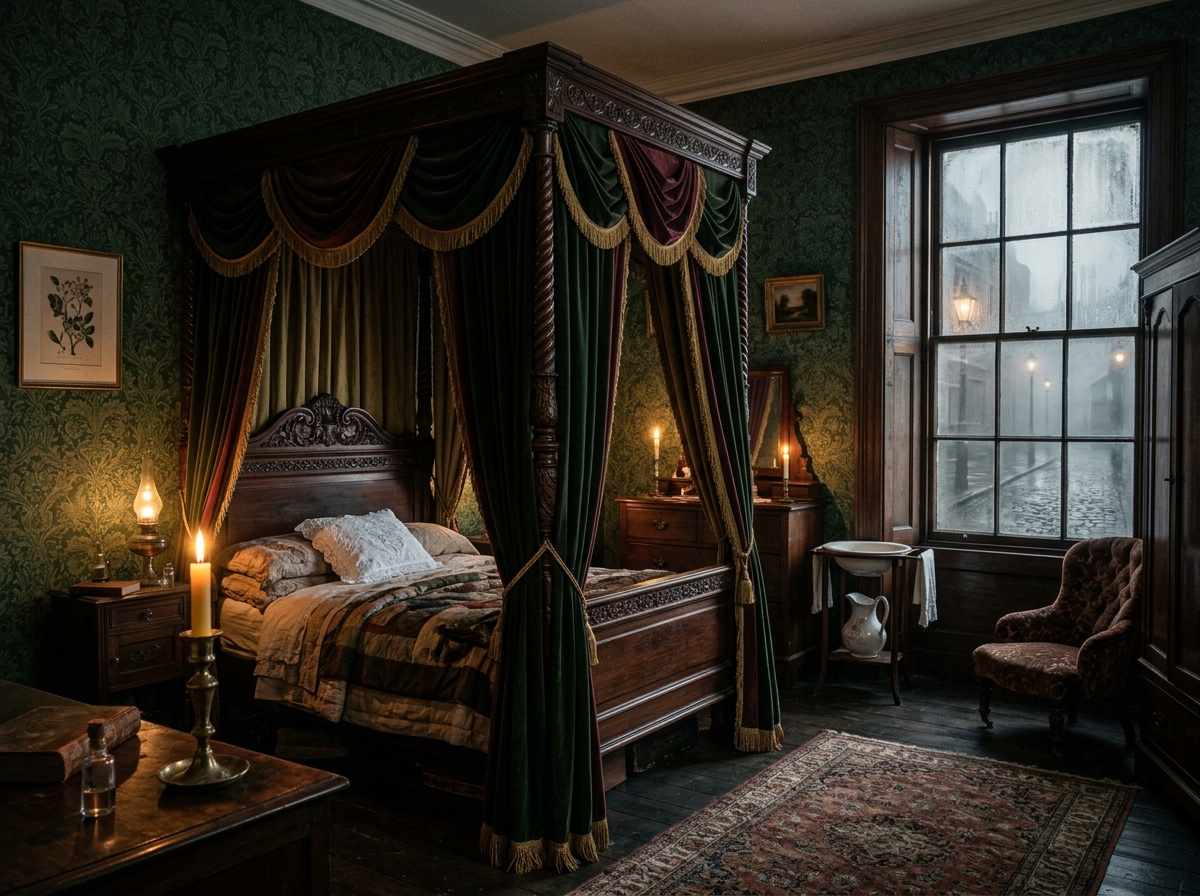
Enclosed, coal-heated parlors and nurseries concentrated toxic fumes within daily living quarters.
The William Morris Controversy and the Turn Toward Safety
Even after medical practitioners published alarming investigations in the 1860s, wallpaper tycoons pushed back. Influential designer William Morris, leader of the Arts & Crafts movement, initially dismissed the medical claims—partly because his family held substantial shares in Devonshire copper and arsenic mines.
It took mounting public outcry, investigative journalism, and relentless pressure from independent chemists to finally force British manufacturers to eliminate arsenic from printing processes. By the close of the century, the industry permanently transitioned to safe mineral dyes, fundamentally reshaping modern understanding of indoor air quality and environmental health.
The Architectural Legacy in Today's Wall Coverings
This historic tragedy established the foundation for modern architectural health standards. Today, low-VOC water-based paints, breathable non-woven wallpapers, and natural lime washes ensure homes remain beautiful without compromising indoor wellness.
Before committing to bold patterns or wall finishes, careful spatial and lighting planning is key. Explore our interior design styles guide and discover practical space-saving ideas in our guide on how to decorate a small living room.
Test wallpaper patterns and wall colors risk-free
Snap a photo of your bedroom or living room to preview elegant patterns, mineral textures, and color schemes in seconds on the Arquitet IA app.
Simulate Wall Colors in Arquitet IA →Frequently Asked Questions
Why was Victorian green wallpaper toxic?
The Scheele's Green pigment was synthesized from copper arsenite to produce a bright, fade-resistant color. In damp rooms, common household molds reacted with the starch paste and pigment, off-gassing highly poisonous arsine gas.
What symptoms did people experience in rooms papered with this color?
Inhabitants suffered from unexplained chronic fatigue, severe migraines, skin ulcerations, persistent respiratory distress, and in severe cases, fatal arsenic toxicity.
Do modern wallpapers carry any similar health risks?
No. Modern wall coverings and interior paints undergo strict environmental certifications and international VOC standards, guaranteeing formulations free of heavy metals and hazardous toxins.
How can I choose safe and healthy wallpaper for a bedroom today?
Choose breathable non-woven or pure cellulose substrates, water-based non-toxic printing inks, and solvent-free starch or methylcellulose adhesives.