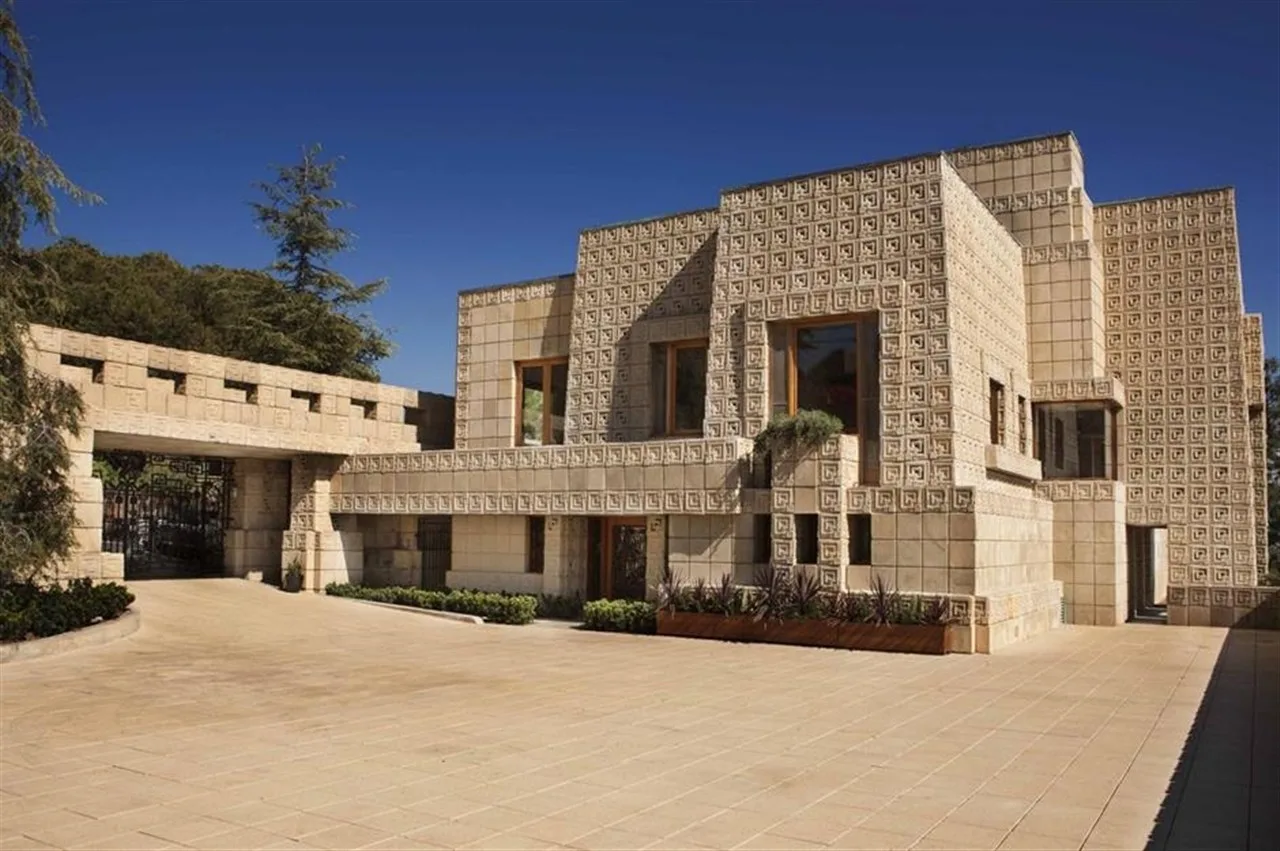
When visionary director Ridley Scott created the visual world of Blade Runner (1982), he avoided sterile spaceship interiors and generic chrome sets. To house the secluded apartment of blade runner Rick Deckard (Harrison Ford), Scott chose a monument completed in 1924 in the Los Feliz hills of Los Angeles: the iconic Ennis House, masterminded by Frank Lloyd Wright.
The juxtaposition of pre-Columbian Mayan monumentality and vertical neon beams piercing through rainy skylines cemented the Ennis House as one of the most celebrated residential settings in cinematic neo-noir history.
Architectural Profile: Ennis House (Charles & Mabel Ennis Residence)
| Parameter | Specification |
|---|---|
| Lead Architect | Frank Lloyd Wright (construction management by Lloyd Wright) |
| Year Completed | 1924 |
| Architectural Style | Mayan Revival / Textile Block System |
| Real-World Location | 2607 Glendower Avenue, Los Feliz, Los Angeles, California |
| Cinematic Persona | Dystopian apartment of Rick Deckard in Blade Runner (1982) |
Textile Block Engineering & Dramatic Light
The Ennis House represents the largest and most intricate of the four textile block houses Wright built in Southern California during the 1920s. Sourcing decomposed granite and aggregate directly from the construction hillside, Wright cast over 27,000 interlocking precast concrete blocks.
Each 16-inch square block displays an abstract geometric relief derived from Mayan palace facades in Uxmal, Mexico. Internally, a network of horizontal and vertical steel reinforcing rods binds the hollow blocks together, providing structural stability while allowing narrow vertical slits for natural light filtration.
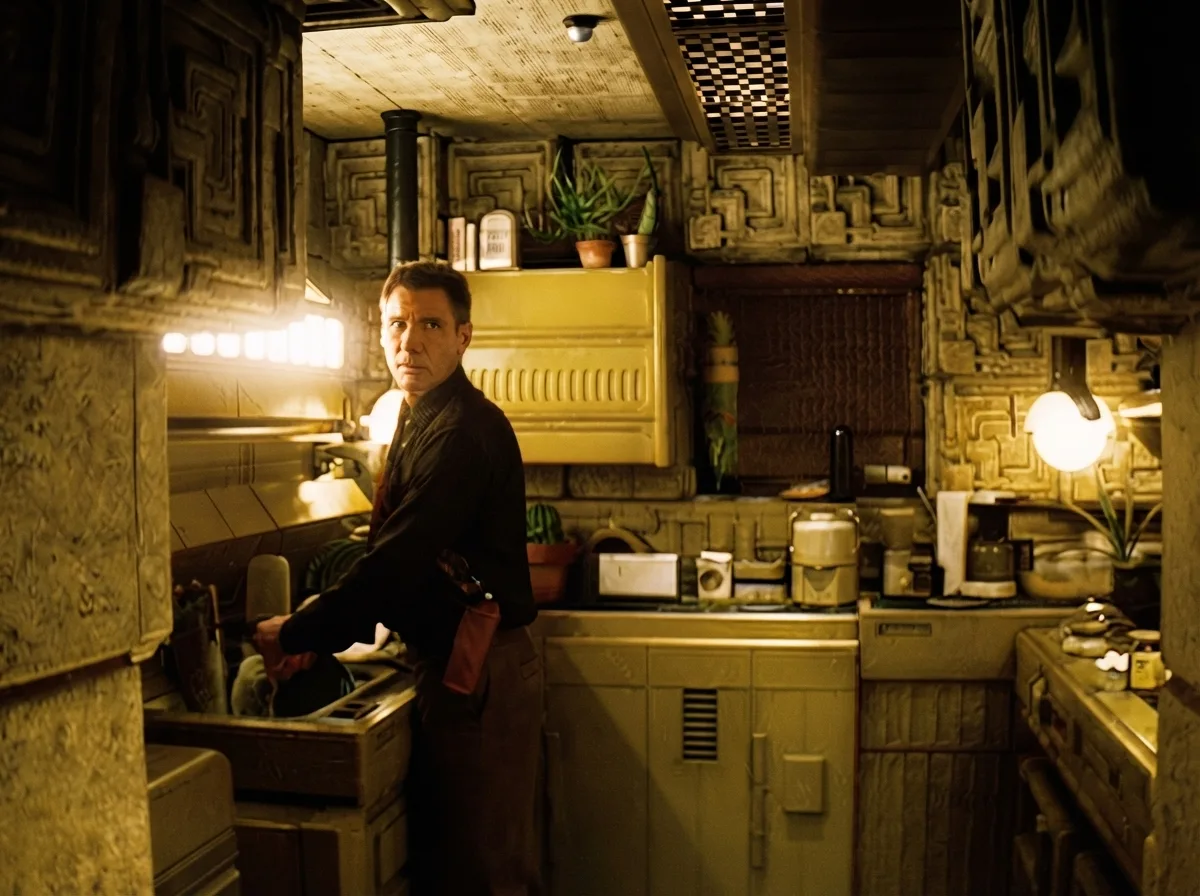
Dystopian Scenography: Rick Deckard's Sanctuary
In Blade Runner, Wright's architecture becomes an extension of the protagonist's weary psychological state. The coarse grey concrete blocks contrasted against dark timber shutters and grazing neon highlights depict an archaic refuge engulfed by an overwhelming metropolitan collapse.
"The Ennis House reframes science fiction as an archaeological excavation. Instead of sleek plastic surfaces, Deckard inhabits a concrete cathedral sculpted in shadow." — Cinematic Design Review.
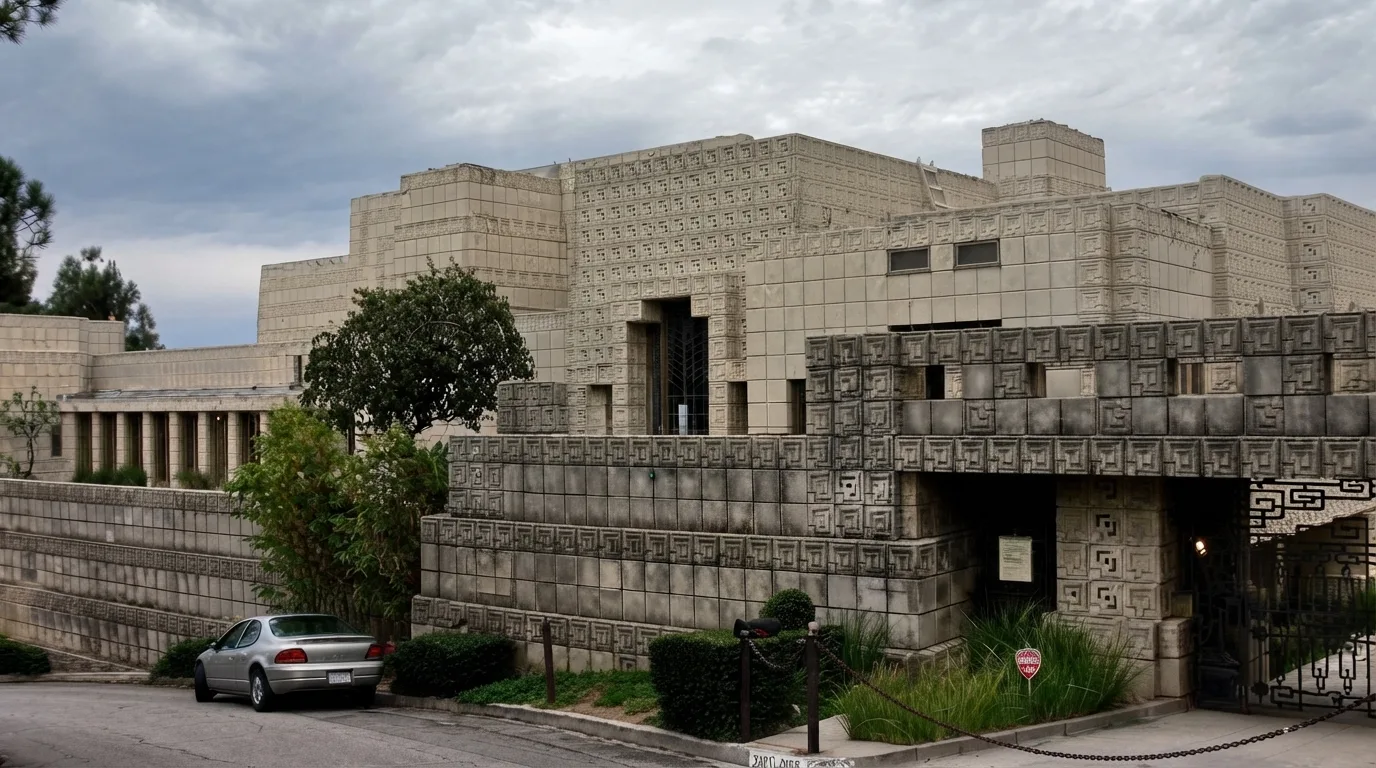
Production Behind the Scenes: Location vs. Soundstage
Given spatial limitations for large camera rigs and the need to preserve the landmarked historic fabric, Ridley Scott filmed exterior establishing shots and entrance courtyards at the actual Los Feliz residence.
For interior sequences requiring artificial rain machines and special lighting, Warner Bros. set decorators molded plaster replicas of Wright's textile blocks at their Burbank studio, enabling dramatic backlighting through translucent relief gaps.
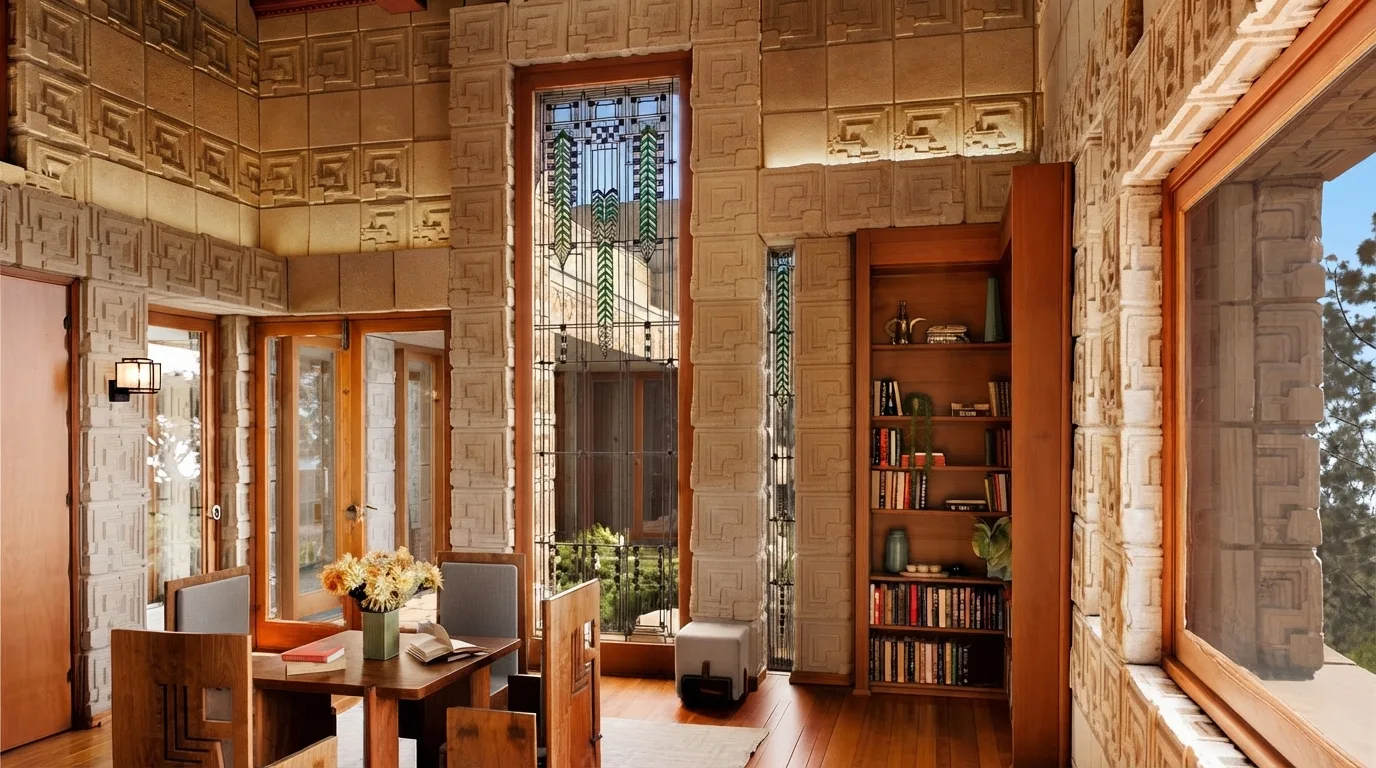
Influence on Contemporary Architecture & Interiors
The textural gravitas of the Ennis House continues to influence contemporary residential design. Concepts like 3D cementitious tiles, architectural floor-to-ceiling uplighting, and aged walnut joinery draw from Wright's exploration of mineral warmth and shadow play.
This cinematic architectural narrative connects with our studies on The Architecture of Parasite, the Frank Lloyd Wright Dossier, and the sculptural Sheats-Goldstein House in The Big Lebowski.
Simulate Concrete Textures & Dramatic Light with AI
Looking to preview exposed concrete wall reliefs, moody uplighting, or architectural textures in your own room photos? Arquitet IA generates photorealistic 3D renders in seconds.
Try Simulation in Arquitet IAFrequently Asked Questions
What is Frank Lloyd Wright's Textile Block System?
The Textile Block System is a construction method developed by Frank Lloyd Wright in the 1920s using precast concrete blocks woven together with horizontal and vertical steel rebar rods, allowing structural walls with integral ornamental reliefs.
Why was the Ennis House chosen as Rick Deckard's apartment in Blade Runner?
Director Ridley Scott wanted a neo-noir atmosphere that evoked ancient archaeological weight amidst dystopian futuristic decay, using the textured Mayan concrete blocks to express the loneliness and alienation of the protagonist.
Where is the Ennis House located and what inspired its design?
The residence is located in the hills of Los Feliz in Los Angeles, California. Built in 1924, its geometry was heavily inspired by the pre-Columbian Mayan ruins of Uxmal in Mexico, standing as a premier example of Mayan Revival architecture.