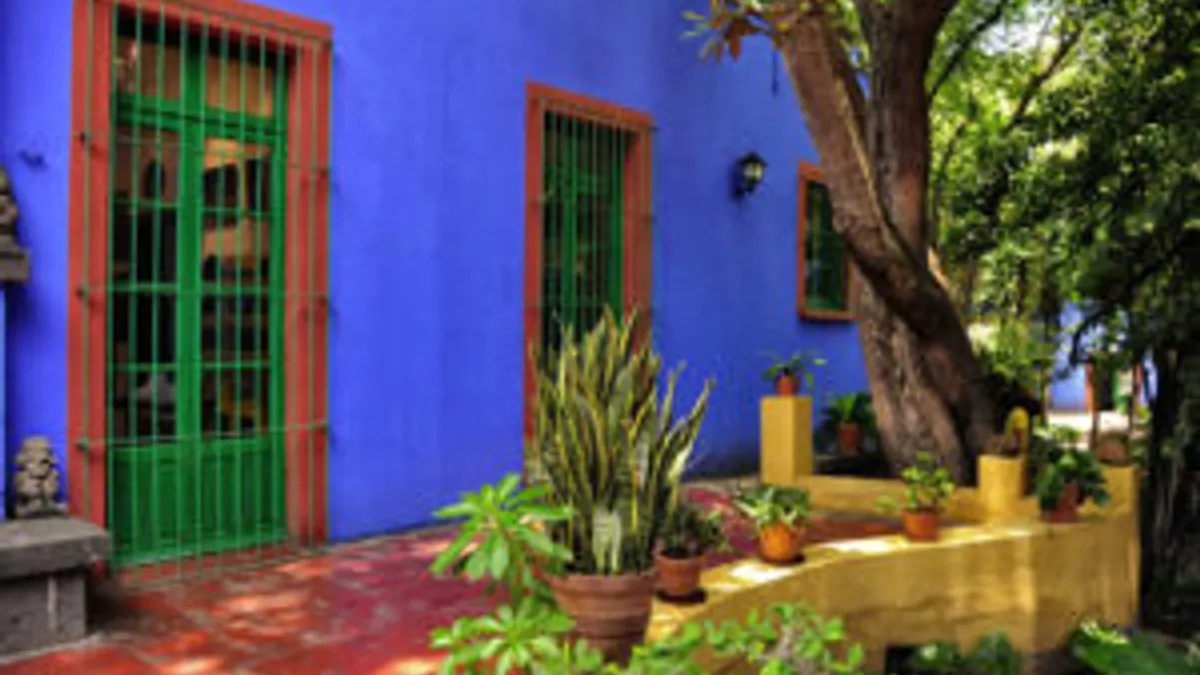
In Coyoacán, a serene neighborhood south of Mexico City, stands a sanctuary that radiates artistic life and cultural pride from every wall. Its intense cobalt blue surfaces are visible from down the street: a color so saturated, bold, and unapologetic that it feels like a love letter to Mexican folk heritage. Behind these vibrant walls, Frida Kahlo was born, loved, painted her most iconic masterworks, and lived her most profound moments. Today, decades after her passing, La Casa Azul welcomes thousands of travelers worldwide as one of the most beloved artist homes in Latin America.
Beyond the legend of Frida herself, an inspiring design question emerges: how did the architecture, the fearless color palette, and the lush courtyard gardens shape her creative process—and how can they inspire our own homes today?
"This house gave me color. This house gave me pain. This house gave me everything I am." — Frida Kahlo, from notes in her personal diary.
Family Origins and the Embrace of Mexican Folk Tradition
The history of this iconic residence began in 1904, built by Frida's father, German photographer Guillermo Kahlo. Born Wilhelm Kahlo in Germany, he arrived in Mexico in the late 19th century, fell in love with the country, and became the government's premier documentary photographer of national heritage monuments.
Originally, the house featured exposed brick walls without the trademark cobalt blue that made it world-famous. That vivid pigment was introduced decades later by Frida and Diego Rivera when they decided to transform the home into a living celebration of indigenous Mexican craft. The vibrant blue, common across village homes in Oaxaca, was traditionally believed to energize living spaces and ward off negative spirits.
Frida was born here on July 6, 1907. She grew up within its rooms, recovered here from the life-altering bus crash at age 18, and returned permanently to paint after years of international travels alongside Rivera.
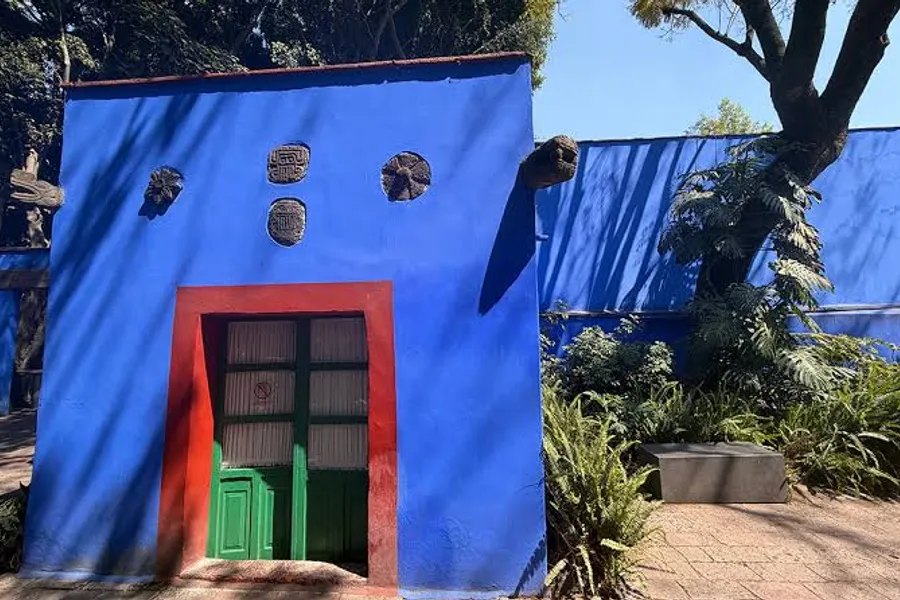
The iconic facade of La Casa Azul: cobalt blue walls framed by emerald green window grilles and a deep red doorway.
Colonial Courtyard Living and Modern Functionalist Additions
Architecturally, La Casa Azul represents the classic Mexican casa patio (courtyard residence). The house turns a discreet face to the street while opening generously inward onto a lush central garden overflowing with native cacti, bougainvillea, and tropical foliage.
During the 1930s and 1940s, needing more studio space, Diego Rivera hired prominent functionalist architect Juan O'Gorman to design an expansive new wing. O'Gorman introduced modern architectural elements: soaring double-height ceilings, generous north-facing glass walls for optimal painting daylight, and steel mezzanines harmoniously integrated with traditional adobe brickwork.
In the leafy courtyard, Rivera even erected a miniature stepped pyramid made from local volcanic basalt stone to showcase his vast collection of pre-Columbian sculptures. This harmony between nature, indigenous heritage, and architecture anticipated concepts that contemporary designers celebrate today as biophilic design and Warm Minimalist Architecture.
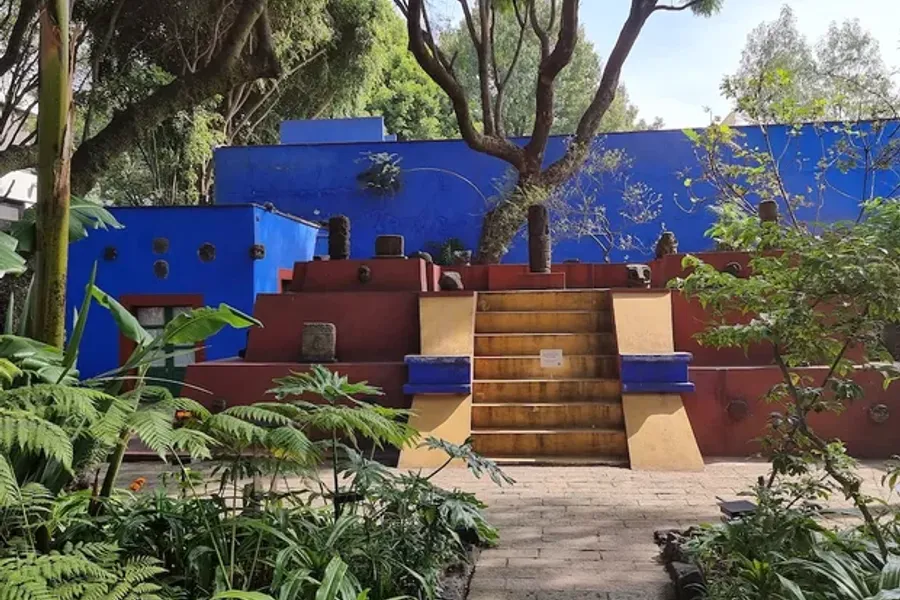
The lush tropical garden at La Casa Azul: stone pathways, exotic botanicals, and the pre-Columbian pyramid in the background.
The Intimate Bedroom and the Canopy Bed with Ceiling Mirror
While the courtyard and facade represent a public celebration of Mexican culture, Frida's private bedroom is a touching sanctuary of intimacy and endurance.
The bedroom is relatively compact and deeply personal. Dominating the center of the room is her historic carved dark-wood four-poster bed. Attached beneath the canopy is a horizontal mirror installed by her mother following her accident, enabling Frida to paint her famous self-portraits during months of bed rest.
Around the room rest her palettes, brushes, vintage photographs, handmade papier-mâché masks, and painted orthopedic corsets. Everything remains arranged just as Frida left it in 1954, preserving an emotional atmosphere of creative resilience.
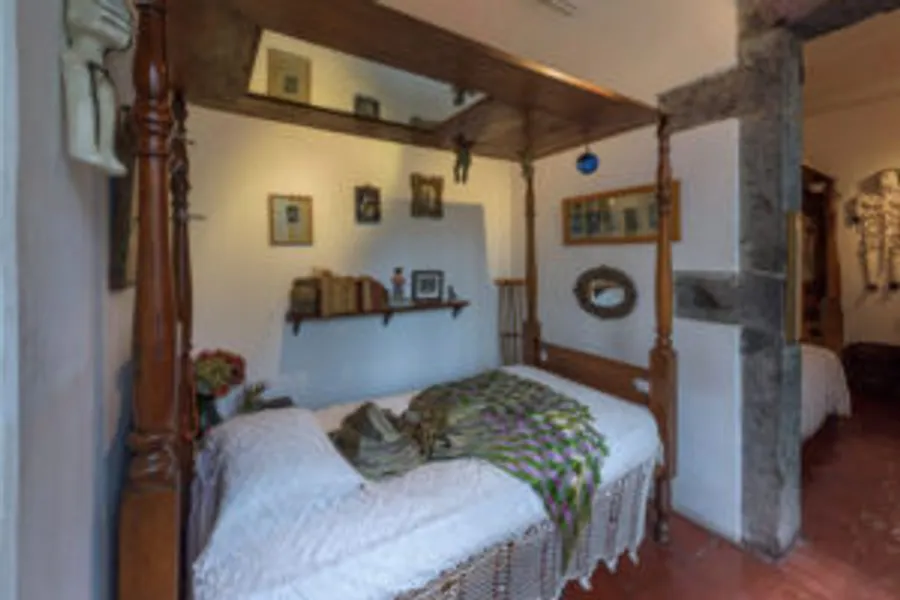
Frida Kahlo's preserved bedroom: the canopy bed, the ceiling mirror, and her personal art materials.
The Chromatic Triad That Redefined Interior Design
The palette of La Casa Azul was never a fleeting trend; it was a deliberate masterclass in color harmony:
The cobalt blue walls create a comforting sense of enclosure and depth, known in modern interior architecture as *color drenching*. In contrast, the terracotta red baseboards and door trims ground the eye with earthy warmth, while emerald green window frames bring natural botanical vibrancy indoors.
This joyful balance proves that bold, saturated colors can create serene, soulful spaces when balanced with raw woods, clay tiles, and living plants.
Timeless Decor Lessons from Frida Kahlo
La Casa Azul continues to influence contemporary interiors by championing warmth, authenticity, and personal storytelling:
Pairing artisanal ceramics and vibrant folk art with clean modern furniture creates homes full of character. Embracing private garden pockets, earthy hues, and handcrafted textures connects directly with the philosophies of iconic architects like Lina Bo Bardi and Frank Lloyd Wright.
Fact Sheet: La Casa Azul (Frida Kahlo Museum)
| Location | Londres 247, Del Carmen, Coyoacán, Mexico City |
| Original Construction | 1904 — by Guillermo Kahlo |
| Modernist Expansion | 1930s & 1940s — Diego Rivera and Juan O'Gorman |
| Architectural Style | Colonial courtyard house with functionalist interventions |
| Signature Palette | Cobalt blue, terracotta red, and emerald green |
| Museum Opening | 1958 — donated by Diego Rivera to the Mexican people |
Frequently Asked Questions
Why was Frida Kahlo's house painted cobalt blue?
Cobalt blue was chosen by Frida and Diego Rivera as an homage to indigenous Mexican traditions. In traditional folk culture, blue walls were used to energize homes, celebrate local identity, and ward off negative spirits.
Who designed the modernist studio extension of the house?
The studio expansion was designed by renowned functionalist architect Juan O'Gorman during the 1930s and 1940s, featuring tall north-facing windows, iron mezzanines, and local volcanic rock details.
How can you apply Frida's color palette in a modern apartment?
You can paint an accent wall in deep cobalt blue or indigo in a study or bedroom, balancing it with natural wood furnishings, terracotta planter accents, and lush indoor plants for a vibrant yet cozy atmosphere.
Try bold colors and warm textures in your own space
Want to see how cobalt blue walls, terracotta accents, and artisanal wood furniture would look in your room? The Arquitet IA app lets you visualize realistic interior transformations in seconds using just a photo.
Simulate Colors in Arquitet IA →The Lasting Power of Artful Living
Far more than a popular museum, La Casa Azul stands as a moving tribute to how architecture can nurture the human spirit. By welcoming the world inside, Frida Kahlo's home reminds us that a house truly comes alive when its walls reflect our deepest passions and authentic identity.