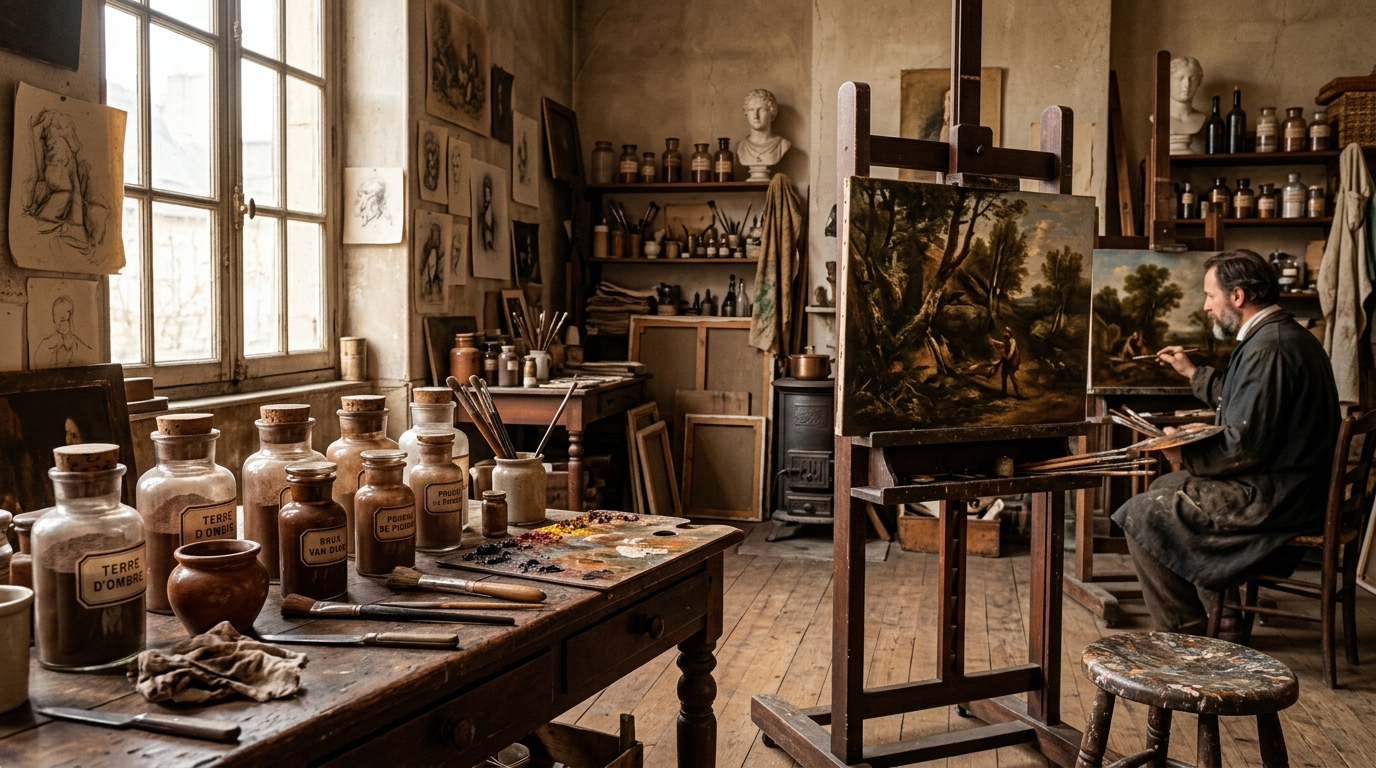
Among the most startling materials ever documented in European fine art and interior decoration, few carry a history as unsettling as Mummy Brown (Caput Mortuum or Egyptian Brown). From the late Renaissance until the mid-20th century, leading painters, illustrators, and decorative artists routinely worked with oil paint manufactured from pulverized ancient Egyptian mummies.
Prized for its warm terracotta depth, velvety transparency, and unmatched performance in subtle glazing and chiaroscuro layering, this pigment adorned classical canvases and country house reception rooms before its biological provenance became widely understood.
Origins and the Allure of Rich Earth Undertones
Following the expansion of Mediterranean trade routes from the 16th century onward, merchant vessels imported thousands of ancient wrapped remains into the ports of London, Paris, and Amsterdam. Color merchants targeted the unique chemical amalgam produced by centuries of preservation: a blend of natural bitumen, myrrh, tree resins, and ancient linen fibers.
At specialized pigment mills, the desiccated remains were ground into an ultrafine powder. When emulsified with cold-pressed linseed oil or amber varnish, it yielded a buttery, semi-transparent glaze with optical characteristics that contemporary mineral earths struggled to match, delivering rich shadow work without clouding underlying paint layers.
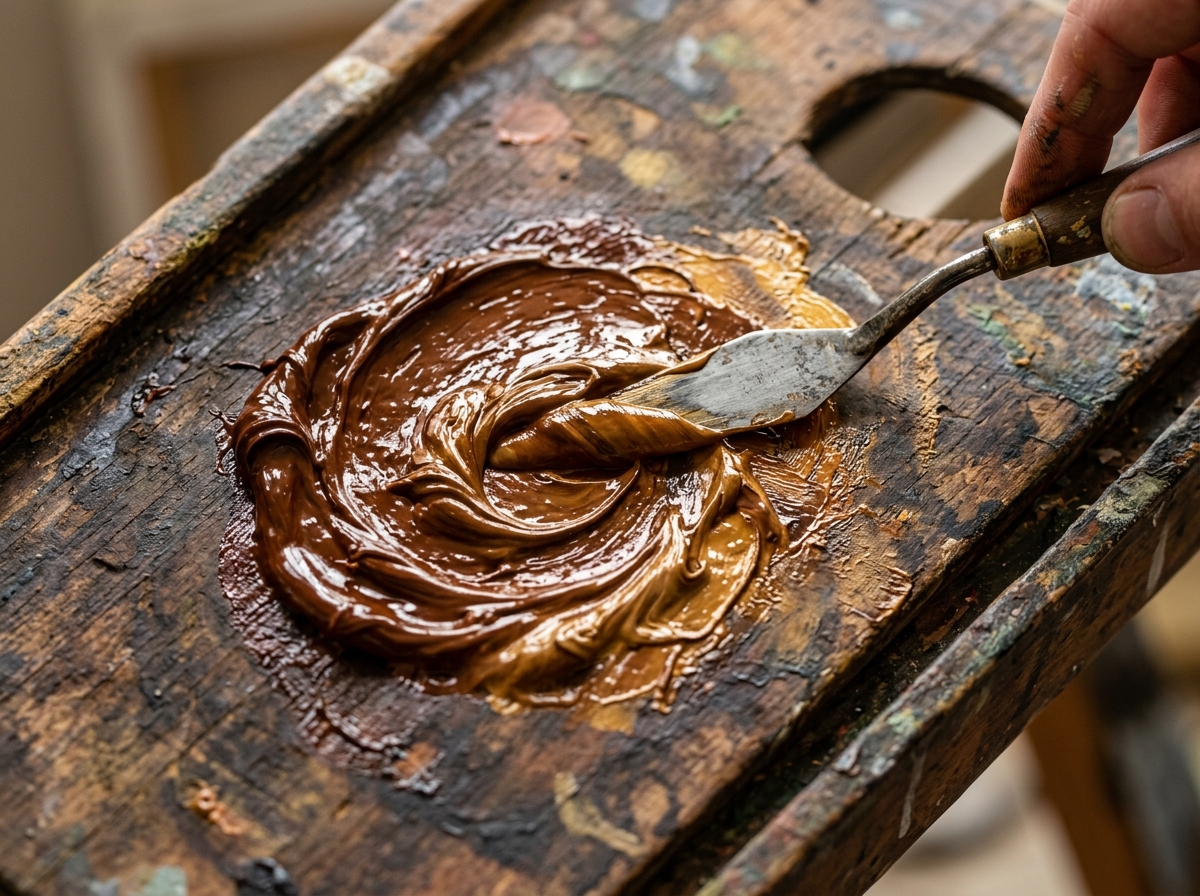
The velvety texture and subtle translucency of Mummy Brown made it a staple for classical glazes.
Studio Revelations and the Ceremonial Garden Burial
Remarkably, many prominent painters had no idea their favorite color was literally composed of ancient corpses, assuming the moniker was merely poetic phrasing denoting the ochre tones of the Nile.
The most famous realization occurred in Victorian England. The Pre-Raphaelite master Edward Burne-Jones was having Sunday dinner with fellow artist Lawrence Alma-Tadema when the conversation turned to color chemistry. Learning that the tube in his studio was genuine human tissue, Burne-Jones was so horrified that he walked out into his Surrey garden and gave his tube of paint a formal burial beneath the grass.
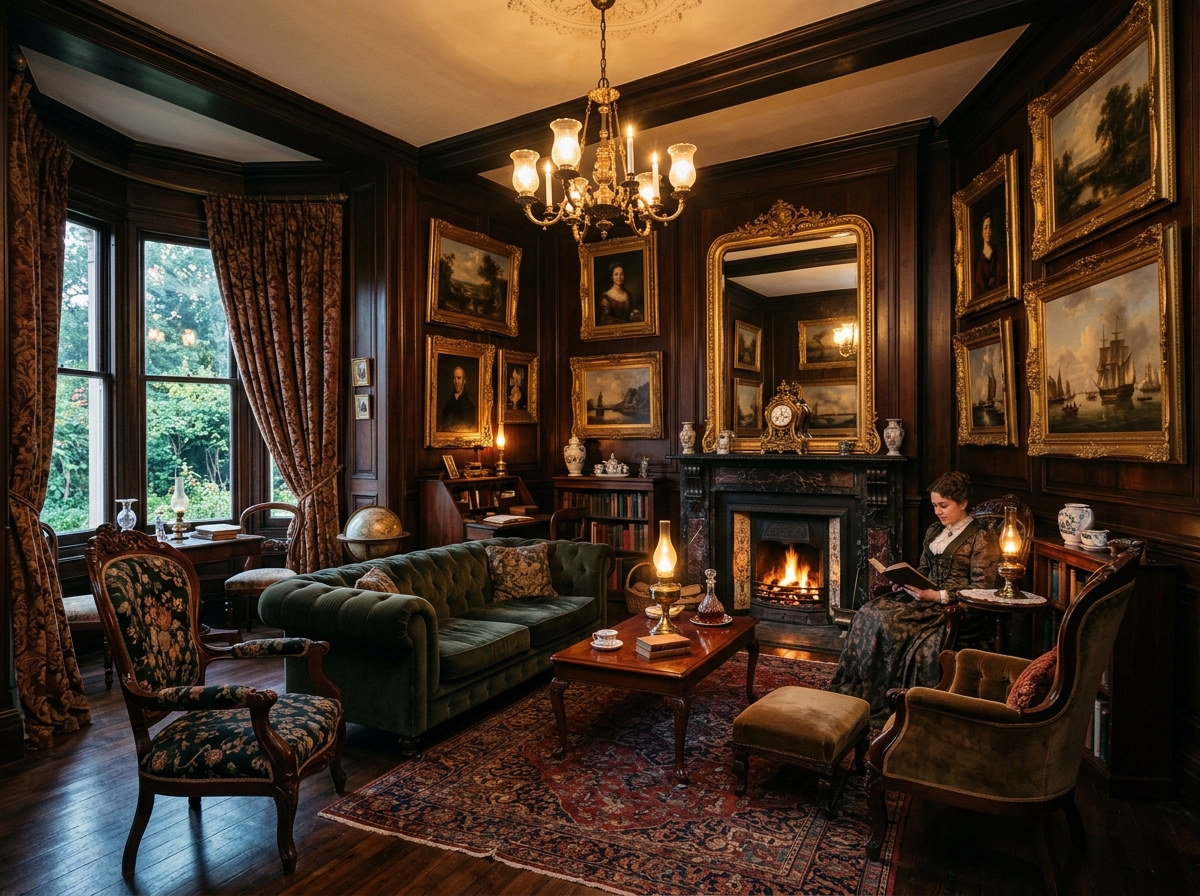
Victorian drawing rooms frequently displayed canvases and interior woodwork finished in warm, rich brown hues.
Exhaustion of Supplies and the Modern Synthetic Shift
Contrary to common belief, commercial production did not cease because of sudden legislative bans, but because the physical supply of mummies simply ran out.
In 1964, historic London artists' colorman C. Roberson & Co. announced that their last authentic Egyptian mummy had been processed and that they could no longer supply the original formulation. Since then, pigment chemists have perfected durable, non-toxic alternatives based on synthetic iron oxides and natural umbers, offering identical chromatic depth without ethical compromise.
This fascinating chapter in decorative materials pairs naturally with other historical home design revelations, such as the hazard of Victorian arsenic wallpaper and the architectural consequences of Britain's Daylight Window Tax. Today, warm earthy tones and natural finishes are celebrated across modern interior design styles.
Historical Summary: The Mummy Brown Pigment
| Active Era | 16th century through the mid-1960s |
| Original Ingredients | Ground embalmed human and feline remains, bitumen, pitch, and tree resins |
| Visual Characteristics | Warm, earthy terracotta tone, buttery texture, and high transparency in glazes |
| Reason for Cessation | Depletion of merchant mummy inventories and growing ethical standards |
| Modern Counterparts | Synthetic iron oxides, burnt umber, raw sienna, and non-toxic mineral ochres |
Find the Perfect Earth-Tone Color Palette for Your Home
Experiment with warm terracotta shades, rich wood stains, and refined lighting schemes directly on photos of your living spaces using the Arquitet IA app.
Explore Palettes in Arquitet IA →Frequently Asked Questions about Mummy Brown
What was Mummy Brown pigment made of?
Mummy Brown (also known as Caput Mortuum or Egyptian Brown) was produced by finely grinding ancient embalmed human and feline remains combined with pitch, bitumen, and resins.
Why was the paint so popular among artists?
The pigment provided a warm, transparent earthy undertone with exceptional glazing properties, making it ideal for shadows, chiaroscuro effects, and rich flesh tones in oil painting.
When did the production of Mummy Brown end?
Commercial manufacture ended during the 1960s; in 1964, London color merchant C. Roberson & Co. announced it had completely run out of mummies, permanently switching to synthetic alternatives.
What modern pigments replaced Mummy Brown?
Contemporary color makers produce identical hues using non-toxic synthetic iron oxides, burnt umber, raw sienna, and mineral earth blends.