In the 1920s, stepping into a well-appointed bedroom after nightfall revealed a visual novelty that enchanted high society: atop rosewood nightstands, alarm clock hands, pocket watch numerals, and luminous toggle switches cast an unyielding emerald-green glow in the dark without needing electrical cords, oil wicks, or open flames.
To consumers of the era, this self-sustaining illumination represented the absolute frontier of scientific progress and domestic luxury. Yet beneath the radiant dials that filled Western homes lay one of the most poignant industrial tragedies in history: the story of the Radium Girls, whose courage forever altered the course of workplace safety standards and occupational medicine.
The Fascination with Radium and the Craze for Nighttime Luminescence
Discovered by Marie and Pierre Curie at the close of the nineteenth century, radium captured the popular imagination like few elements before it. During the first two decades of the twentieth century, advertisers hailed it as a miracle tonic, blending it into cosmetics, face powders, and glowing household decor. When mixed with phosphorescent zinc sulfide crystals, radium triggered a continuous radioluminescent reaction that illuminated the dark.
Enterprises like the United States Radium Corporation (USRC) patented specialized paints under names such as Undark. First commissioned on a massive scale by the military during World War I to allow infantrymen to read pocket watches in muddy trenches without revealing positions, luminous dials swiftly migrated into the residential consumer market following the armistice.
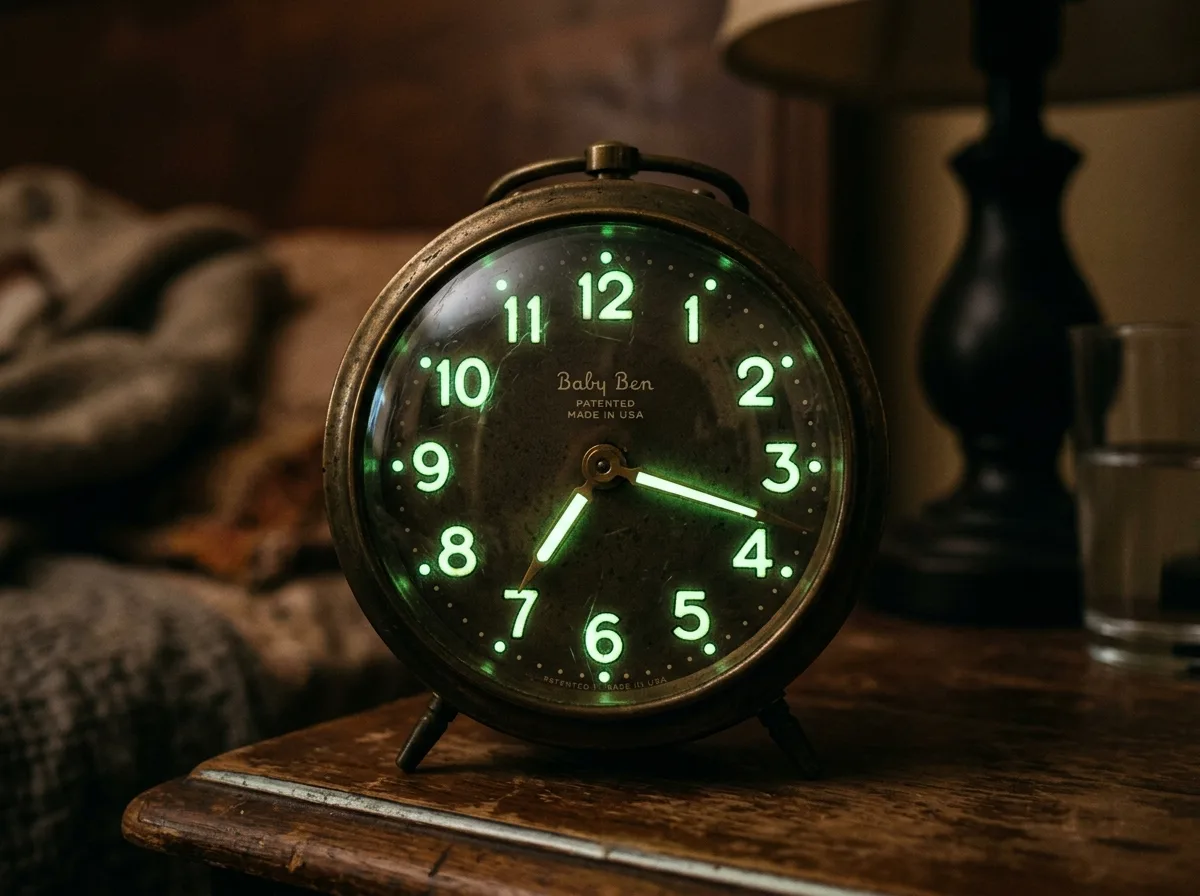
Vintage 1920s pocket watch dial painted with radium-based radioluminescent pigment.
Factory Studio Routines and the Pointed Camelhair Brush
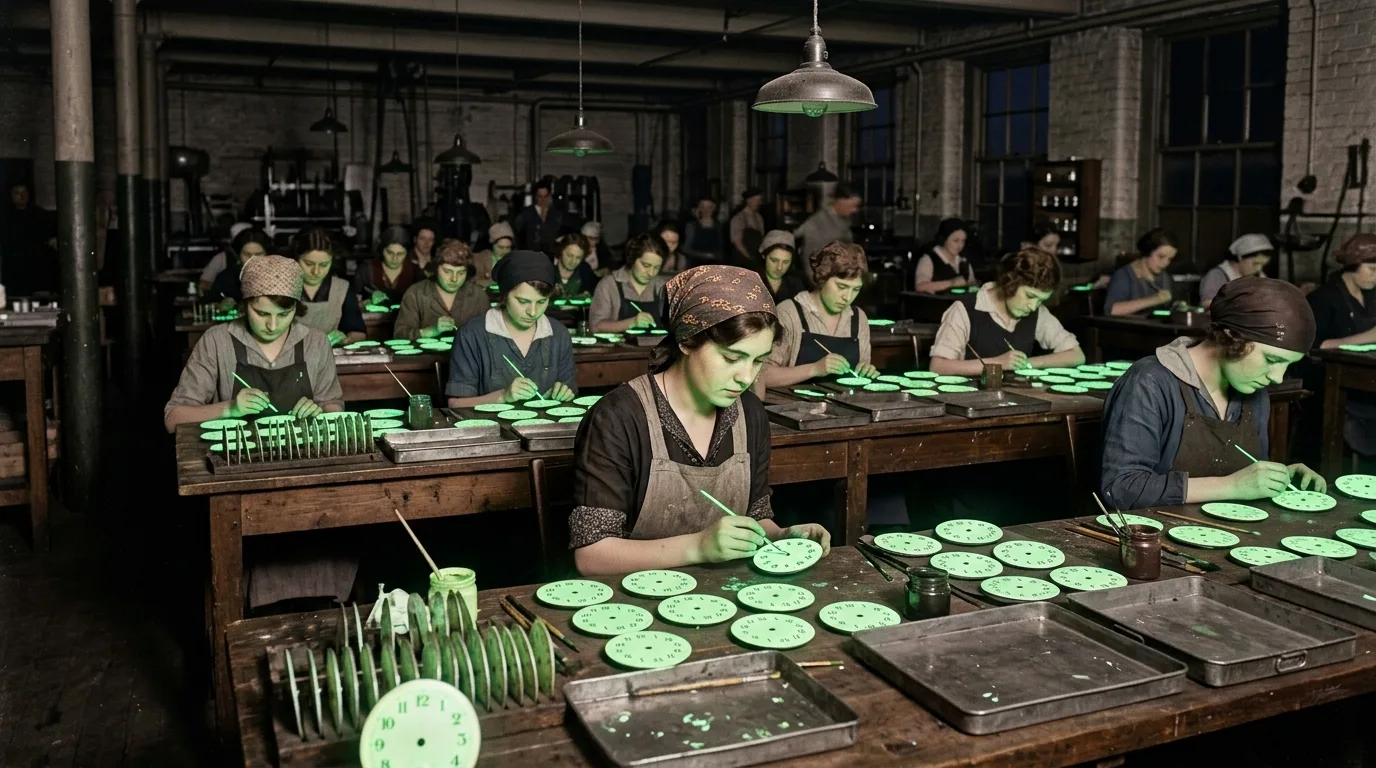
Painting miniature numerals on delicate watch faces required immense precision. Factory managers recruited hundreds of teenage girls and young women, offering handsome wages and clean working conditions. Because the fine camelhair brushes frayed after a few strokes, supervisors instructed the dial painters to shape the tips between their lips — a technique known as "lip, dip, paint".
While company executives and research scientists handled raw radium with lead shields and tongs in secure laboratories, the factory floor workers ingested minute amounts of radioactive material with every brush stroke. Reassured that the compound was completely harmless, some workers painted their fingernails and teeth with the leftover glow for evening social gatherings.
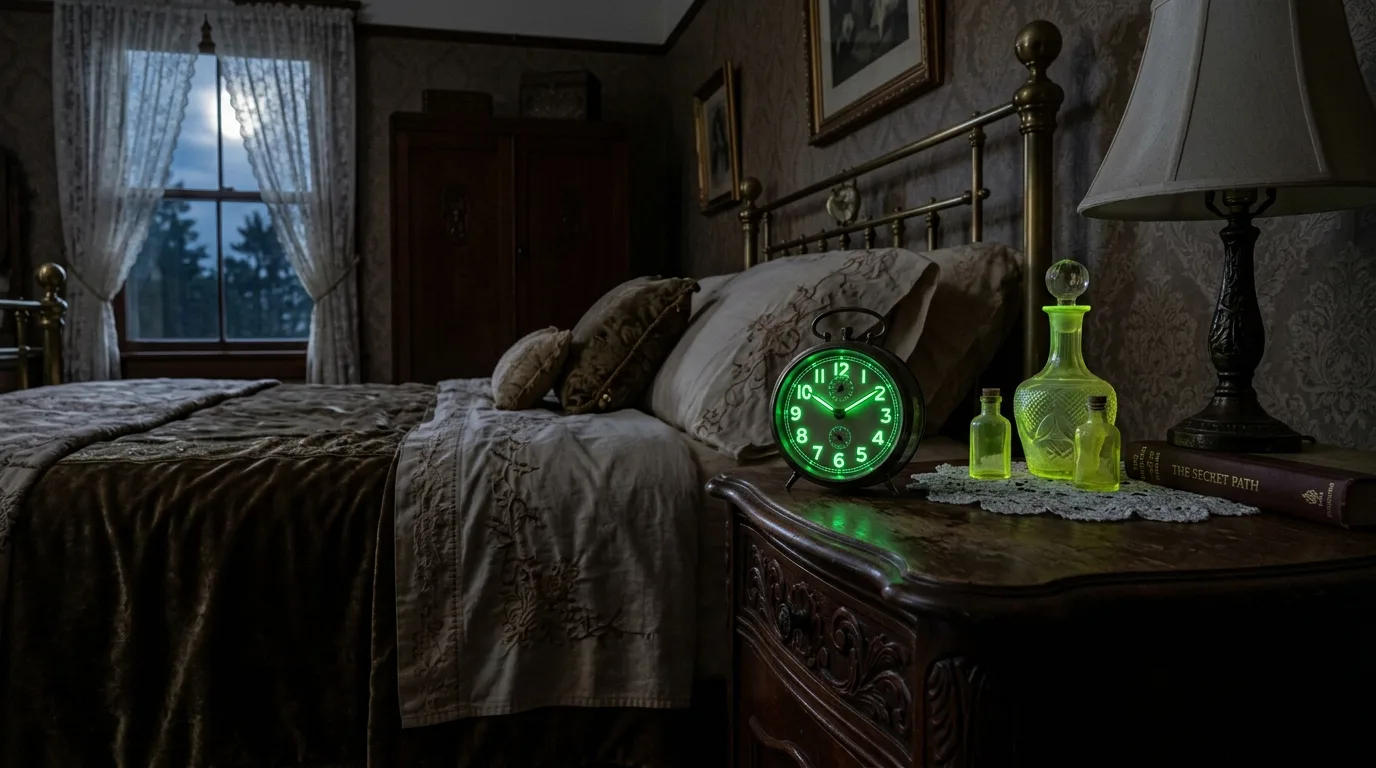
Residential bedrooms in the 1920s celebrated radiant bedside clocks and luminous decorative accents.
The Biological Toll and the Shattering of Domestic Illusion
By the early 1920s, the physical consequences of continuous radium ingestion manifested with alarming severity. Because radium shares chemical characteristics with calcium, the human body absorbed the isotope directly into skeletal tissue, concentrating the radiation inside bone marrow and the jawbone.
The dial painters developed devastating conditions including spontaneous bone collapse, tooth loss, and severe necrosis of the jaw — a condition contemporary medical journals termed "radium jaw." Confronted by rising medical diagnoses, factory management initially denied any causal connection between the illnesses and the painting workshops.
The Courtroom Battle and the Legacy for Workplace Safety
Led by determined dial painters like Grace Fryer and Katherine Schaub, a group of women challenged the chemical corporations in court. Extensive press coverage brought forward forensic evidence proving internal radiation contamination and willful corporate neglect.
The legal victory of the Radium Girls established groundbreaking precedents for workers' rights to sue for occupational diseases, prohibited brush-licking practices, and laid the groundwork for modern industrial safety regulations, including the eventual founding of the Occupational Safety and Health Administration (OSHA). In subsequent decades, safer photoluminescent compounds permanently replaced radium, ensuring that nighttime illumination in modern homes is achieved without risk to human health.
This historical crossroads connects with other instances where interior trends converged with health and architectural history, such as Victorian-era toxic arsenic wallpaper, the macabre use of Mummy Brown pigment, and architectural adaptations driven by Britain's Window Tax. To discover safe contemporary lighting and interior principles, consult our complete guide to interior design styles.
Historical Summary: The Radium Girls
| Peak Era | 1910s through the mid-1920s |
| Material Compound | Radium salts mixed with zinc sulfide phosphors (Undark paint) |
| Occupational Practice | "Lip, dip, paint" (pointing camelhair brush tips with lips) |
| Biological Impact | Severe bone necrosis ("radium jaw") and internal radiation poisoning |
| Regulatory Legacy | Precedents for occupational disease litigation and creation of OSHA standards |
Design Safe, Sophisticated Lighting with AI
Simulate modern cove lighting, warm LED accents, and premium architectural materials on real photos of your home with the Arquitet IA app.
Simulate Lighting in Arquitet IA →Frequently Asked Questions about the Radium Girls
Why was radium used in clocks and decorative items during the 1920s?
When blended with zinc sulfide, radium generated continuous green luminescence without requiring electrical power or solar charging, making it a celebrated symbol of modern convenience.
What was the 'lip, dip, paint' routine?
It was the factory procedure where dial painters were instructed to reshape camelhair brushes between their lips before dipping them into radium paint, causing direct internal ingestion.
What were the biological consequences for the workers?
Because radium mimics calcium chemically, it settled deep inside the women's bone tissue, triggering severe bone necrosis (radium jaw), spontaneous fractures, and fatal radiation-induced illnesses.
What was the historical outcome of the Radium Girls legal battle?
Their landmark courtroom victory established the legal precedent for occupational disease compensation in the United States and directly paved the way for industrial labor safety standards, including the creation of OSHA.